Murat Monkeuly
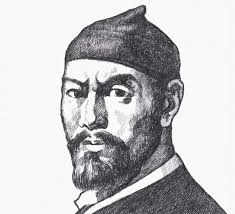 Murat Monkeuly (1843–1906)
The prominent poet Murat Monkeuly, who lived in the second half of the 19th century, was born in 1843 in the village of Karabau, Kyzylkoga District, in present-day Atyrau Region. Orphaned at an early age, he was raised by his elder brother.
He received his initial education from a village mullah, where he learned Arabic. From childhood, he began composing poetry and became known in his community as a “poet boy.” He learned from the renowned Yeset bi and the poet Abyl, and later mentored the zhyrau Muryn Sengirbayuly. In 1860, after meeting the poet Zhylkyshy, he began participating in poetic competitions (aitys).
At the age of 17, he competed with Zhylkyshy; at 20, with Bala Oraz; and at 25, with poets such as Zhaskelen, Zhantoly, Sholpan, and Tynyshtyk, emerging victorious. These aitys became a true school of poetic mastery for him. Known for his bold character, sharp wit, and quick repartee, Monkeuly consistently stood out. His name remains in literary history not only as a master of aitys but also as a major epic poet.
Murat was one of the most significant figures in Kazakh literary history and a leading representative of the “Zar Zaman” poets. From a young age, he learned from the eloquent Yeset. Gifted with exceptional talent, he grew up memorizing the spiritual heritage and heroic epics of the people. The works of Sypyrа Zhyrau, Asan Kaigy, Kaztugan, Zhiembet, Shalkiiz, and other historical figures have reached us through Murat’s recitation.
A great son of his people, he transformed national history into expressive literary works and widely promoted them. Murat longed for his country’s independence and composed poems opposing colonial subjugation, thus earning the title of a “Zar Zaman” poet. Grieving the loss of ancestral lands, he nostalgically recalled the past of his native steppe.
His most renowned work is the poem “Ush Kiyan.” In it, he speaks of the erosion of old traditions and the moral decline of society. The confiscation of fertile lands through colonization and the resulting hardship of the people deeply troubled him.
Among his notable works are “Saryarka,” “Alas, Fleeting World,” “Kaztugan,” “Karasai-Kazi,” and others. He also composed didactic poems such as “Death,” “The Girl,” “Why Gift a Swift Horse?,” “Can Anything Be More Beautiful than a Horse?,” and “In This False Mortal World.”
Murat contributed significantly to the development of the Kazakh literary language. His works clearly reflect the protest of the poor against oppression, especially against tsarist authority. He raised important social issues and frequently turned to the past of his people, creating a visible connection between history and his present.