Data, documents
Kh. Dosmukhamedov: Eminent Scholar, Educator, and Enlightener
One of the regions that has played a significant role in the history of our people and has contributed substantially to the spiritual growth and development of our nation is the modern-day Atyrau Region. Since ancient times, when local communities began to establish their foundations amid turbulent eras, the vast northern steppes of Atyrau have continued to attract the attention of researchers. Countless heroes, poets, eloquent speakers, and wise judges have emerged from this region over the centuries, leaving a lasting imprint on the social life of the Kazakh steppe. The distinguished figures of Atyrau left a significant mark on the history of the Kazakh people.
In this overview, we do not aim to provide a detailed account of every historical period of the Atyrau region. Our purpose is to reconnect the public with both the overlooked and the lesser-known truths of our national history. For many years, the names of great figures who were repressed or persecuted under Soviet ideology have been excluded from historical memory. Restoring their recognition is a civic duty of the younger generation. At the beginning of the 20th century, the region also produced prominent representatives of educational and national liberation movements, whose contributions shaped the future of the Kazakh people.
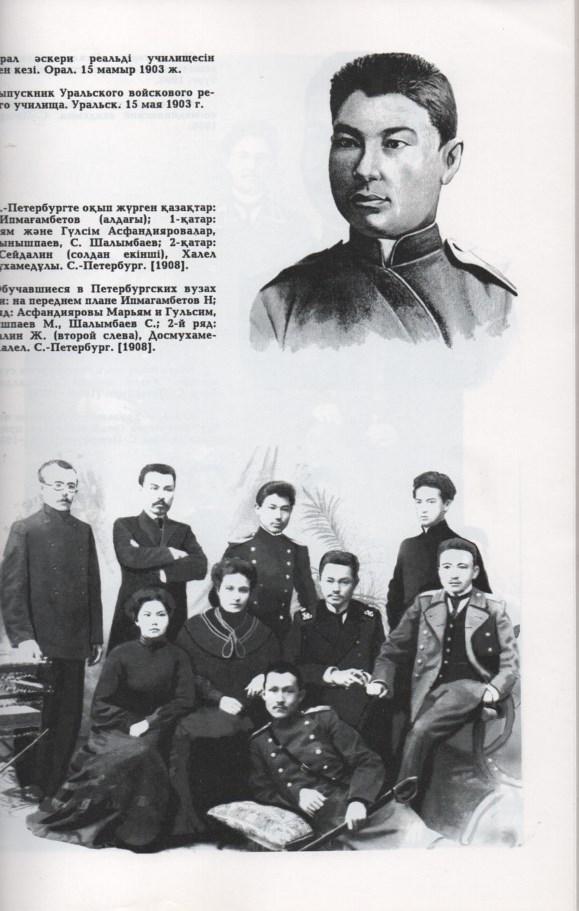
One such remarkable figure - indeed, a unique personality - is Kh. Dosmukhamedov, the subject of this report. His significant contributions to the Kazakh people and the future of his homeland, Kazakhstan, remain worthy of acknowledgment today.
In the early 20th century, Kh. Dosmukhamedov stood at the center of political life in Kazakh society, where his leadership and dedication elevated him to a prominent position. During his relatively short life, he demonstrated exceptional talent, remarkable ability, and tireless diligence.
A naturally gifted individual, Kh. Dosmukhamedov grew up in an environment rich in cultural and intellectual traditions - his native village imbued with the wisdom of elders and the guidance of local leaders. He mastered multiple languages in addition to his mother tongue, Kazakh, including Latin, Arabic, Persian, Turkish, Russian, German, and French. His polyglot abilities allowed him to fully reveal his multifaceted genius. Sensitive to the nuances of language, he was a linguist, folklorist, historian-ethnographer, and translator.
Thanks to his broad knowledge, he authored numerous significant works in biology, zoology, and medicine. Even today, his contributions to the development of biological sciences in Kazakhstan, as well as his linguistic scholarship, continue to be studied and appreciated.
Another important aspect of his legacy, which has drawn the attention of historians and the public, is his political work and service as a public figure in the national liberation movement. Modern generations primarily recognize and value Kh. Dosmukhamedov for these contributions. At the beginning of the 20th century, political leaders like him played a critical role in shaping democratic thought in Kazakh society, elevating the ideas of national independence to the level of a national ideal, and putting them into practice. Among the Kazakh intellectuals whose names shine in history, Kh. Dosmukhamedov holds a distinguished place as a leader of the Alash movement.
The intellectual elite of Kazakhstan, striving for equality and independence, carried forward the Alash legacy despite the coercive measures of Soviet power, seeking to serve their people as best they could. These intellectuals often set aside political ambition and devoted themselves to educational and cultural enlightenment, guiding their people from darkness into light through knowledge and moral leadership.
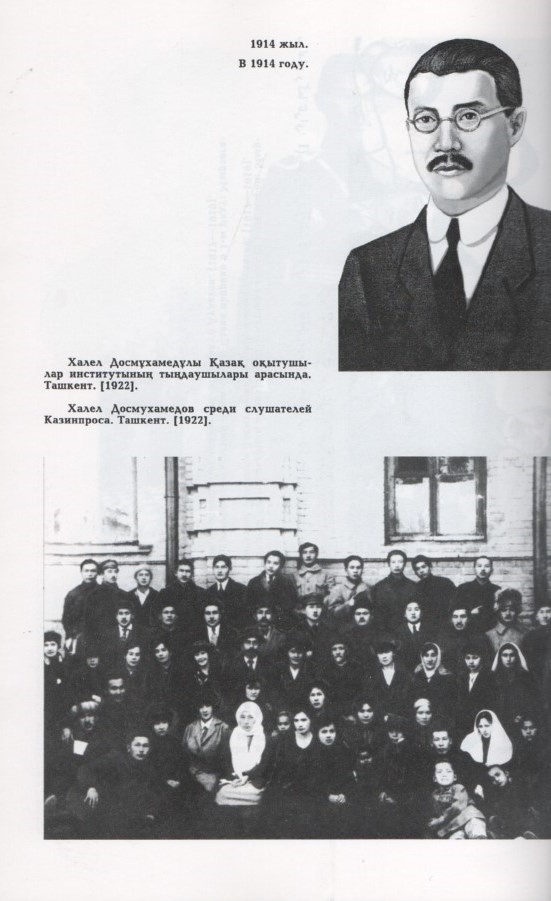
After the dissolution of the Alash government, forward-thinking Kazakh intellectuals actively participated in cultural and educational initiatives under the Soviet regime. In the fall of 1920, Kh. Dosmukhamedov began teaching at the Kazakh People’s Education Institute, while also serving as a hospital physician at the Medical Faculty of the Central Asian University.
In 1923, he was elected chairman of the Scientific Council of the Turkestan Republic and simultaneously took on responsibilities at the state scientific publishing house. At that time, the Turkestan Autonomous Republic included significant portions of Kazakhstan. In Tashkent, Kazakh intellectuals worked collaboratively despite the political distrust of the new government, dedicating themselves to the advancement of their nation. Kh. Dosmukhamedov’s scholarly, teaching, and leadership abilities shone in this environment, demonstrating the enduring resilience and contribution of Kazakh intellectuals during the difficult years from 1920 to 1937.
Despite constant threats, surveillance, and repression, these figures significantly contributed to the spiritual and cultural development of their people, serving as true guardians of the Kazakh nation. Even when unable to establish an independent state, they strove to preserve the national identity and spirit of their people under Soviet rule.
Intellectuals devoted to the prosperity of their nation aimed to elevate education and enlightenment among the people, thereby nurturing public consciousness and preserving national identity. They understood the underlying motives of the Soviet government’s far-reaching and covert policies. These courageous individuals, using their knowledge and skills, worked quietly to ensure the survival of their nation as an ethnic community. They collected, studied, and systematized the Kazakh language, customs, literature, culture, and history, transforming national heritage into a source of spiritual wealth.
In this endeavor, monumental works emerged: M. Tynyshbayev and S. Asfendiyarov in history, J. Aymauytov in psychology, A. Baitursynov in linguistics, and M. Zhumabayev in pedagogy. These efforts represented extraordinary struggles by Kazakh intellectuals to safeguard the nation’s spiritual independence. Kh. Dosmukhamedov also made significant contributions during these years in history, literature, and pedagogy.
One of the most prominent figures in Kazakh pedagogy and enlightenment, Kh. Dosmukhamedov scientifically founded and systematized national pedagogy. The delayed scholarly study of his work is largely due to his political activism, ideas, and path, as he was labeled a “public enemy” by the authorities. Many of his works were lost during periods of repression, making it difficult to fully study, preserve, and analyze his vast intellectual legacy even after his rehabilitation.
The surviving works, however, form the foundation for understanding his scholarly contributions. His role in education and pedagogy was exceptional. Regardless of his duties, he never neglected his responsibilities as a physician, often serving as a school doctor even while in exile. While teaching, he established the Department of Pedagogy and later earned the title of “Professor of Pedagogy.” Kh. Dosmukhamedov prioritized the health and well-being of his people, and his professional work became a vital service to society.
He worked at the Kazakh People’s Education Institute in Tashkent, a key institution that trained specialists for schools, extracurricular educational institutions, and cultural organizations. Intellectuals devoted to national revival and cultural development established enlightenment organizations to implement their vision. In Tashkent, the educated elite formed the “Talap” society to bring the light of culture to their nation. Kh. Dosmukhamedov served as chairman, with members including Professor Alexander Schmidt, Isa Toktabayev, Myrzagazy Yesbolov, Mukhametzhan Tynyshbayev, Mukhtar Auezov, and Kasym Tynystanov. Active participants included Magzhan Zhumabayev, Abubakir Divaev, Nikolay Arkhangelsky, Turar Ryskulov, and Sultanbek Kozhanov. The society produced dozens of books and educational materials.
Kh. Dosmukhamedov’s remarkable contributions to education were officially recognized: he was awarded the title of associate professor in 1927 and professor in 1929. In 1924, he became the first corresponding member of the Russian Academy of Sciences’ Local Lore Bureau. He also led the Planning and Organization Department of the Health Commissariat and edited the journal Sana, established by the Kazakh-Kyrgyz Education Commission in Tashkent.
Through his work in public education, Kh. Dosmukhamedov demonstrated himself as a devoted and compassionate servant of his people. He believed that culture was essential to national development and that knowledge required sustained effort and patience. His philosophy emphasized that to become a proud and independent nation, a people must first embrace education and culture. During the 1920s and 1930s, Kh. Dosmukhamedov combined profound wisdom with high-quality European education to lead transformative cultural and educational initiatives.
He made substantial contributions to ethnopedagogy and ethnopsychology, scientifically grounding the study of Kazakh national character for the first time. His findings on national pedagogy and psychology were often reflected in his folkloric works. For instance, various forms of Kazakh aytıs (improvised oral poetry competitions) illustrate multiple facets of human psychology - thought, speech, imagination, emotion, will, and character.
Kh. Dosmukhamedov viewed Kazakh oral literature as a primary source of moral and educational guidance. He emphasized that every genre of Kazakh literature carries pedagogical meaning, reflecting the lifestyle and psychology of the nomadic people. From birth to adulthood, children’s experiences were embedded in songs, poems, rituals, and folk traditions. Kh. Dosmukhamedov particularly highlighted the importance of lullabies, ceremonies, greetings, blessings, proverbs, riddles, wedding songs, heroic epics, and folk medicine songs in shaping children’s development.
He meticulously analyzed folklore to derive insights into child psychology, education, and the formation of national consciousness. He emphasized the crucial role of language, music, and traditional instruments, such as the dombra, in cultivating Kazakh identity. Kh. Dosmukhamedov recognized that children first hear and internalize the world through cultural sounds -most notably, the melody of a mother’s lullaby. His research connected ethnopedagogy, ethnopsychology, and scientific pedagogy to the development of a child’s language, character, and cultural awareness.
As a literary scholar, Kh. Dosmukhamedov authored significant works, including Kazakh Folk Literature and Its Content, written in Russian to present Kazakh cultural heritage to a wider audience. He later published Alaman, Isatay-Makhambet, and other critical studies, establishing foundational research in Kazakh literary scholarship. His studies systematically analyzed genres, content, and the moral significance of literary works, bridging literature, history, and social sciences.
Although a physician by training, Kh. Dosmukhamedov’s interdisciplinary expertise spanned pedagogy, linguistics, literature, psychology, and folklore, making him a truly universal scholar. His research in Kazakh language, including theory, grammar, and textbook development, significantly advanced the scientific understanding of national education. His insights into terminology, style, and language remain influential today.
Despite the challenges of his era, Kh. Dosmukhamedov pursued knowledge relentlessly. Today, on the 135th anniversary of his birth, Atyrau State University - bearing his name - stands as one of Kazakhstan’s leading higher education institutions. It is a source of pride that Kh. Dosmukhamedov’s legacy continues to inspire scholarship and education not only in Kazakhstan but around the world.
References
- Dosmukhamedov, K. Selected Works (Tandamaly) – Almaty: Ana Tili, 1998.
- Korkytov, B. Atyrau Biys and Heroes – Almaty: Olke, 1992.
- Dosmukhamedov, K. Alaman – Almaty: Ana Tili, 1991.
- Syzdykov, K., Kerimov, Sh. Alkalasa Aleumet. Poetry Collection – Almaty, 1991.
- Ozganbay, O. The State Duma of Russia and Kazakhstan (1905–1917) – Almaty, 1999.
- Nurpeisov, K.N. Alash and Alashorda – Almaty, 1995.
- Koigeldiev, M.K. Public and Political Activities of the Kazakh Democratic Intelligentsia in 1905–1917. Abstract of Doctoral Dissertation – Almaty, 1994.
- Koigeldiev, M.K. Public and Political Activities of the Kazakh Democratic Intelligentsia in 1905–1917 – Almaty, 1997.
- Koigeldiev, M.K. The Alash Movement – Almaty, 1995.
- Tynyshpaev, M. History of the Kazakh People. Preface and editors: A.S. Takenov, B. Baigaliev – Almaty: Kazakh University, 1993.
- Ozganay, O. The State Duma of Russia and Kazakhstan (1905–1917) – Almaty, 1999.
- Nurpeisov, K., Kulkenov, M., Khabizhanov, B., Meklepeov, A. Kh. Dosmukhamedov and His Life and Works – Almaty: Sanat, 1996.
- Tabyldiev, Kh.B. “His Name Lives in People’s Memory” – Densaulyk, 1995, No. 7.
- Dosmukhamedov, K. “On Infectious Diseases” – Kazakh Newspaper, 1914, Nos. 60, 62.
- Editorial Board of the Kazakhstan National Encyclopedia – Almaty, 1998.
- Kazakh Newspaper, 1917.
- Nurpeisov, K. Political Views of Kh. Dosmukhamedov and His Life and Works – Almaty: Sanat, 1996.
- Alash Orda. Collection of Documents – Almaty, 1992.
- Amanzholova, D.A. Kazakh Autonomism and Russia: History of the Alash Movement – Moscow: Rossiya Molodaya, 1994.
- Dosmukhamedov, K. Natural Science, Part I – Tashkent, 1922.
- Dosmukhamedov, K. Animals, Part I – Kyzylorda, 1928.
- Dosmukhamedov, K. Human Physiology – Kyzylorda, 1927.
- Dosmukhamedov, K. Preserve Your Health – Almaty: Balausa, 1997.
- Pride of Alty Alash: Proceedings of the Republican “Kh. Dosmukhamedov Readings” Scientific-Practical Conference – Atyrau, 2000.
- Khabizhanov, B. Medical Service and Combating Infectious Diseases in the Country – In: Kh. Dosmukhamedov and His Life and Works – Almaty: Sanat, 1996.
- Dosmukhamedov, K. The Law of Sygarmonism in Kazakh-Kyrgyz Language – Tashkent, 1924.
- Seytaliyev, K.B. “Universal Scholar-Pedagogue” – Kazakhstan School, 1994, No. 6.
- Seytaliyev, K.B. Development of Higher Pedagogical Education in Kazakhstan – Almaty: Republican Publishing Cabinet, 1996.
- Koyanbayev, Zh.B., Koyanbayev, R.K. Pedagogy – Astana, 1998.
- Aubakirov, S. Ecology – Almaty, 1995.
- Kosherbayev, K. Kazakh Language and Literature – the Pillar of National Culture – Kazakh Language and Literature, 2000, No. 7.
- Syzdykov, K., Kerimov, Sh. Alkalasa Aleumet. Poetry Collection – Almaty, 1991.
- Sharip, Amantai. “Abai and the Nation” – Kazakh Literature, 2000.
- Auezov, M.O. History of Literature – Almaty, 1991.
- Dosmukhamedov, K. Isatay-Makhambet – Almaty: Olke, 1991.
- Bulletin of Kh. Dosmukhamedov Atyrau State University. Scientific Journal.
- Kozhakhmetova, K. National Education System in Schools: Theory and Practice – Almaty: RBK, 1997.
- Kaliev, S., Zharikbayev, K. Kazakh Pedagogy – Almaty, 1995.
- Sembayev, A.I. History of Kazakh Soviet Literature – Almaty, 1967.
- Kunantaeva, K. History of Education in Kazakhstan – Almaty, 1917–1990.
- III Republican “Dosmukhamedov Readings” – Atyrau, 2003.
- Atyrau State University: Present and Future – Almaty, 2001.
- Kh. Dosmukhamedov: Life and Works – Almaty: Sana, 1996.
- Dosmukhamedov, K. Selected Works (Tandamaly) – Almaty: Ana Tili, 1998.
- OROMA. Fund R-372, Inventory 1, File 15, pp. 51–73.
- OROMA. Fund 17, Inventory 1, File 293, p. 25.
- Nurpeisov, K., Kulkenov, M., Khabizhanov, B., Meklepeov, A. Kh. Dosmukhamedov and His Life and Works – Almaty: Sanat, 1996, p. 115.
- OROMA. Fund R-34, Inventory 1, File 293, p. 25.
- Nurpeisov, K., Kulkenov, M., Khabizhanov, B., Meklepeov, A. Kh. Dosmukhamedov and His Life and Works – Almaty: Sanat, 1996, p. 133.
- OROMA. Fund R-34, Inventory 1, File 2114, p. 13.
- OROMA. Fund R-34, Inventory 1, File 2114, p. 13.
- OROMA. Fund R-34, Inventory 1, File 2114, p. 13.
- Sana, 1923, No. 1.
- Pride of Alty Alash: Republican Readings – Atyrau, 2000, p. 60.
- OROMA. Fund R-34, Inventory 1, File 2114, p. 36.
- Dosmukhamedov, K. Natural Science, Part I – Tashkent, 1922, pp. 6–11.
- Dosmukhamedov, K. Animals, Part I – Kyzylorda, 1928, p. 229.
- Dosmukhamedov, K. Animals, Part I – Kyzylorda, 1928, p. 3.
- Dosmukhamedov, K. Animals, Part I – Kyzylorda, 1928, pp. 3–229.
- Dosmukhamedov, K. Human Physiology – Kyzylorda, 1927, p. 4.
- Dosmukhamedov, K. Human Physiology – Kyzylorda, 1927, p. 308.
- Dosmukhamedov, K. Volume I: Mental Health / Comp. Prof. G. Anes – Almaty: Arys, 2017, 432 p.
- Dosmukhamedov, K. Volume II: Physical Health / Comp. Prof. G. Anes – Almaty: Arys, 2017, 496 p.
- Dosmukhamedov, K. Volume III: Animals / Comp. Prof. G. Anes – Almaty: Arys, 2017, 536 p.
- Muratova, A. The Role of Kh. Dosmukhamedov in the Development of Kazakh Science and Language – Kazakh Language and Literature, 2000, No. 4, pp. 52–53.
- Dosmukhamedov, K. Preserve Your Health – Almaty: Balausa, 1994, p. 4.
- Dosmukhamedov, K. Preserve Your Health – Almaty: Balausa, 1994, p. 69.
- Pride of Alty Alash: Republican “Kh. Dosmukhamedov Readings” Scientific-Practical Conference Proceedings – Atyrau, 2000, p. 61.
- Pride of Alty Alash: Republican “Kh. Dosmukhamedov Readings” Scientific-Practical Conference Proceedings – Atyrau, 2000, p. 69.
- Dosmukhamedov, K. Selected Works (Tandamaly) – Almaty: Ana Tili, 1998, p. 349.
- KROMA. Fund 693, File 47, pp. 123–124.
- Alimkhanova, R. “The ‘Talap’ Society Led by Kh. Dosmukhamedov” – Akykat, 1998, No. 3, pp. 62–64.
- Educator Kh. Dosmukhamedov. Collection / Comp. G. Kabdolkaïrov – Almaty: Arys, 2004, 272 p.
.jpg)
.jpg)
.jpg)
.jpg "Рисунок: /upload/iblock/767/Скан_20200413 (5).jpg")
.jpg "Рисунок: /upload/iblock/767/Скан_20200414 (2).jpg")
.jpg)
.jpg)
.jpg)
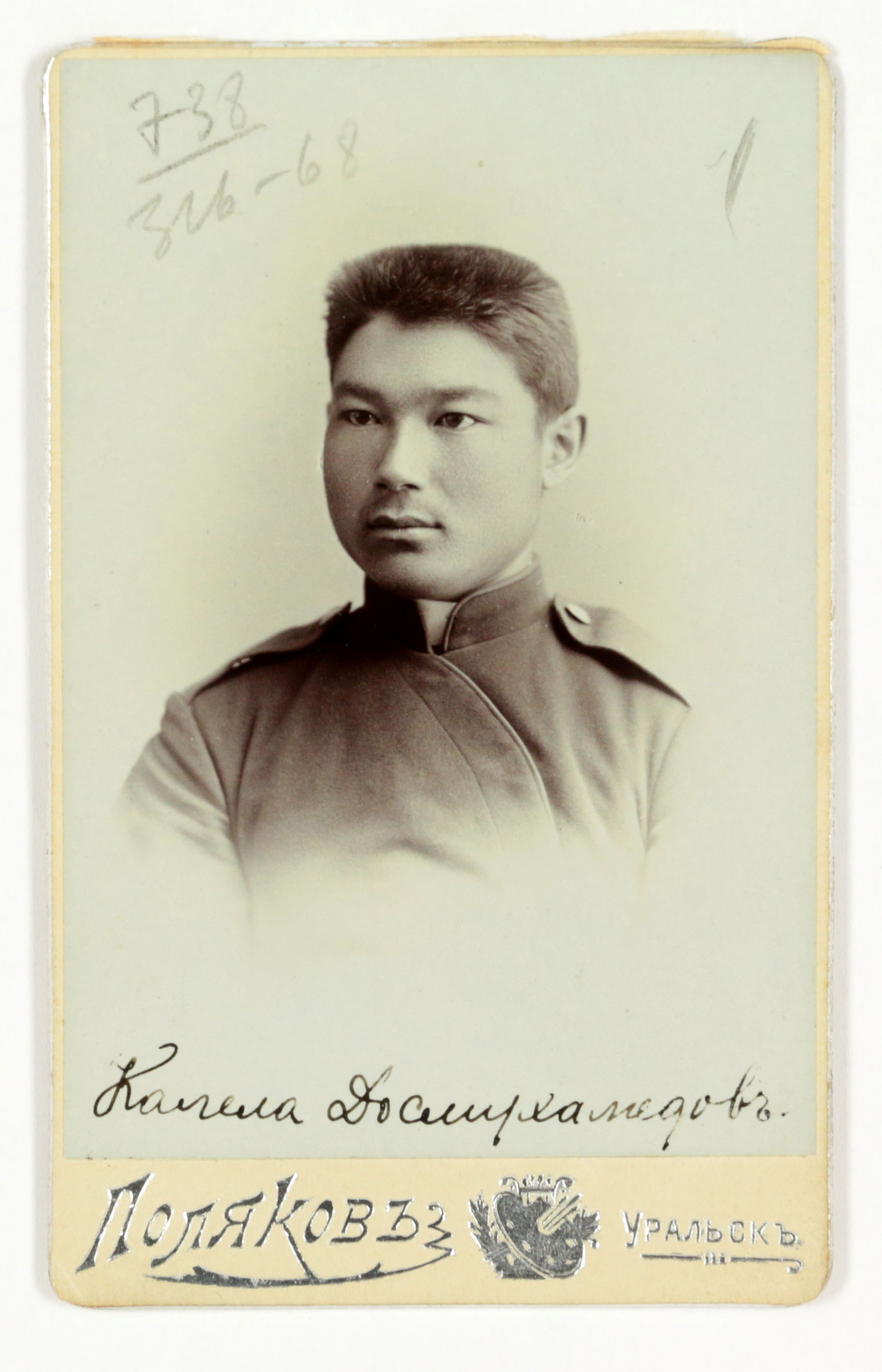
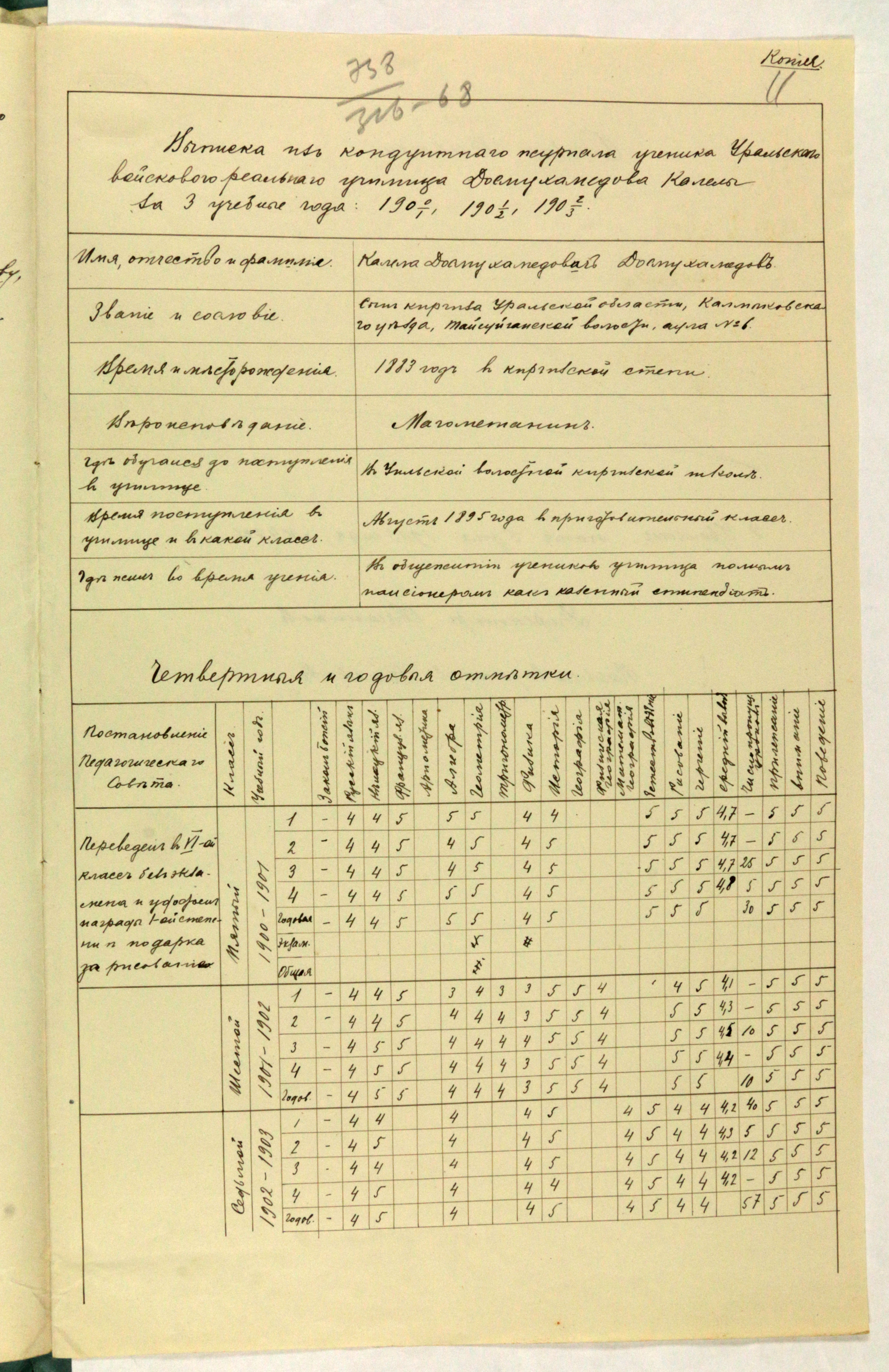
Университет профессорлары Аққали Ахмет пен Сайфулла Сапановтың 2019 жылғы Ресейдің Мәскеу және Воронеж қаласына жасаған ғылыми іс-сапары барысында әкелген құжаттарынан
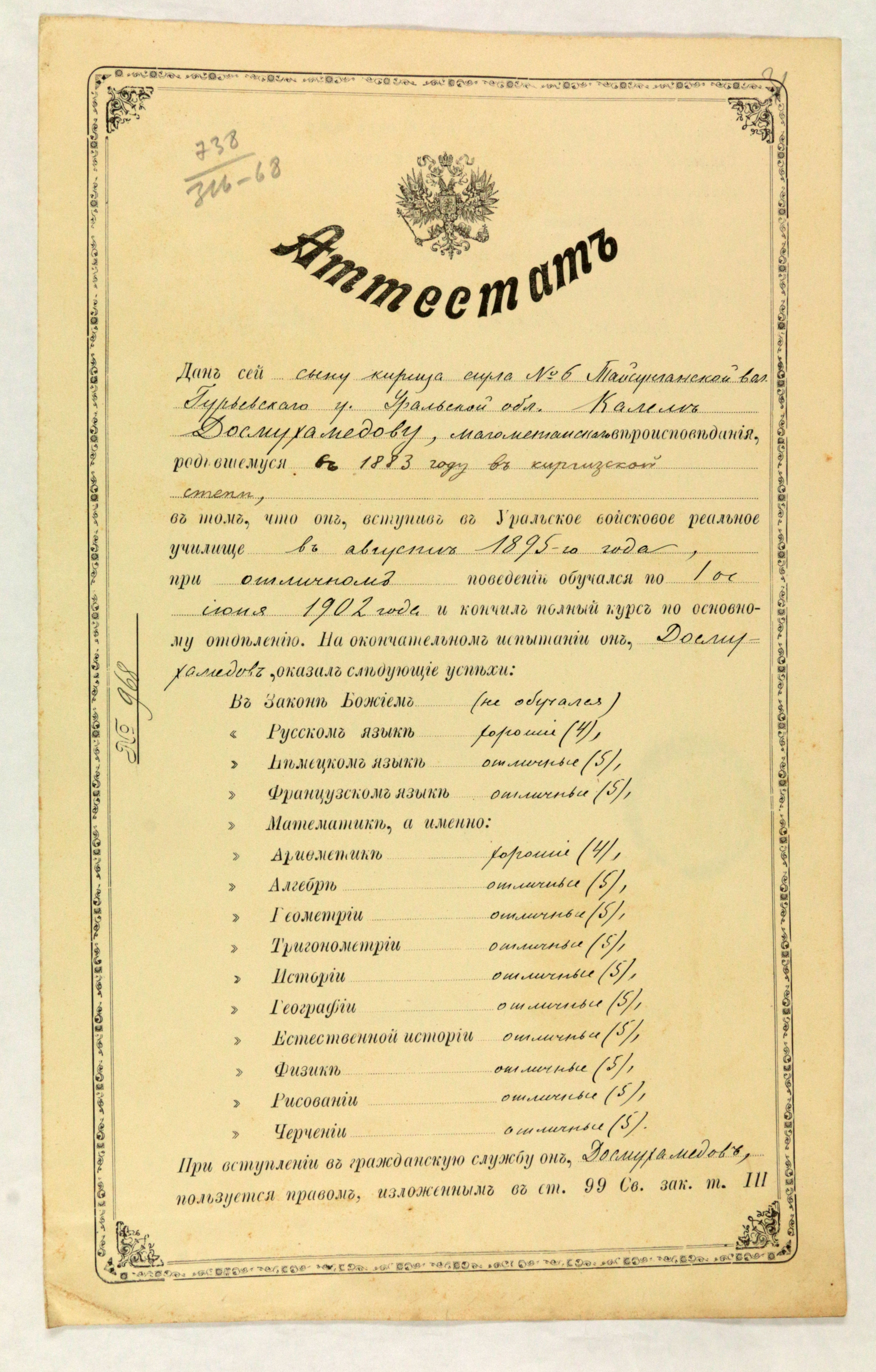

.jpg "Рисунок: /upload/iblock/767/Ф.Р-1714. Оп.2. Д.316.Л.1. (1).jpg")
автор: Базарғалиев Ғабит Бағытжанұлы


The house in Voronezh where Khalel lived


Khalel's personal ex-libris (bookmark)

Khalel's bet.

Resolution on awarding the name of Khalel Dosmukhamedov to the Kh. Dosmukhamedov Atyrau University

Khalel Dosmukhamedov is a doctor in the pioneer camp of School No. 7 in the city of Voronezh.