University 1970 years
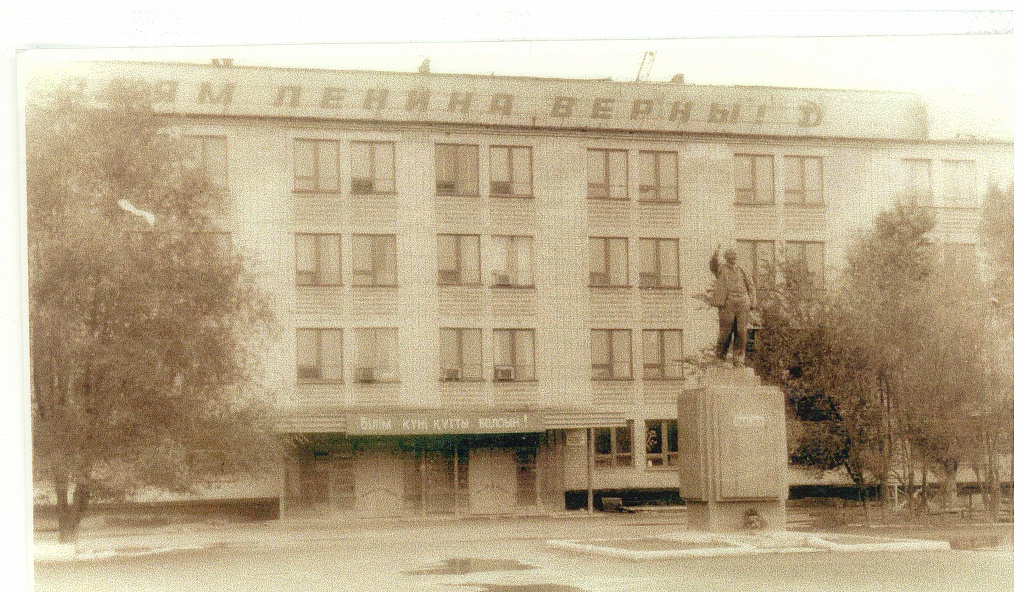


The increase in the number of faculties and departments was driven by the need to further improve the quality of teaching and learning and, on the other hand, by the stabilization of specializations within faculties such as the Faculty of Physics and Mathematics, which trained teachers in three specialties; the Faculty of History and Philology, which also transitioned to training in three specialties; and the Faculty of Biology and Chemistry, which prepared teachers in one specialty. The newly established Faculty of Music Education, by the 1980s, was already training specialists in three specialties. Having started in 1950 with instruction in two specialties, by the 1980s the institution was preparing teachers in ten specialties.
All these processes required both an increase in the number of faculty members and their intensive academic development. Considerable efforts were made in this regard. By the 1980s, 233 faculty members were working across 24 departments, including one Doctor of Sciences and 48 associate professors and Candidates of Sciences. This became possible due to the consistent policy of enhancing the academic qualifications of the institute’s teaching staff. In 1974, M.S. Azhenov became the first faculty member to defend a dissertation for the degree of Doctor of Philosophical Sciences. During the same decade, more than 20 faculty members, applicants, and postgraduate students earned the degree of Candidate of Sciences. This progress was largely facilitated by the established system of advanced training institutes and faculties, postgraduate studies, internships, research appointments, and the planned provision of creative leave and academic business trips for faculty engaged in research activities.
In 1972, contract-based research was initiated for the first time with state farms, and later with regional enterprises. Academic growth was further stimulated by the participation of faculty members in all-Union, republican, and intra-university scientific conferences. In 1978, the institute hosted the republican seminar-meeting “The Relationship of Pedagogical Institutes with General Education Schools, Vocational Schools, and Public Education Authorities,” where 104 reports by scholars from 15 regions of the republic were presented. Of these, 22 reports (21% of the total) were prepared by the scholars and faculty of our institution. The seminar not only summarized the outcomes of scientific collaboration between pedagogical universities and schools across the republic but also outlined prospects for further work, giving impetus to the renewal of the content of scientific and practical conferences and seminars in universities, schools, vocational institutions, and teacher professional development courses, with a focus on the needs of rural schools.
The academic advancement of the faculty also contributed to the increased research activity of students. Annual student scientific conferences, republican Olympiads, and competitions for the best student research paper became standard practice. Later, a number of students who demonstrated a strong interest in research joined the institute’s teaching staff, defended their dissertations, and took their place in science and education.
In the 1970s, building on established traditions, the rectorate, dean’s offices, departments, and public organizations continued to improve the forms and methods of educational and extracurricular work among students. The well-developed system of student construction and agricultural brigades functioned effectively. These brigades not only fulfilled contractual work at construction sites and during harvest campaigns but were also actively engaged in outreach, cultural, and mass activities in their deployment areas. In 1978–1979, the institute was twice awarded the traveling banner of the Central Committee of the Leninist Communist Youth Union of Kazakhstan. Student amateur art groups traditionally summarized their achievements in vibrant spring competitions and festivals, in which nearly every student participated at the faculty level. These students also prepared the institute’s concert programs and formed performance ensembles, the core of which consisted of students majoring in “Music and Singing.”
Throughout the 1970s, this extensive and multifaceted work was led by rectors Duimagambetova S.D., Dairova G.D., and Sakhipov E.B.; vice-rectors Kirillov V.V., Dairova G.D., Sakhipov E.B., Blokhin A.V., Dyusenov M.I., and Tabyldiev Kh.B.; as well as the deans, the Party Committee, the Komsomol Committee, and trade union committees.