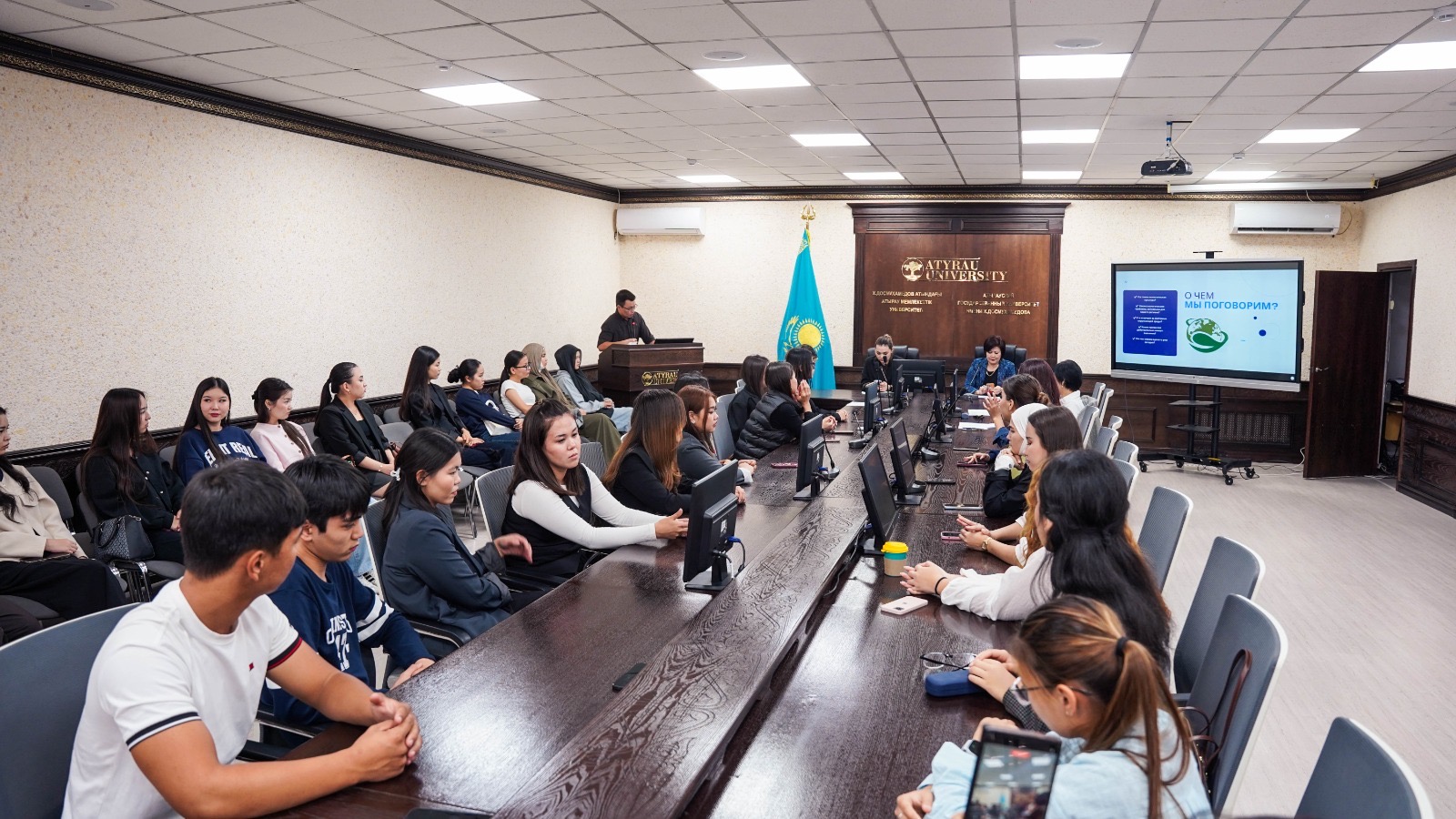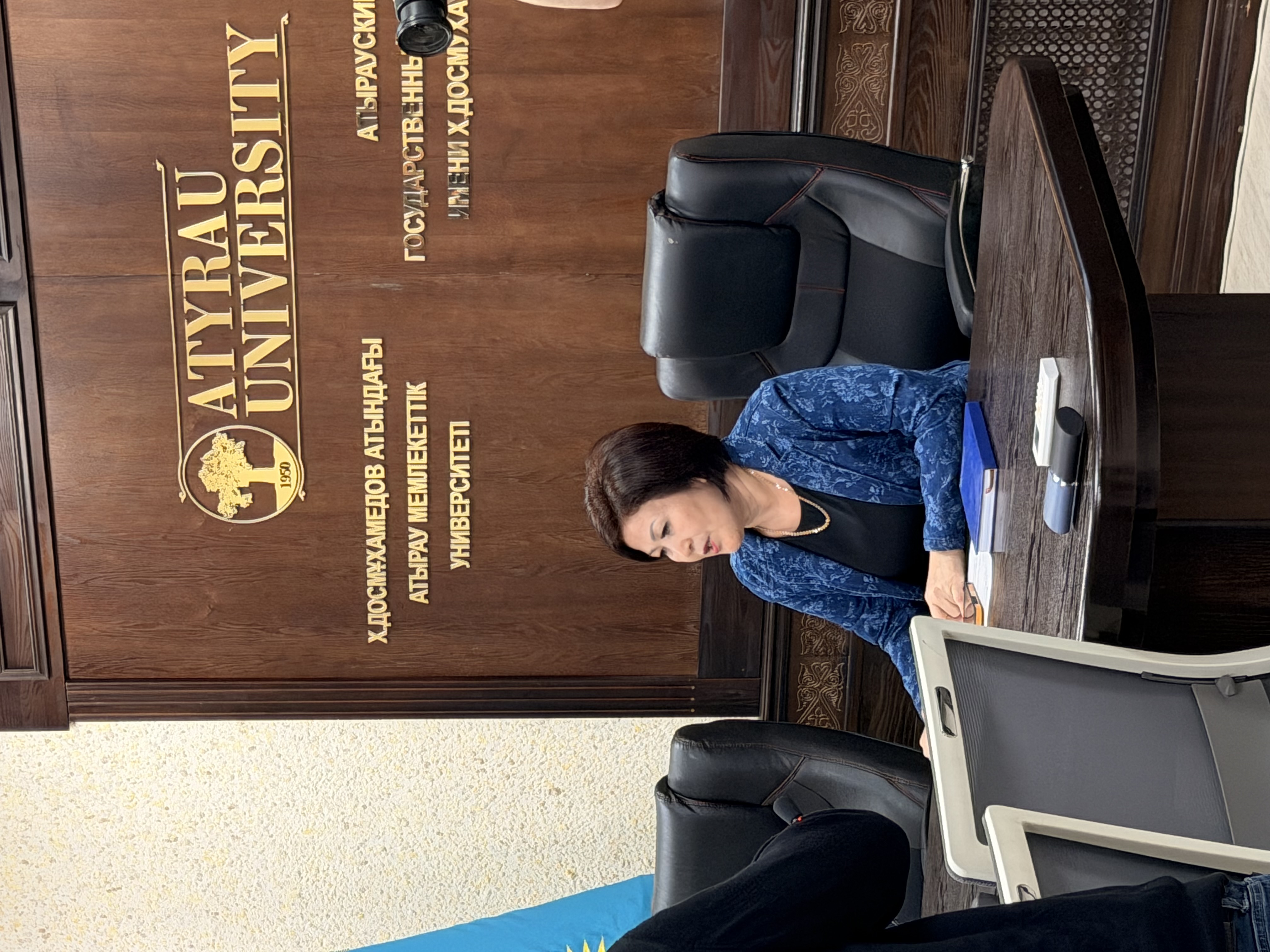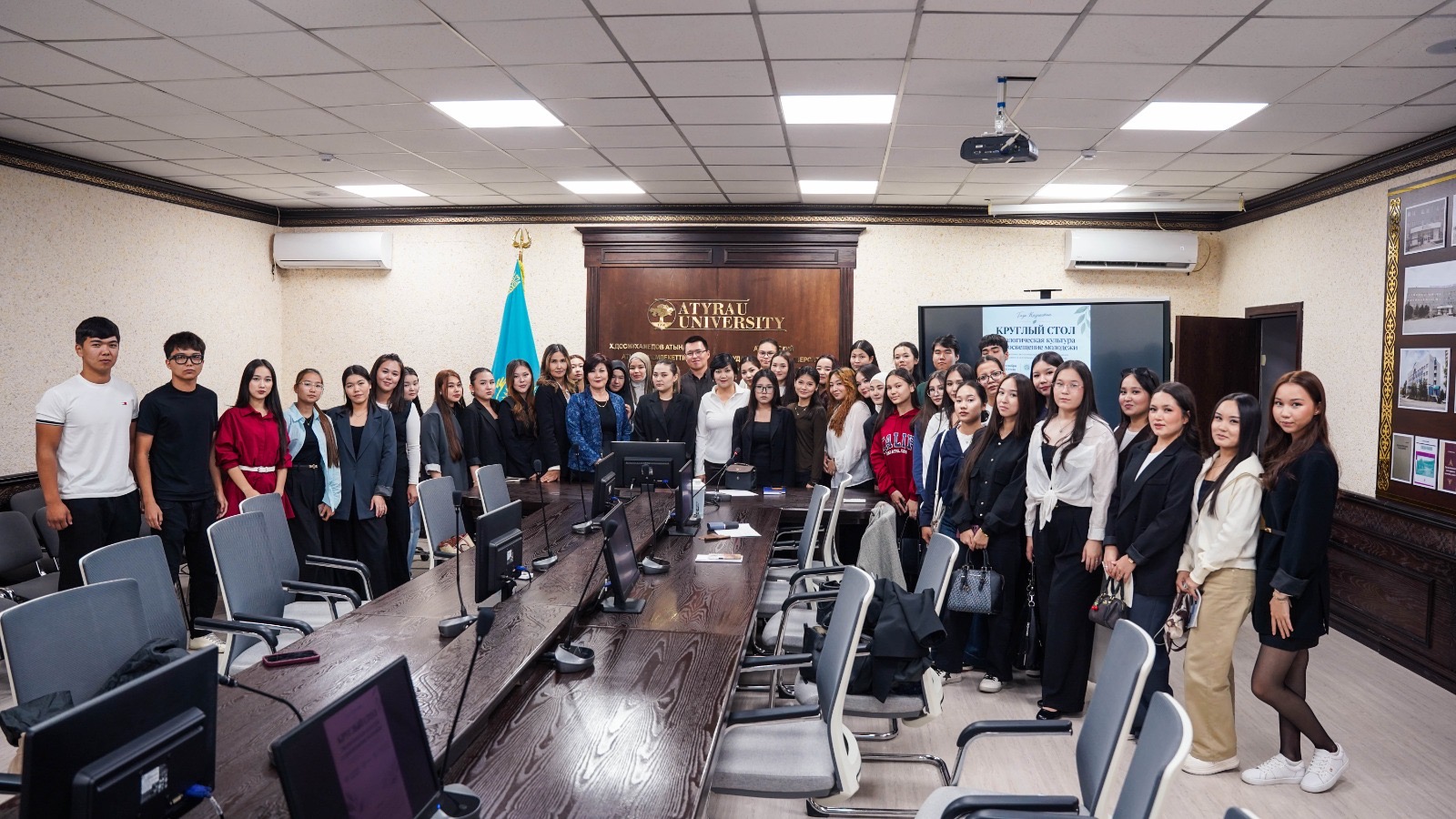
A round table on “Environmental Culture and Environmental Education for Young People” was held at Kh. Dosmukhamedov Atyrau University.
The event brought together faculty members and students of the Department of Ecology, who discussed environmental culture and the role of young people in protecting the environment.
During the round table, Anar Tlepbergenova, Head of the Department of Ecology, highlighted the importance of increasing young people’s environmental responsibility. Zhanar Yesenamanova, Professor of the Department of Ecology and PhD, emphasised the importance of the efficient use of natural resources and environmental protection. Zhanibek Tauanov, Lecturer at the Department of Ecology and Master’s degree holder, stressed the need for students to actively participate in environmental initiatives and implement practical projects.
Moldir Zhailaubaykyzy, Head of a Division of the Department of Youth Policy, also highlighted the importance of young people’s active involvement in environmental projects.
The participants discussed the development of environmental awareness among young people, environmental education, the conservation of natural resources and biodiversity, as well as pressing environmental issues in the Atyrau Region. Particular attention was also paid to opportunities for students to participate in environmental protection activities, environmental projects and community initiatives.
The participants exchanged views on how environmental responsibility can be demonstrated in everyday life. The discussion covered such issues as the responsible use of water and natural resources, waste reduction, limiting the consumption of single-use plastics, protecting green spaces, and maintaining cleanliness in public areas.
The meeting emphasised the importance of young people not only understanding environmental issues from a theoretical perspective but also translating their knowledge into concrete action. Students were presented with opportunities to conduct environmental monitoring, carry out small-scale research and surveys, participate in volunteer projects, and develop environmental initiatives that could be implemented at the University and across the city.
Following the round table, the participants agreed that environmental culture should not be limited to one-time campaigns. It is shaped through a person’s knowledge, individual responsibility and everyday actions.
Such meetings contribute to the development of students’ environmental thinking, engage young people in discussing pressing issues facing the region, and create opportunities for new environmental and research initiatives.
The key message of the meeting was that environmental change begins with a conscious attitude towards the environment and with turning knowledge into meaningful action.