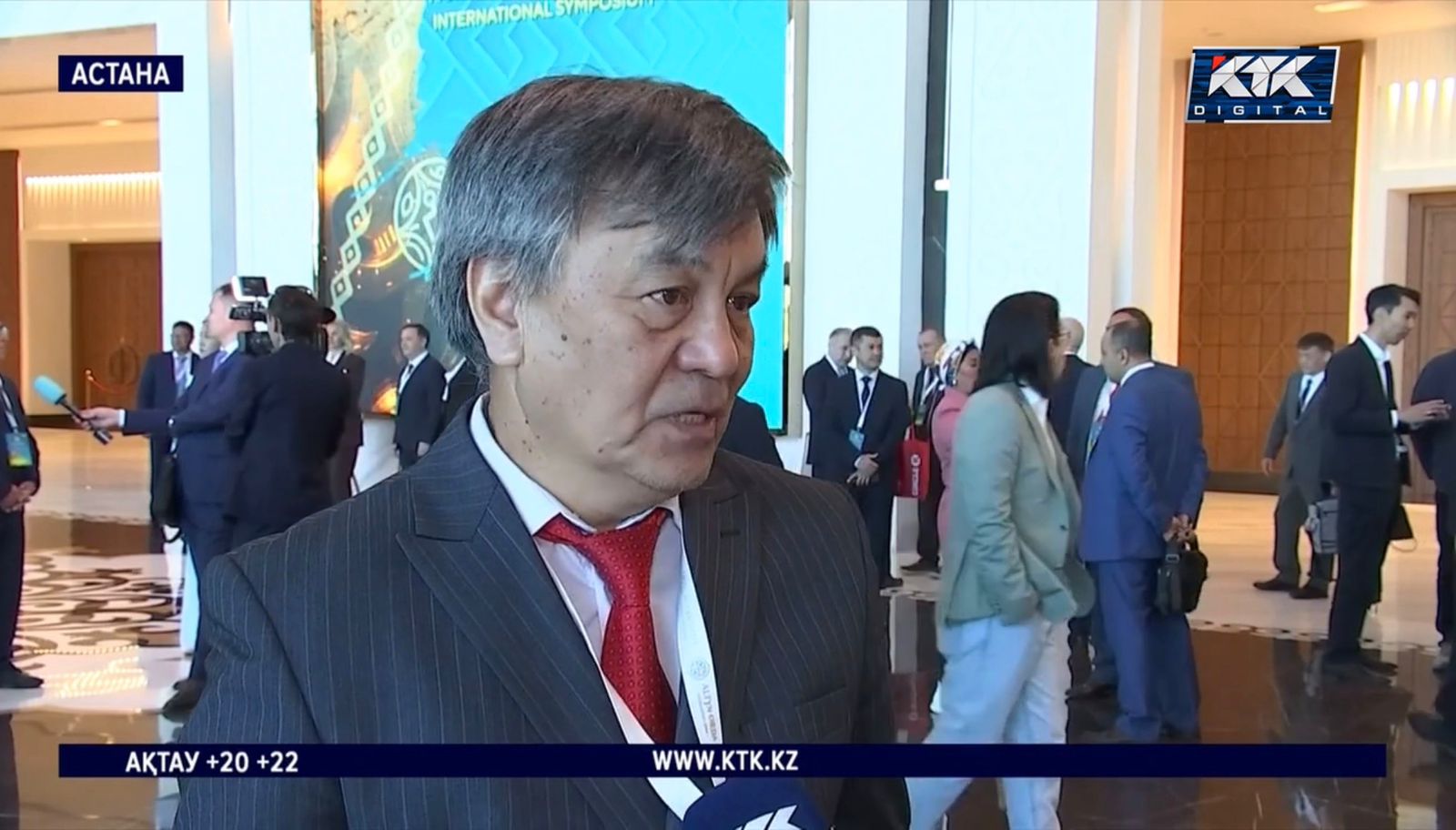
An international symposium titled “The Golden Horde as a Model of Steppe Civilization: History, Archaeology, Culture, and Identity” was held in the capital city of Astana.
At the opening ceremony, the President of the Republic of Kazakhstan, Kassym-Jomart Tokayev, delivered a speech emphasizing the historical significance of the Golden Horde in the nation’s history and its important role in steppe civilization. The Head of State highlighted the importance of scholarly research on historical heritage in strengthening national historical consciousness.
The large-scale international gathering brought together historians-medievalists, archaeologists, Turkologists, orientalists, cultural scholars, and representatives of international organizations from more than 20 countries around the world. The symposium became an important platform for reviving historical memory, promoting national values, and scientifically discussing the continuity of civilizations across the Eurasian region.
Scientists from Kh. Dosmukhamedov Atyrau University- Doctor of Historical Sciences, Professor Saipulla Sapanov Zhumabayuly, and Candidate of Historical Sciences Marat Kassenov - participated in the symposium and delivered meaningful presentations.
Professor Saipulla Sapanov presented a report titled “The Legacy of the Golden Horde and Historical Continuity in Kazakhstan’s Modern Foreign Policy.” In his presentation, he extensively discussed the historical and political influence of the Golden Horde across the Eurasian region. The scholar noted that the Golden Horde’s governance system, diplomatic practices, and trade relations directly influenced the formation of the Kazakh Khanate. He also examined Kazakhstan’s modern multi-vector foreign policy, cooperation with Turkic states, and integration initiatives within the Eurasian space from the perspective of historical continuity.
The professor further emphasized that the international diplomacy of the Golden Horde played an important role in establishing relations with the Mamluks of Egypt, Byzantium, the Russian principalities, and European states, and that these diplomatic traditions continued within Kazakh statehood. He also noted that studying the legacy of the Golden Horde not only strengthens national historical awareness but also allows for a deeper understanding of Kazakhstan’s role in the international arena.
During the symposium, UNESCO Assistant Director-General Ernesto Ottone Ramírez described the Golden Horde as a symbol of historical unity, cultural exchange, and dialogue among civilizations. According to him, UNESCO’s primary goal is to present the Golden Horde not only as a historical state but also as a unique example of steppe civilization that united the peoples, cultures, and traditions of Eurasia.
The scientific conclusions and discussions presented during the international symposium contribute to a renewed understanding of the Golden Horde’s legacy, a deeper study of national history, and a modern evaluation of historical continuity.