Scientific activities
Grant financing of projects
Intra-university projects
Grant financing of projects
Projects 2024
Projects 2025
AP19174589 Influence of defects on the atomic and electronic properties of platinum-based transition metal dichalcogenides
Project implementation period: 2023 - 2025
Project Leader: Zhussupbekov K.
The aim of this project is to investigate zero-dimensional (0D) and one-dimensional (1D) defects by comprehensive theoretical and experimental approaches including density functional theory (DFT) and scanning tunneling microscopy/spectroscopy (STM/STS). Specifically, this study will be focused on Pt-based transition metal dichalcogenides (TMDs).
In order to achieve the project’s goal, the following objectives have to be completed:
1. Investigate the atomic structure of the Pt-based TMDs via STM with picometer resolution at the temperature of 77 K.
2. Study the electronic properties of the Pt-based TMDs by STS with milli eV resolution at the temperature of 77 K.
3. Resolve point defects (quantum systems) of the Pt-based TMDs at 77 K.
4. Characterise resolved features with the assistance of DFT simulations.
5. Investigate edge states in Pt-based TMDs, perform high-resolution STS measurements on monolayer and multilayer steps to understand the influence of edge-state occurrence.
6. Perform rigorous DFT calculations of the deferent edge terminations to fully understand experimental results.
AP19678668 Development of an interactive distance professional training program for rural small class schools teachers based on the Discord digital platform
Project implementation period: 2023 - 2025
Project Leader: Abykanova B.T.
The purpose of the project is to investigate the difficulties in the process of professional development of teachers of rural SCS and develop modular digital resources to eliminate difficulties with the possibility of remote access through Discord platform.
The objectives of the project. The purpose of project will be achieved through implementation of tasks:
1) To conduct a state-of-the-art literature review on the professional development of rural SCS teachers, specific features of teaching based on international and domestic experience;
2) To conduct quantitative and qualitative analysis of professional development difficulties of SCS teachers, existing approaches, their classification and characteristics;
3) To develop a modular program for the professional development of SCS teachers with theoretical and methodological materials, including video lessons;
4) To develop a model for organizing the process of distance learning for SCS teachers;
5) To post materials on the Discord digital platform and conduct an experimental training course, which will clarify methodology, cooperation, communication and moderation format;
6) To develop scientific and methodological recommendations for approbation and implementing methods of modular professional development of rural SCS teachers through non-formal education programs.
AP19678865 Optimization of the learning process for solving physical problems based on STEM technologies in the professional training of a future teacher
Project implementation period: 2023 - 2025
Project Leader: Zhussupkaliyeva G.K.
To develop the optimal content of physics problems, methods and techniques for solving them, aimed at the formation of students' research skills in the teacher training system.
Project Tasks:
1. Theoretical analysis of the problem of the role and place of tasks in the development of cognitive interest and the formation of research skills.
2. Substantiation of the role of the symbolic mathematical form in physical science and the process of learning to solve problems.
3. Development of a task system to implement the TQM approach in education:
• quality tasks;
• situational tasks;
• tasks with interdisciplinary connections.
4. Development of the elective course program "Physics in problems" in the educational program for training future teachers.
5. Development of an educational and methodological manual on the research topic.
6. Development of an educational content of an electronic training program on the manual for solving problems.
AP19679897 Development of an intelligent decision-making system for the control of the petroleum coke production process
Project implementation period: 2023 - 2025
Project Leader: Assanova B.U.
The purpose of the project is research- to create mathematical models of the main aggregates of the slow coking plant in conditions of uncertainty of the initial information and to develop heuristic methods for solving decision-making problems based on the knowledge, experience and intuition of the DMP.
In order to achieve the set goal, the following research tasks are set and solved in the next project:
- development of a methodology for creating models of CTS units based on various primary information, on the example of a slow coking plant;
- creating a system of mathematical models of the main aggregates of the research facility (tube furnaces, K-1 main rectification column, coking reactor) based on the developed methodology;
- mathematical formulation of decision-making problems and creation of heuristic algorithms for solving them for effective control of the installation using the models of the main aggregates of the created SCP, for choosing the optimal operating modes of its aggregates;
- to propose the heuristic approach created for optimization of the operating modes of the CTS through systematic modeling for use in decision-making on the selection of the optimal operating modes of the SCP;
- creation of the structure and main functional blocks of the intelligent decision-making support system.
AP22685192 Development of a Digital portal for Improving Teacher Training Based on Cloud Computing and IoT Technology Integration
Project implementation period: 2024 - 2026
Project Leader: Mukhambetova M. Zh.
Project Objective -The creation of a digital portal to enhance the training of computer science teachers and science teachers interested in implementing STEM education based on integration cloud computing and IoT technology.
Project Tasks:
- Conduct a survey to determine the level of preparation of teachers in cloud computing and IoT technology integration.
- Conduct a comparative analysis of the features of cloud platforms such as Ubidots Platform, Arduino IoT Cloud, ThingSpeak and AWS IoT for implementing the Internet of Things.
- Configuration and programming of IoT tools using the hardware and software capabilities of Arduino, Raspberry Pi and ESP32 boards. Preparation of STEM project methodics.
- Data recording from sensors and the establishment of links with cloud resources such as Ubidots Platform, Arduino IoT Cloud. Analysis and visualization of accumulated datasets using a remote cloud server.
- To design the model of digital portal and refinement of the architectural structure. Programming the client-side of the digital portal and development of a monitoring environment for tracking teachers' mastery of the portal's informational content.
- Programming the server-side of the digital portal using local and cloud servers. Creating CRUD processes, recording security transactions and linking the client-side and server-side sections.
- Creation visual environment for reading external and virtual internal objects IoT and linking collected data with cloud. Integration visual software environment with digital portal.
- Clarification of teaching methods for cloud computing and IoT technology integration, preparation of digital didactic complex and STEM project methodics.
- Testing and implemention of the digital portal. Formation of user guide for the digital portal.
- Analysis of the results of teachers' work on the digital portal.
AP22685531 Research of integrated models with self-consistent potential
Project implementation period: 2024 - 2026
Project Leader: Taishiyeva A.G.
The aim of the project is to investigate, within the framework of Soliton theory, to investigate integrable models with self-consistent potentials.
To achieve the project goal, the following tasks are set:
To investigate the relationship between generalized Heisenberg ferromagnetic equations and integrable models with self-consistent potentials.
To determine the integrability of generalizations of the Heisenberg ferromagnetic equation.
To establish the calibration equivalence of integrable models with self-consistent potential.
To obtain exact solutions of integrable models with self-consistent potential.
AP23490925 Reaching the Kazakhstan SDGs on safe access to water, sanitation and wastewater systems using AI and machine learning
Project implementation period: 2024 - 2026
Project Leader: Tussupova K.M.
Aim - to develop an integral decision support system tool based on AI and machine learning for assessment and monitoring of the sustainability of urban water and wastewater systems (WWS) and rural WWS and sanitation management systems in Atyrau region to achieve joint SDG Targets 6.1.- 6.3.
Project Tasks:
1. To conduct the review on the risk assessment tools used in assessing centralized water and wastewater supply systems, decentralized water supply and sanitation systems and by developing criteria to identify the most suitable tools for the assessment WWS of Atyrau city and rural areas. 2. To assess the current condition of WWS treatment and delivery systems including technical, environmental, chemical engineering, health and other prospectives based on the chosen tool from Task 1.
3. To define and assess the demand for possible increased water and wastewater and the need for the extension of the current WWS system within urban and rural context.
4. AI and machine learning based framework for development of extended sustainable WWS system models for Atyrau city and rural areas. It will be based on the principles of circular economy in treating wastewater and consider the safely managed drinking water and safely managed sanitation principles.
5. Developing integral AI and machine learning tool and decision support system for assessment and monitoring of the sustainability of water and wastewater systems and sanitation management systems in Atyrau region and with the possibility to up-scale results for the entire Kazakhstan . This study uses the concept of sustainable development and the latest research innovations within artificial intelligence (AI) and machine learning processes to assess the environmental, economic, and social potential of the extension of centralized water supply and wastewater systems in urban context using risk assessment tools. The systems approach is used for a comprehensive analysis of access to safely managed drinking water and sanitation services of cities through the sustainable extension of the WWS system.
AP25795485 The linguocognitive nature of hydronyms in the West Kazakhstan onomastic space
Project implementation period: 2025–2027
Project Leader: Dautkulova A.K.
Project Objective - Determination of the location of indigenous hydronyms in the onomastic space of western Kazakhstan on the basis of folk names, restoration, modernization, disclosure of linguistic and cognitive character. Defining their role in the ethnological, national and cultural space.
To achieve the goal of the project, the following main tasks were set:
• Decoding of national, cultural, and ethnolinguistic codes in macro and micro-hydronyms of Western Kazakhstan;
• Promotion of the general public by uploading information on the linguocognitive nature of hydronyms of Western Kazakhstan to the open Wikipedia encyclopedia;
• Determination of the frequency of hydronyms of Western Kazakhstan within the framework of a research project;
• To conduct a comparative study of local hydronyms and new hydronyms on a geographical map;
• Departure to regional expeditions to create an information and reference base on hydronyms;
• Provide information about the hydronyms of Western Kazakhstan in a QR code and an electronic version to the regional office of Onomastics;
• The study of national and cultural features of cognitive, ethnolinguistic, linguocultural, semiotic, perceptual, psychopathological, precedent properties of hydronyms in the West Kazakhstan onomastic space;
• Collection of information related to the early course of the hydronyms of Western Kazakhstan for the prevention of the consequences of natural disasters, floods using methods of statistical linguistics and cognitive analysis.
AP25796073 Development of a methodology for creating a distance learning platform based on the principles of artificial intelligence
Project implementation period: 2025–2027
Project Leader: Rakhmetov M.E.
Project Objective - The main goal of the project is to substantiate the methodology for creating a distance learning platform for automating the educational process based on the principles of artificial intelligence (AI) in order to improve the quality of education and adapt curricula to modern technological requirements.
Project Tasks:
1. To conduct a theoretical analysis of existing distance learning platforms in order to identify their features, advantages and disadvantages.
2. Creation of a conceptual and technical architecture of a distance learning platform based on the principles of artificial intelligence.
3. Development of a model for training future specialists to create a distance learning platform based on the principles of artificial intelligence.
4. Implementation of the developed methodology and platform into the educational process with adaptation to the specific requirements and needs of educational programs.
5. Conducting and summarizing experimental work in order to evaluate the effectiveness of the methodology for creating a distance learning platform based on the principles of artificial intelligence.
AP26101249 Development of a concept for effective and safe gamification of school education
Project implementation period: 2025–2027
Project Leader: Idrissov S.N.
There is a pressing need for a framework that adapts game mechanics into educational gamification, ensuring both effectiveness and safety. This project aims to develop a concept for safe and effective gamification in school education, tailored to the cultural and educational context of Kazakhstan. The initiative seeks to establish a comprehensive theoretical foundation, classify game mechanics, and adapt them for educational use while ensuring psychological safety, cybersecurity, and instructional effectiveness.
Project Tasks:
1) To conduct in-depth analysis of existing research on gamification in education and develop detailed model of effective and safe gamification.
2) To study how multimedia consumption affects schoolchildren’ attention and engagement to understand what elements can be used in gamification.
3) To study popular mobile games and identify game mechanics that can be adapted for educational purposes.
4) To develop clear principles for the safe use of gamification in education.
5) To create the first version of an educational platform based on developed gamification model.
6) To test the platform in real conditions and make necessary changes based on obtained results.
7) To assess long-term effects of using gamification on learning and student motivation.
8) To scale project results for pedagogical community. Preparation of a collective monograph. Publication of a chapter of the monograph with indexing in the Scopus database.
AP26100713 Fundamentals of creating sustainable asphalt concrete pavements using secondary polymers and lignin to solve environmental and infrastructure problems
Project implementation period: 2025–2027
Project Leader: Shambilova G.Kh.
The objective of the project is to develop fundamental principles for the creation of new asphalt concrete pavements that are resistant to climatic and mechanical impacts using recycled polymers (PP, PE) and lignin, aimed at solving environmental problems of plastic recycling and increasing the durability of road surfaces. The implementation of the project will improve the road infrastructure of Kazakhstan, reduce the environmental burden through the recycling of plastic waste, and stimulate the use of biomaterials in construction.
Project Tasks:
1. Development of modified bitumen compositions. The project involves the creation of stable and durable asphalt pavements by including three-component systems in the formulations, including primary and secondary polymers (PP and PE) and lignin. This will improve the performance characteristics of the pavements. It is planned to study the effect of polymers and lignin on the mechanical properties of asphalt compositions, which will be assessed through rheological tests using rotational viscometry and dynamic mechanical analysis, as well as adhesion and cohesion studies.
2. Study of rheological and thermomechanical properties of compositions. To analyze the effect of additives on the rheological behavior and resistance of compositions to temperature changes (from -40 to +230 °C), experimental studies will be conducted, including TGA, DSC, DTMA, DMA, morphological studies using optical and electron microscopy, IR spectroscopy and analysis of volatile components of mixtures. These methods will allow a detailed study of the rheological, thermomechanical and operational characteristics, including the coefficients of thermal expansion of materials.
3. Development of laboratory regulations for optimal compositions. This stage includes the development of detailed regulations describing the methods of preparation and modification of asphalt concrete using recycled plastics and lignin. The regulations will cover the stages of preparation and testing of materials, and will also determine the process parameters necessary to achieve optimal characteristics in various climatic conditions.
4. Conducting climatic tests of modified asphalt concrete pavements. Tests will be organized to assess the durability of materials under conditions of sharp temperature fluctuations, high temperatures, high humidity and UV radiation. These tests will determine the resistance of pavements to aging and the effect of additives on their climatic resistance.
5. Development of recommendations for the preparation of asphalt concrete for various climatic zones. The task is to develop recommendations for the selection of the fractional composition of fillers, as well as determining the optimal components for various types of loads. This will ensure the adaptation of asphalt concrete to the operating conditions of Kazakhstan and their use in different climatic zones of the country.
6. Creation of a database of properties of modified bitumen compositions. The data on the physical, chemical and rheological properties of materials obtained during the research will be systematized in a database, which will facilitate their further use in scientific research and in practice in the road industry. The database will become a valuable resource for engineers and scientists involved in the development and testing of new road surfaces.
Intra-university projects


Перечень товаров, работ и услуг, планируемых к закупу для научных исследований в рамках выполнения государственного заказа
BR28713197 Caspian Center for Sustainable Innovation: scientific and academic promotion of alternative solutions for the region's transition to a greener future (2025-2027).
The program is aimed at solving the problems of socio-economic development on the scale of the Republic of Kazakhstan, specified in the Instruction of the President Kasym-Jomart Tokayev at the meeting of the National Council on Science and Technology under the President of the Republic of Kazakhstan dated 12.04.2024, No. 24-01-12.1, (clause 4.4 "Develop the research component of universities within the framework of program-targeted financing, including for the phased implementation of the creation of centers of academic excellence").
Goal of the program: Develop innovative technologies aimed at creating new materials and devices for cleaning hydrogen sulfide and sulfur gases, innovative composite materials based on polypropylene to ensure safety in urban ecosystems with the creation of a research and technology center to ensure integrated and sustainable innovative development of the Caspian region.
Assignments of the Program
1. Develop an innovative technology for the utilization of hydrogen sulfide-containing gases, oil sludge with the production of sulfur composite materials.
- analyze the effect of the process gas composition, existing methods of utilization and development of new functional materials;
- study the effect of the composition of the binary mixture of amine solution and liquid hydrocarbon fraction on the efficiency of removing acidic components;
- develop a process flow chart for cleaning acidic components from gases;
- create a solar power plant for the utilization of sulfur-containing waste and oil sludge with the stages of dehydration, thermolysis and neutralization;
- develop a sulfur melting technique that takes into account the optimal temperature and time parameters;
- create a laboratory for the preparation, processing and utilization of sulfur waste to obtain sulfur composite materials, sulfuric acid, etc.;
- evaluate the effectiveness of the developed technologies; introduce production of energy fuel at deposits, sulfur compositions for the construction industry.
2. Development of technologies to reduce the volume of consumed resources, reuse of biomaterials that help improve the state of the environment to achieve the SDGs (2,6,11,12,13,15).
- monitor sources of pollutant emissions and waste generated in urban ecosystems;
- analyze the chemical composition of water and soil for the content of sulfur compounds, heavy metals and oil products;
- develop a concept of new technical solutions for cleaning hydrogen sulfide-containing natural and waste water by physicochemical methods using sorbents;
- formulate recommendations for growing crops in soilless conditions (hydroponics, aeroponics and aquaponics) in regions with arid climates;
- create a laboratory of ecology and environmental protection;
- create innovative technologies and develop effective solutions in the field of ecosystem protection.
3.Creation of innovative solutions and development of technologies in robotics and mechatronics aimed at improving productivity, efficiency and safety.
-develop an algorithm for controlling robots in conditions of limited data in dynamically changing environments to create adaptive models;
-design the structure, interfaces and hardware and software components of sensors for robots, taking into account their functional tasks, compatibility and integration;
-create sensor systems for robot operation in various conditions;
-create prototypes of robots integrating mechatronic and electronic components with the definition of system tasks and architecture design;
-create an industrial robotics laboratory;
-develop methodological recommendations for the integration of mechanical and electronic components in robots.
4. Development of innovative composite materials based on PP, including those filled with additives of various natures.
- monitor existing PP processing technologies in order to identify their limitations and optimization opportunities;
- study the composition and determine the characteristics of PP types, cellulose additives, lignin and other heteropolymers;
- identify the potential of secondary and biopolymer additives for the creation of environmentally sustainable and cost-effective composites based on PP;
- identify promising areas of research in the development of composite materials, their application in industry;
- develop methods for introducing fillers into the polymer matrix with a study of the rheological properties and morphology of composites for various temperatures;
- develop a mechanism for controlling the degree of crystallinity of the polymer for the use of PP as a raw material for 3D printing;
- develop recommendations for the use of natural additives to modify the properties of PP;
- formulate approaches to the creation of mathematical models describing the mechanisms of interaction of PP with various fillers;
- create a laboratory equipped with equipment for studying polymeric materials, ensuring a full cycle of development, analysis, testing of new composite materials;
5. Development of technology for obtaining valuable components from plant and animal raw materials using biotechnical methods.
- analyze the effect of plant growth stimulants on the productivity and resistance of plants to adverse conditions;
- analyze the composition of fish feed using microorganisms and secondary raw materials to obtain feed using a new technology;
- study the parameters of germination energy under the influence of growth stimulants of the studied plants and live fish feed;
- develop innovative technologies for obtaining high-quality plant raw materials and seeds, fish feed using beneficial microorganisms;
- create a biotechnology laboratory to study the composition of medicinal and essential oil raw materials, morphological, biochemical, physiological properties of microorganisms with the production of high-quality seeds and their raw material mass in arid conditions;
- evaluate the economic efficiency of the developed innovative technologies;
- implement into production the developed agrotechnical technologies for growing flax, industrial hemp and reed, preparing feed for juveniles and adults of sturgeon and other fish species, based on the use of microorganisms and secondary raw materials.
TRL assignments 1-5 at the application stage (2025):
Category A: TRL-2. Technical concept - The main elements of the technology being developed have been defined. The stages of the experiment have been defined. The means and infrastructure that will be used have been defined.
Result: Scientific articles will be published describing the results of studying the objects of study.
TRL assignments 1-5 at the intermediate stage of program implementation (2026):
Category A: TRL-4. Confirmation of the concept by developing a prototype of the technology - Support from secondary data complements the previously obtained source data. The integrated basic components of the method and the creation process work well and are stable.
Result: A laboratory prototype of the technology and copyright objects will be obtained. TRL assignments 1-5 at the final stage of program implementation (2027):
Category B: TRL-7. Demonstration of the system prototype as part of existing systems in real operating conditions - Testing of a full-scale, fully functional prototype in conditions corresponding to reality.
Result: The created laboratories will be platforms for the promotion of scientific projects to achieve pre-production levels.
To solve these strategic tasks, the scientific and technical program consists of 5 directions:
Direction 1. Development of innovative technology for the utilization of hydrogen sulfide-containing gases and oil sludge to produce sulfur composite materials;
Direction 2. Development of technologies to reduce the amount of resources consumed, reuse of materials, biomaterials, technologies that contribute to improving the environment in order to achieve the goals of the SDGs (2,6,11,12,13,15);
Direction 3. Creation of innovative solutions and development of technologies in robotics and mechatronics aimed at improving productivity, efficiency and safety;
Direction 4. Development of innovative composite materials based on PP, including those filled with additives of various nature;
Direction 5. Development of technology for obtaining valuable components from plant and animal raw materials by biotechnical methods.
The project involves 45 researchers and co-implementers represented by Al-Farabi Kazakh National University (KazNU) (task 1), UNESCO Chair on Sustainable Development (Almaty) and Nazarbayev University (NU) (task 3), Advanced robotics and mechatronics systems (ARMS) Laboratory (Astana).
The project manager Doctor of Chemical Sciences, Professor Shambilova G.K. carries out strategic coordination through the leading implementers of the project: Dzheksenov M.K., PhD in Geogr. (task 1), Yesenamanova M.S., PhD in Engineering (task 2), Sharmukhanbet S.R., PhD (task 3), Iskakov R.M., DSc, Kadasheva Zh.K., PhD (task 4), Sagyndykova S.Z., DSc in Biology (task 5). The leading implementers oversee the implementation of these tasks.
Project 2025
1. Direction
|
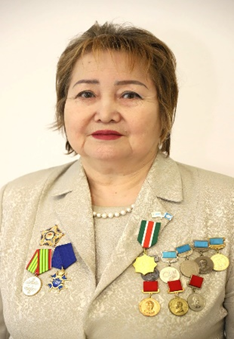
Abdinov Rauan Sharipbaevich Head of the Marine Ecology Department of the Kazakh Research Institute of the Caspian Sea
Contact phone numbers: Email abdinov.r@gmail.com.r@gmail.comaddress: abdinov.r@gmail.com.тел+ 7-701-73786923 Author ID in Scopus 57211230461 Researcher ID Web of Science I-2003-2012 ORCID ID 0000-0001-9136-3269
|
Education, academic degree and title: In 2001 graduated from Zhetysu State University named after I. Zhansugurov, specialty 010900 "Ecology and Nature management", Taldykorgan. In 2002, he completed a Master's degree in Ecology at the Al-Farabi Kazakh National University. In 2015, he receiveda PhD degree. The training took place at the Kazakh National Technical University namedafter K. I. Satpayev. |
|
Research interests: Ecology, Environmental management, Toxicology, Agriculture, water resources, green technologies, multidisciplinary Earth Sciences |
|
|
Research grants for applied research programs: 1) 0115RK02484 Study of the current toxicological state of water bodies in the Ural-Caspian basin 2) BR10764915 Development of new technologies for the restoration and rational use of pastures (use of pasture resources) for the event: "Development of a resource-saving technology for creating a hay and pasture conveyor for the production of full-fledged feed and multicomponent pasture lands in semi-desert and desert zones of Kazakhstan" (2021-20232021-2023). 4) BR21881871 Development of new technologies for the restoration and rational use of pastures (use of pasture resources) for the event: "Development of a resource-saving technology for creating a hay and pasture conveyor for the production of full-fledged feed and multicomponent pasture lands in semi-desert and desert zones of Kazakhstan" (2023-20252023-2025). 5) Study of abnormal growth and development of prostrate barnyak and ways to overcomeit (2023-2024). 6) BR22883585 Development of effective technologies for increasing the productive potential and rational use of pastures for the event: "Development of effective technologies for the cultivation of arid plants that are promising for improving pastures in semidesert and desert zones of Kazakhstan "(2024-2026). 7) BR28713197 Caspian Center for Sustainable Innovation: scientific and academic promotion of alternative solutions for the region's transition to a greener future (2025-2027 гг). |
|
|
Professional activity: Professional experience: 21 years. since 2004-2021, lecturer (since 2020и., acting Associate Professor) of the Department of Ecology, Atyrau University named after Kh.Dosmukhamedov (AU); from 23.08.05 – 30.08.09 representative of the company "KC NEDRA" LLP in Atyrau; from 28.08.2012-23.08.2015-Head of the Department of Scientific Research Coordination of the AU; from 23.08.2015-01.09.2016-Director of the Department of Development Strategy and Information Technologies of the AU. from 01.09.2016-04.08.2017-Head of the Department ecocampus developmentof the Ecocampus Development Department; from 04.08.2017-01.09.2020 Dean of the Faculty of Natural and Agricultural Sciences of the University from 02.11.2020 -10.02.2025 Director of the Research Institute "Ecology, Bio-and Nanotechnologies" of the University. Since 11.02.2025-Head of the Department of Science and Commercialization of the Kazakh University of Technology and Business named after K. Kulazhanov, Astana.Astana. from 16.16.2025-01.08.2025 Director of the Research Institute "Ecology, Bio-and Nanotechnologies" of the Academy of Sciences. since 25.09.2025-to this day Head of the Department of Marine Ecology of the Kazakh Research Institute of the Caspian Sea.
|
Taught courses: Responsible consumption and production within the framework of the Sustainable Development Goals. Land resources and their rational use. Rational use of natural resources. Global monitoring systems. Environmental safety management systems. Environmental protection and nature management systems. Global ecology and modern biosphere processes. Nature protection and fundamentals of rational use of natural resources. Environmental protection management systems. |
|
Applications:References: The list of works includes more than 30 publications. 11. Behavior of water and its solutions in alternating electromechanical fields. IVInterd.scientific practice conferenceof young scientists. КазНУAl-Farabi Kazakh National University. 21-22April 21-22. 2004. Abdinov R. Sh., Mukhamedieva A. G. 2. Esenamanova M. S., Tynybaev B. G. Abdinov R. Sh. Assessment of industrial and household waste pollution in Atyrau region. Proceedings of the scientific and practical conference "State of ecosystems of the Caspian region: problems and prospects". 2005. 3. Saparov A. Z., Tynybaev B. G., Abdinov R. Sh. Hygienic assessment of soil contamination in the oil and gas region of Atyrau region. Proceedings of the scientific and practical conference "State of ecosystems of the Caspian region: problems and prospects". 2005 4. Abdinov R. Sh., Nurkeev S. S., Metaxa G. P., Silvestri R. Processing of solid household waste by decomposition of water with activated aluminum. Scientific and technical support of mining production. Proceedings. Volume 81. 2011-pp. 236-239. 5. Abdinov R. Sh., Nurkeev S. S., Silvestri R., Metaxa G. P. Obtaining biologically active solutions to increase the rate of methane release from solid household waste. Pech. "Education and Science of the XXI century". 17-25October 17-25, 2011 Bulgaria., - p. 63-68. 6. Abdinov R..Sh., Nurkeev S..S., Silvestri R.R. "Modeling of Processes of Decomposition of Organic Compounds of Municipal Solid Wastes in Cross Electromechanical Fields". Eurasian Chemico-technological journal. V.3, Number 3-4, 2011. –P. 235-239. https://doi.org/10.18321/ectj89 7. Abdinov R. Sh., Nurkeev S. S. Methodology for studying the properties of solid household waste during biodegradation in laboratory conditions. Proceedings of the International Conference" Forced industrial and innovative development in metallurgy, KazNTU, 2010, pp. 239-242. 8. Abdinov R. S. Analysis of the energy potential of the Karasai solid waste landfill in Almaty. 9th International ScientificPractice conf. "High Technologies, Research and Industry". SaintPetersburg, 2010, p. 11-14
. 9. Abdinov R. S. Current state of safe handling of solid household waste. KazNTU Bulletin. No. 6 (82) 2010.-p. 44-48.10 . Abdinov R. Sh., Nurkeev S. S., Silvestri R. Energy and environmental aspects of the use of biogas. International Conference "Colloids and Nanotechnology in Industry". Almaty. KazNTU, 2010, pp. 108-109.11 . Abdinov R. Sh. Environmental measures in the operation of landfills of solid household waste in Kazakhstan. Bulletin КазНУof Al-Farabi Kazakh National University. Geography series. No. 2 (35), 2012. - pp. 72-76. 12 . Esenamanova M. S., Esenamanova Zh.S., Abdinov R. Sh. Choice of the place of burial of radioactive waste. I International ScientificPractice conf. Current state and problems of engineering ecology, biotechnology and sustainable development", KazNTU, 2010, pp. 198-19 13. Nurkeev S. S., Kezembayeva G., Nurmakova S., Userbayeva A. T., Abdinov R. Sh. Investigation of the decomposition of organic waste to produce biogas using the method of planning experiments. International Forum."Engineering education and Science in the XXI century: problems and prospects". KazNTU, 2014.14 . Abdinov R. Sh., Metaksa G. P. Sposob pererabotki solid household waste. Innovative patent for an invention. №25738. Application No. 2011/0550. 1 15. Nurkeev S. S., Abdinov R. Sh., Metaksa G. P. Method of solid household waste processing. Innovative patent No. 2012/0433. 1 16. Bokova E. B., Kamieva T. N., Abdinov R. Sh. Current state of biodiversity of the Ural-Caspian basin. International scientific practice conf. Conservation of biological resources of the Caspian Sea. 18-19September 18-19. 2014. Astrakhan. AGTU Publishing House. 2014.-pp. 51-54. 17 . Tulemisova G. B., Amangosova A. G., Abdinov R. Sh. Investigation of the content of heavy metals in reservoirs of the Ural-Caspian basin. Between.journal of Experimental Education, No. 12, 2015. Part 3. International Conference Basic research. Israel. Tel Aviv. 16-23October 16-23, 2015-p. 405-408. 18. Tulemisova G. B., Amangosova A. G., Abdinov R. Sh. Investigation of the content of heavy metals in water bodies of the Ural-Caspian basin. North-eastern Caspian Sea. Between.Journal of Applied and Fundomental Research, No. 12, 2015. Part 10. Moscow:-P.1900-1904.. 19. Tulemisova G. B., Amangosova A. G., Abdinov R. Sh. Naukenov M. J. Content of toxicants in bottom sediments of reservoirs of the Ural-Caspian basin. International Journal of Experimental Education. - 2016. - No. 7. Moscow: - pp. 125-128. 20. Daulbaeva R. A., Tulemisova G. B., Abdinov R. Sh., Zhalmakhanova M. K. State of atmospheric air in Atyrau. Between.journal of experimental education. №9. 2016. Part 1. Moscow: - pp. 59-63. 21. Tulemisova G. B., Abdinov R. Sh., Batyrbaeva G. U., Kabdrakhimova G. Zh., Mustafina A. Zh., Current state of hydrochemical regime of rivers of the Ural-Caspian basin. Proceedings of the National Academy of Sciences of the Republic of Kazakhstan, Chemistry and Technology Series, Volume 1, Number 421 (2017), pp. 96-100. 22.Tulemisova G. B., Abdinov R. Sh., Batyrbaeva G. U., Kabdrakhimova G. Zh., Mustafina A. Zh. Hydrochemical indicators of the water areas of the North-eastern Caspian Sea. Proceedings of the National Academy of Sciences of the Republic of Kazakhstan, Chemistry and Technology Series, (421), January – February 2017, pp. 109-115. 23. Tulemisova G. B., Kabdrakhimova G. Zh., Iskakova G. B. Ecological state of the rivers of the Zhaiyk-Caspian basin. Bulletin of the Kazakh-German University, No. 1 (8) 2017,pp.210-214 . Murzagaliyev S., Abdinov R. Analysys of Technologies for cleaning Domestic and Industrial Effluents at the Karabatan Area. Bulletin of AtSU named after H..Dosmukhamedova, No. 4 (47), December, 2017,pp.154-158 25. Тулемисова Г.Б., Амангосова А.Г., Абдинов Р.Ш., Кабдрахимова Г.Ж., Батырбаева Г.Л., Джанзакова Б.С., Искакова Г.Б. Жайық-Каспий бассейінің замануи токсикологиялық жағдайы. Proceedings of the International Scientific and PracticalConference"Actual problems of biotechnology, ecology and physico-chemical biology". Almaty, 6-7 April 6-7, 2017, pp.126-127 26. Tulemisova G.B., Amangosova F., Kabdrakhimova G., Orynbasarova A. Hydrochemical conditions of water dodies of the Ural-Caspian basin. European journal of Natural History. No. 1, 2018, pp.7-13. 27 . Tulemisova G. B., Abdinov R. Sh. Toxicology. Monograph.- Atyrau: "Kh.Досмұхамедов атындағы АМУ Баспа орталығы» 2018. -165 б. 28. Карамурзиева Ж.Ж., Абдинов Р.Ш.Материктер мен мұхиттардың географиялық номенклатурасы. Monograph. Monograph. - Atyrau: "Kh.Досмұхамедов атындағы АМУ Баспа орталығы» 2018. -37 б. 29. Бимырза О., Абдинов Р.Ш. Атырау қаласының кәріз жүйелерінің қазіргі жағдайы. Bulletin АтГУof Kh AtSUДосмухамедова, №1(48), март, 2018, -С.150-154. 30. Шекебайқызы Ш., Абдинов Р.Ш. Атырау облысының тұрақты дамуы. Bulletin АтГУ of Kh AtSU.Досмухамедова, №1(48), март, 2018, -С.172-180. 31. Mukhambetov B., Kabiev E., Abdinov R.Studying the effect of preplanting tillage on the germination and forage productivity of Kochia prostrate in the northern desert of Kazakhstan. International Scientific Conference «AGRITECH-2019: Agribusiness, Environmental Engineering and Biotechnologies». 20–22 June 2019, Krasnoyarsk, IOP Conf. Series: Earth and Environmental Science 315 (2019) 052037, -P.1-4. https://doi.org/10.1088/1755-1315/315/5/052037 32. Yessenamanova, M.S., Yessenamanova, Zh.S., Tlepbergenova, A.E., Abdinov, R.Sh., Ryskalieva, D.K. Desertification assessment of the territory of Atyrau region. IOP Conference Series: Earth and Environmental ScienceVolume 421, Issue 6, 7 January 2020, Номер статьи 0620052nd International Scientific Conference on Agribusiness, Environmental Engineering and Biotechnologies, AGRITECH-II 2019; Krasnoyarsk; Russian Federation; 13 November 2019 до 14 November 2019; Код 156846. https://doi.org/10.1088/1755-1315/421/6/062005 33. Tulemisova G.B., Amangosova F., Abdinov R., Oralova A.K. Hidrochemical conditions of water bodies of thr Zhaiyk-Caspian Basin Печ. SSRG International Journal of Applied Chemistry(SSRG-IJAC) - Volume 6 Issue 3, Sep-Dec. 2019. - P. 6-12. 34. Vorobyev A. E., Abdinov R. Sh. Historical past, current state and prospects of the oil industry of Kazakhstan. Bulletin АтГУ of Kh AtSU.Dosmukhamedova, No. 4 (55), December, 2019,pp.184-201.35 . Mukhambetov B, Abdinov R, Didenko I, Zamzamova N and Bogdanova D. A study of the productivity of alfalfa with melilot grass mixture and methods for developing their layer in the Caspian plain on irrigation. IOP Conference Series: Earth and Environmental Science, 2020, 548(7), 072009. https://doi.org/10.1088/1755-1315/548/7/072009 36. Vorob'ev A. E., Abdinov R. Sh., Shchesnyak K. L. Natural and technogenic features of arsenic contamination of natural waters. Bulletin of AtU named after Kh.Dosmukhamedov, №3(58), 2020, -P. 139-147.37. Mukhambetov B., Abdinov R. Varieties of sweet clover of the Caspian region-Arkas, Saraychik, Honey. Collection материалов of materials Intern.RPC "Actual problems of agricultural science in the context of adaptation to global climate change". (17-18 июня 2021 года). -С.402-408 38. Mukhambetov B., Abdinov R., Tauova N., Didenko I., Nurgaliyeva G. Melilot of the Caspian region and prospects of their conveyor use. IOP Conf. Series: Earth and Environmental Science 848 (2021) 012179. Doi:10.1088/1755-1315/848/1/012179. 39. Kozlovskiy A.L., Egizbek K., Zdorovets M.V., Abdinov R.S., Kadyrzhanov K.K. Study of structural features and phase transformations in nanocomposites of Fe2O3@NdFeO3 type. Journal of Materials Science: Materials in Electronics. Volume 32, Issue 16, Pages 21237-21247, August 2021. DOI 10.1007/s10854-021-06626-7 40. Kozlovskiy A.L., Zagrebova A.S., Abdinov R.Sh., Kenzhina I.E., Zdorovets M.V. A study on the applicability of nife2o4 nanoparticles as the basis of catalysts for the purification of aqueous media from pollutants . Catalysts, Volume 11, Issue 11, November 2021,Номер Article number 1393 DOI: 10.3390/catal11111393 41. Tulemisova G. B., Abdinov R. Sh., Amangosova A. G., Galimova N. Zh., Latipova D. E. Content of heavy metals in reservoirs of the Ural-Caspian basin. Actual problems of biodiversity and biotechnology. Proceedings of the International Scientific and Practical Conference. Astrakhan, November 2, 2021-pp. 96-103. DOI 10.21672 / 978-5-9926-1348-3-096-103 42. Tulemisova G.*, Abdinov R., Amangosova A., Batyrbaeva G. Study Of The Bottom Sediments Of Reservoirs Of Ural-Caspian Basin. News Of the national academy of sciences of the republic of Kazakhstan. Series of geology and technical sciences. Volume 1, Number 451 (2022), 126-134 https://doi.org/10.32014/2022.2518-170X.149 43. Mukhambetov B., Musaeva A. A., Shambilova G. K.A method for protecting clay and heavy loamy soils from salinization and irrigation when growing forest and fruit crops. Patent for invention No. 35467. 2022. Заявка 2020/0794.1 44. Kayrat K. Kadyrzhanov, Artem L. Kozlovskiy, Kamila Egizbek, Inesh E. Kenzhina, Rauan Sh. Abdinov and Maxim V. Zdorovets. Study of Corrosion Mechanisms in Corrosive Media and Their Influence on the Absorption Capacity of Fe2O3/NdFeO3 Nanocomposites. Nanomaterials 2022, 12, 2302. https://doi.org/10.3390/nano12132302. 45. Mukhambetov, B., Abdinov, R., Alzhanova, R., Kadasheva, Zh. Growth and development of Kochia prostrate (L.) Schrad in the extraordinary year in the north desert of Atyrau region in Kazakhstan// IOP Conference Series: Earth and Environmental Science, 2020, 548(7), 072037. 46. Mukhambetov B., Abdinov R., Kadasheva Zh., Doskaliyeva S., Kabiyev Y. Soil cultivation efficiency in pasture management of the arid zone of Central Asia and Kazakhstan//IOP Conference Series: Earth and Environmental Science, 2021, 839(2), 022029 47. Мухамбетов Б., Абдинов Р.Ш., Кадашева Ж.К., Кабиев Е.С. Каспий маңы тұзды жерлерінде суармалы жайылымдар құру // Ғылым және білім. No. 3-3 (68) 2022. 48. Mukhambetov B., Abdinov R., Kadasheva Zh., Kabiev E. Creation of irrigated cultural pastures in the saline lands of the Caspian region. Kormoproizvodstvo, No. 1, 2022 ISSN 1562-0417 49. Kadasheva, Z., Mukhambetov, B., Abdinov, R., Kabiyev, Y., Meranzova, R. Studying dwarfism in Kochia Prostrata growth on saline lands of the Northern Caspian desert, News of the National Academy of Sciences of the Republic of Kazakhstan, Series of Geology and Technical Sciences, 2024, 1(461), рр 143–154 50. Mukhambetov B., Nasiyev B., Kadasheva Zh., Abdinov R., Meranzova R., 2024 Adaptability of Kochia Prostrata (L.) Schrad and Camphorosma Monspeliaca agricultural ecosystems on saline lands of the Northern Caspian desert. News of the National Academy of Sciences of the Republic of Kazakhstan, Series of Geology and Technical Sciences, Volume 4. Number 466 (2024), 197–208 https://doi.org/10.32014/2024.2518-170X.435 51. Mukhambetov Bolat., Nasiyev Beybit., Kadasheva Zhanar., Abdinov Rauan., Zhadyra Zhanabaeva., Vladimir Shibaikin. Features of cultivation of barnyak prostrate in the northern desert of Western Kazakhstan. // are under review in the International Journal of Agriculture and Biosciences. https://www.scopus.com/sourceid/21101162543 52. Kadasheva Zh. K., Mukhambetov B., Abdinov R. Sh. Izuchenie adaptivnykh i produktivnykh svoystv Kamphorosma monspeliiskoi (Camphorosmeta monspeliacae) v pochvenno-klimaticheskikh usloviyakh Atyrau oblasti [Study of adaptive and productive properties of Camphorosma monspeliacae in soil and climatic conditions of Atyrau region]. конф. ЗКАТУ имени Zhangir Khan WKATU Conference, April 10, 2025. 53. Mukhambetov B., Abdinov R. Sh., Kadasheva Zh. K., Aleshova A. A., Mukhamedin A. B. Patent for utility model "Method of cultivationKochia of prostrate barnyak (Kochia prostrata (L.) Schrad.)" No. 10221 dated 21.02.2025 54. Kadasheva Zh. K., Mukhambetov B., Abdinov R. Sh. Use of Camphorosm of Montpellier (camphorosma monspeliaca) for restoration of biodiversity and productivity of degraded pastures in arid regions of Kazakhstan / / Gylym zhane bilim. – 2025. – №1-2(78). – Vol. 2. - pp. 35-43. DOI 10.52578/2305-9397-2025-1-2-35-43 URL:https://ojs.wkau.kz/index.php/gbj/issue/view/99/291 55. Mukhambetov, B., Nasiyev, B., Abdinov, R., Kadasheva, Z., Mamyrova, L.Influence of soil and climatic conditions on the chemical composition and nutritional value of Kochia prostrata feed in the arid zone of Western Kazakhstan / B. Mukhambetov [and etc.] // Caspian Journal of Environmental Sciences. – 2023. – Т. 21. – №. 4. – С. 853-863 |
|
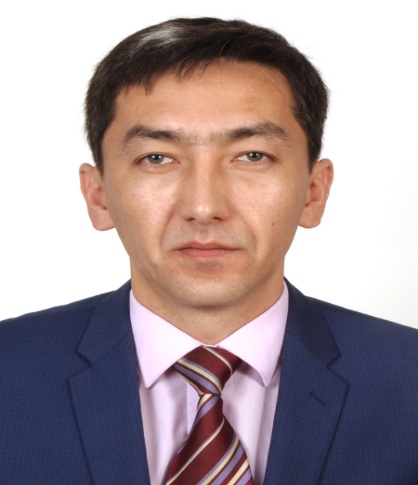
Jexenov Makhambet профессор-исследователь Contact: E-mail: dmk1358@mail.ru; Mobile phone: +7-778-9457349 Author ID в Scopus ………. Researcher ID Web of Science ……….. ORCID ID 0000-0002-1741-3931 Researcher ID in Publons ………….. |
Education, Academic Degree, and Title: In 1979, he graduated from the Guryev Pedagogical Institute, Faculty of Physics and Mathematics, with a specialization in Physics Teaching. In 1985, he completed his studies at the Kazakh Polytechnic Institute with a degree in Mining Engineering and Geology, and in 1990 — the Special Faculty of Ecology at Leningrad State University. From 1997 to 1998, he was a postgraduate researcher at the Moscow State Pedagogical Institute. In 1998, he defended his PhD dissertation for the degree of Candidate of Geographical Sciences on the topic: “Ecological and Geochemical Features of the Northeastern Part of the Caspian Lowland” at the Moscow State Pedagogical Institute. He is a Corresponding Member of the Academy of COAPEBUR in the “Ecology” section, a member of the National Academy of Mining Sciences of the Republic of Kazakhstan, Professor, and Honored Worker of the Ecological Sector of the Republic of Kazakhstan. He holds a certificate of accreditation from the Ministry of Science and Higher Education of the Republic of Kazakhstan as a subject of scientific and/or scientific-technical activity. He is the author of four monographs related to the electron paramagnetic resonance of oils in Western Kazakhstan, ecology, chemistry, and environmental protection technologies. He holds four authorship certificates, three preliminary patents, one patent, and one innovation patent. He is a specialist in ecology, gas purification, and waste processing in the oil and gas industry. His scientific interests include the development of innovative technologies for the utilization of hydrogen sulfide-containing gas emissions and the purification of petroleum gases using efficient technologies. M.K. Jexenov has authored more than 100 publications, including 8 articles indexed in Scopus with percentiles ranging from 27% to 41%, and 8 articles in Web of Science journals recommended by the Committee for Quality Assurance in Science and Higher Education of the Ministry of Science and Higher Education of the Republic of Kazakhstan.
|
|
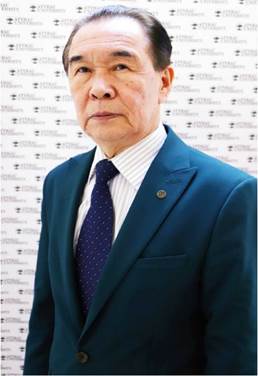
Yessenamanova Zhanar Sanakovna
Professor of the Department of Ecology Contact: zhanyessen@mail.ru; zh.esenamanova@asu.edu.kz Mobile phone: +7-775-562-03-33 Author ID в Scopus 57214148506 Researcher ID Web of Science X-3420-2018 ORCID ID https://orcid.org/0000-0003-3868-4092 The Hirsch Index of Scopus is 5 |
Education, academic degree and title: In 1991, she graduated from the Moscow Geological Exploration College with a degree in Hydrogeology and Engineering Geology. In 2003, she graduated from Dosmukhamedov Atyrau State University. Specialty "History and Geography", qualification "Teacher of history and Geography". In 2005, she graduated from Yesenov Aktau State University, majoring in 550950- Applied Ecology with a Master's degree in Engineering and Technology. And in 2011 She completed her PhD studies at K.Satpayev Kazakh National Technical University with a degree in 6D060800 – Ecology, and defended her doctoral thesis in the same year. |
|
Research interests: geoecology, environmental education; social ecology and sustainable development; environmental law; environmental monitoring, recycling of secondary raw materials. |
|
|
Research grants for applied research programs: 1) Participated in the scientific and research project "Biogeochemical assessment of landscapes of oil fields in Kurmangazinsky district", in 2018-2022 with the financing of Economative LLP, as a performer, senior researcher 2) Participated in the intra-university project "Development of hydroponics for the formation of practical skills of the STEM classroom", in 2023, in as a performer. |
|
|
Professional activity: Professional experience 34 years, of which scientific and pedagogical experience 19 years. -1991-1998 - Hydrogeology technician at Atyrau Hydrogeology JSC. 1999-2005 teacher of history and geography at secondary school No. 18 in Atyrau. -2005-2006 worked as a methodologist at Atyrau Agricultural and Technical College. - from 2006 to the present, lecturer, Professor of the Department of Ecology
|
Courses taught: Geoecology, environmental monitoring, Environmental impact assessment and background environmental studies, Global monitoring systems, Fundamentals of Environmental Policy in Kazakhstan, Environmental safety systems |
|
Textbooks: biogeochemistry and ecotoxicology, Almaty, "Evero", 2015, 246 PP., biogeochemistry and ecotoxicology. Almaty, "Evero", 2015, 237 pp., Fundamentals of Health and Safety. Ewar Trade LLP, 2020-204 p, fundamentals of life safety. LLP "Lantar trade", 2020, 229 P.
Publications: The list of works includes more than 60 publications, of which are in the Scopus database.: 1. Yessenamanova, M., Yessenamanova, Z., Tlepbergenova, A., Moldir, M., Nurgul, B. Optimization of Acidity and Electrical Conductivity in Hydroponic Vegetable Production: A STEM Educational Perspective. International Journal of Design and Nature and Ecodynamics, 2023, 18(6), страницы 1517–1524 Scopus (процентиль-54), автор для корреспонденции 2. Ryskalieva, D., Yessenamanova, M., Koroleva, E.G., Yessenamanova Zh., Tlepbergenova A., Amanzholkyzy, S., Turekeldiyeva, R. Monitoring Study of the Effect of Atyrau Evaporation Fields on the Content of Hydrogen Sulfide in the Air. International Journal of Sustainable Development and Planning, 2022, 17(6), страницы 1789–1796, Scopus (процентиль-53), автор для корреспонденции 3. Nursaule, T., Yessenamanova, M., Kossarbay, K., Yessenamanova, Zh., Tlepbergenova, А. Batyrbayeva, G., Maden, S. Chemical Analysis of Groundwater and Wastewater in the Area of the Tengiz Deposit of the Atyrau Region of the Republic of Kazakhstan. International Journal of Design and Nature and Ecodynamics, 2022, 17(5), страницы 691–700 Scopus (процентиль-54), автор для корреспонденции 4. Yessenamanova, M.S., Sangajieva, L.K., Yessenamanova, Z.S., Tlepbergenova, А.Е. Migratory activity at the landfill site of microelements of the Caspian depression. News of the National Academy of Sciences of the Republic of Kazakhstan, Series of Geology and Technical Sciences, 2020, 1(439), с. 155-163, Scopus (процентиль-42), автор для корреспонденции ҚР ҰӘҚ ғылым және жоғары білім саласындағы сапаны қамтамасыз ету Комитеті ұсынған журналдарда: 1. А.Tlepbergenova, M. Yesenamanova, Zh. Yesenamanova. Development of hydroponics for the formation of practical skills of the STEM education subjects. Bulletin of National Academy of sciences of the Republic of Kazakhstan ISSN 1991-3494 Volume 6. Number 412 (2024), 232–224 https://doi.org/10.32014/2024.2518-1467.866 2. M. Yessenamanova, Zh. Yessenamanova, A. Tlepbergenova, M. Маkhambet, N. Baitemirova. The relationship between the values of acidity and electrical conductivity in a hydroponic installation. Reports of the National Academy of sciences of the Republic of Kazakhstan ISSN 2224-5227 Volume 3. Number 347 (2023), 7–19 https://doi.org/10.32014/2023.2518-1483.220 3. M. Yessenamanova, Zh. Yessenamanova, A. Tlepbergenova, M. Маkhambet, N. Baitemirova. The relationship between the values of acidity and electrical conductivity in a hydroponic installation. Reports of the National Academy of sciences of the Republic of Kazakhstan Volume 3. Number 347 (2023), 7–19. ISSN 2224-5227 https://doi.org/10.32014/2023.2518-1483.220 4. D. Ryskalieva , M. Yessenamanova , S. Syrlybekkyzy, Zh. Yessenamanova , А.Е. Tlepbergenova , N.R. Tauova L. Sangadzhieva. Monitoring of hydrogen sulfide content in winter in the observation points of Atyrau city. Вестник КазНУ имени Аль-Фараби, Экология сериясы. №3 (72). 2022 ISSN 1563-034Х; ISSN 2617-7358 https://doi.org/10.26577/EJE.2022.v72.i3.04 5. M. Yessenamanova, A. Anuarbekova, D. Ryskalieva, Zh. Yessenamanova, А.Е. Tlepbergenova Analysis of emissions of pollutants into the atmosphere for the facilities of tengizchevroil llp in Atyrau region. Reports of the National Academy of sciences of the Republic of Kazakhstan. ISSN 2224-5227 Volume 1, Number 341 (2022), 84-93 6. Yessenamanova M. S., Davaeva Ts. D., Sangadzhieva L. Kh., Tsombueva B. V., Sangadzhieva O. S., Yessenamanova Zh. S., Tlepbergenova The content and distribution of trace elements in soils during the development of oil fields in the Republic of Kalmykia. News of the national academy of sciences of the Republic of Kazakhstan. Series chemistry and technology. ISSN 2224-5286, Volume 1, Number 445 (2021), 14 – 21 https://doi.org/10.32014/2021.2518-1491.2 7. Yessenamanova M.S., Yessenamanova Zh.S., Tlepbergenova A.E., Abdinov R.Sh., Ryskalieva D.K. Desertification assessment of the territory of Atyrau region. IOP Conference Series: Earth and Environmental Science, 2020, 421(6), 062005 8. M S Yessenamanova, G Kulzhanova, A E Tlepbergenova, Zh S Yessenamanova and G Batyrbayeva. Environmental monitoring of water quality in the interstate Ural river. Journal of Physics: Conference Series, 2021. 1889 032007 9. Yessenamanova M.S., Tlepbergenova А.Е., Zhaksieva G., Sangajieva L.Kh., Bekesh S., Yessenamanova Zh.S. Analysis of the hydrochemical composition of salt brins of lake Inder. News of the National Academy of Sciences of the Republic of Kazakhstan, Series Chemistry and Technology, 2020, 1(439), с. 16 – 14 10. Yessenamanova M.S., Shukbarov A., Zaitsev V.F., Melnik I.V., Yessenamanova Zh.S., Tlepbergenova А.Е. Estimation of oil products content in soil and water objects in the area of location of sludge dressers on the coast of the Volga river. News of the National Academy of Sciences of the Republic of Kazakhstan, Series Chemistry and Technology, 2020, 1(439), с. 29 – 36 |

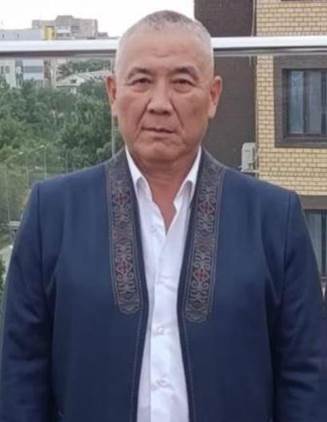
Denis Alexandrovich Skorobogatov is a researcher Contacts: Email: mail_box_02@mail.ru; Mobile phone: +7 701 553 40 02 Author ID in Scopus ----- Researcher ID in Web of Science ----- ORCID 0000-0002-7454-6001 Researcher's ID in publications ----- |
Education, academic degree and title: Graduated from the Atyrau Institute of Oil and Gas in 2006, specializing in drilling oil and gas wells, qualified as a mining engineer. His research interests are related to the development of innovative technologies in the field of utilization of hydrogen sulfide-containing gas emissions and purification of petroleum gases using effective technologies.
|
|
|
Research interests: ecology, rational use of natural resources, environmental protection, petrochemistry, interdisciplinary geosciences |
||
|
Research grants for applied research programs: 1) Researcher of the scientific project "Development of technology for purifying hydrogen sulfide-containing gases by compression with binary solutions" (2022-2025). 2) As a researcher, an application was submitted for grant funding from the Ministry of National Economy of the Republic of Kazakhstan in 2023-2025 on the topic "Development of technology for purifying process gases of field installations from acidic components by hydrodynamic compression of gases and absorbent binary solutions". 3) Research Associate of the grant financing of the Ministry of National Economy of the Republic of Kazakhstan 2023-3025 on the topic "Development of technology for cleaning process gases of field installations from acidic components by hydrodynamic compression of gases and absorbent binary solutions". 4) Is the executor of the project of the Ministry of Education and Science of the Republic of Kazakhstan and JSC "Science Foundation": - "Intensification of the process of recultivation of disturbed lands during open-pit mining due to hyperaccumulative plants and mycorrhizae" (2023-2025). -"Production of bioprotein based on natural gas" JSC "Science Foundation" - as part of a grant for the commercialization of scientific research (2022-2024). |
||
|
Professional activity: Professional experience of 21 years. 2004 - 2015 Director of IP "Skorobogatov D.A.". 2015 – 2025 Director of LLP "Emba Petroleum Project"
|
Subjects taught: - |
|
|
Publications The list of scientific and research publications is 2: 1. Makhambet Jexenov; Yerkin Bektai; Denis Skorobogatov; Meruert Bektayeva; Daniyar Jexenov PURIFICATION OF GROUNDWATER FROM RADIOACTIVE ISOTOPES AT NUCLEAR TEST SITES IN ATYRAU REGION OF KAZAKHSTAN. Proceedings of the 22nd International Interdisciplinary Scientific Geoconference SGEM 2022.https://doi.org/10.5593/sgem2022/4.1/s16.01 2. Makhambet Jexenov; Foat Ismagilov; Yerkin Bektai; Denis Skorobogatov; Meruert Bektayeva - A BLOCK UNIT FOR THE PURIFICATION OF REFINING GAS FROM MERCAPTAN-CONTAINING OIL. Proceedings of the 22nd International Interdisciplinary Scientific Geoconference SGEM 2022. https://doi.org/10.5593/sgem2022/1.1/s06.070 |

|
Tauova Nursaule RaulovnaPhD, Associate Professor E-mail: tauova76@mail.ru
|
Education, Academic Degree and Title: |
||
|
Research Interests: |
|||
Textbooks:Author of the following educational publications:
Multimedia electronic textbooks:
|
|||
|
Examples of publications: 1. B.Mukhambetov, R.Abdinov, I.Didenko, G.Nurgalieva, N.Tauova. “Caspian sweet clover and prospects for its conveyor use”. V Scientific and Practical International Conference AGRTECH-in-2021: Agribusiness, Biotechnology, Environmental Engineering, June 16-19, 2021, Krasnoyarsk-Volgograd, Russia/Tashkent-Bukhara, Uzbekistan, Percentile-18. 2. M.S.Yesenamanova, R. Salikhov, A.E. Tlepbergenova, J.S. Yesenamanova and N.R. Tauova. "Forecast of solid household waste generation in Atyrau region". II International Conference ICMSIT-II-2021: International Conference on Metrological Support of Innovative Technologies, March 4, 2021, St. Petersburg | Krasnoyarsk, Russia. The percentile is 18. 3. N.Tauova, M.S.Yesenamanova, K.Kozhakhmet, A. R. Kushakov, A.Kalieva. The geological state of the stratigraphic complex of the Tengiz deposit. Proceedings of the National Academy of Sciences of the Republic of Kazakhstan, Series "Geology and Technical Sciences", 5 (455), September–October 2022, September-47. 4. Tauova, N., Yesenamanova, Z., Yesenamanova, M., Tlepbergenova, A., Abilgazieva, A., Sakparova, A. Technology of production of grouting chloride of resistant drilling mud based on sulfur composite material. Tauova, Z., Yesenamanova, M., Tlepbergenova, A., Abilgazieva, A., Sakparova, A. //Bulletin of MGTU GA. Proceedings of the National Academy of Sciences of the Republic of Kazakhstan, Series "Geology and Technical Sciences", 2023, 2023(6), pages 196-207, number of citations for 2022 — 1.8, rating-41. 5. Tauova Nursaule, Mansia Yesenamanova, Kozhakhmet Kosarbai, Zhanar Yesenamanova, Anar Tlepbergenova, Samal Shamshedenova, Gaukhar Batyrbayeva, Sanshe Maden. Chemical analysis of groundwater and wastewater in the area of the Tengiz deposit of the Atyrau region of the Republic of Kazakhstan. International Journal of Design, Nature and Ecodynamics, 2022, 17(5), pp. 691-700, citation rating 2022 — 2.0, Proentil-57. 6. Yessenamanova M.S., Anuarbekova A., Ryskalieva D., Kamelov A., Tauova N. Analysis of emissions of pollutants into the atmosphere at the facilities of Tengizchevroil LLP in Atyrau region. AIP Conference Proceedings, Preface: III International Conference on Science, Technology and Digital Education (ASEDU-III 2022), 2024, 2969(1), 050021. Krasnoyarsk, Russia. Publications in journals recommended by the committee to ensure the quality of Science and higher education of the Republic of Kazakhstan: 1. Tauova Nursaule, Kadyrgali Zhanar «Atyrau and the global greenhouse effect: climate analysis and prospects». M. Utemisov West Kazakhstan University. DOI: 10.37238/2960-1371.2960-138X.2025.99(3).143 ISSN 2960-1371 (print), 2960-138X, № 3(99)/2025. 2. Tauova N. R., Sarieva A.m., Berzhanova M., Sakparova A. "The study of extraterrestrial intelligence in the atmospheric air of Atyrau in the winter season". Scientific and technical and production magazine of Kazakhstan, ISSN 2227-4766, № 8 (244), 2025. 3. Tauova N. R."hydrological and hydrochemical regime and ecological and toxicological state of the Ural-Caspian basin". Bulletin of Natural Sciences, No. 2, June 2019. Semey, Shakarim State University. 4. Tauova N. R."environmental problems and protection measures of the Caspian Sea coast". Bulletin of Natural Sciences, No. 2, June 2019. Scientific journal No. 1 (85), 2019. Semey, Shakarim State University. |
|||
Professional Experience:Total work experience — 27 years, including 18 years in scientific and pedagogical work.
|

|
Tukhfatov Zhasulan Kasimuly — Candidate of Geological and Mineralogical Sciences.
Contact: E-mail: tukhfat@mail.ru; Mobile phone: +7-701 577 31 88 Author ID в Scopus 57219219081 Researcher ID Web of Science --- ORCID ID 0009-0007-3301-9997 Researcher ID in Publons --- |
Education, Academic Degree, and Title:
In 1987, he graduated from the Kazakh Polytechnic Institute named after V. I. Lenin with a degree in Drilling of Oil and Gas Fields, earning the qualification of Mining Engineer (Diploma No. RV 105790).
In 1993, he graduated from the same institute with a degree in Geology of Oil and Gas, earning the qualification of Mining Engineer-Geologist (Diploma No. UV 697377).
Candidate of Geological and Mineralogical Sciences.
Since 2022, he has been the Chairman of the Attestation Commission for the educational program “7M07202 – Petroleum Engineering” at Atyrau University of Oil and Gas named after Safi Utebayev.
He completed advanced training courses:
– at the Academy of National Economy under the Government of the Russian Federation (Moscow) under the program “Development of Oil and Gas Fields: Problems of Modeling and Enhanced Oil Recovery” (2001);
– at the Almetyevsk State Oil Institute (Republic of Tatarstan) on the topic “Development and Operation of Oil and Gas Fields” (2005).
Total work experience: 44 years.
Experience in the oil and gas industry: 27 years.
|
|
Research Interests: ecology, rational use of natural resources, environmental protection, petrochemistry, interdisciplinary Earth sciences.
|
|
|
Professional Experience:
1980–1987 — IGRE, Production Geological Association “Zapkazgeologia,” Ministry of Geology of the Kazakh SSR — worker, mechanic, driller’s assistant.
1987–1995 — Production Geological Association “Guryevneftegazgeologia,” North-Emba Oil and Gas Exploration Expedition, Kazakh Research Institute of Geological Exploration — drilling department engineer, senior drilling master, geologist.
1995–1998 — Joint Venture “Indergips,” LLP “Karbid” — workshop supervisor, company director.
1998–2004 — Oil and Gas Production Department “Zhayyqmunaygaz” — operator, dispatcher, shift supervisor, workshop and site supervisor, engineer-geologist, deputy head of the Central Research and Production Planning Department.
2004–2008 — Oil and Gas Production Department “Dossormunaygaz” — head of the geological department, chief geologist, deputy head for geology and field development.
2008–2010 — Research Institute “Kaspimunaygaz” LLP — head of the oil field preparation sector.
From 2010 to the present — JSC “Embamunaigas,” Oil and Gas Production Department “Dossormunaygaz” — head of the geology and field development department. |
|
2.Direction
|
AYTEN ATEŞ Professor, Sivas Cumhuriyet University, Faculty of Engineering, Chemical Engineering Contact phone numbers: E-mail: aytenates1974@gmail.com Mobile: +905325155224 Author ID in Scopus 8842313200 Researcher ID Web of Science ADS-9758-2022 ORCID ID https://orcid.org/0000-0002-0806-4549 Researcher ID in Publons ADS-9758-2022 The Hirsch Index of Scopus is 15 Wos-14 |
Education, Academic Degree and Title:
|
|
|
Research interests: Engineering and Technology
|
||
|
Professional activity: Professional experience of 27 years.
|
Courses taught: Heterogeneous Catalysis, Physical Chemistry, Process Optimization, Chemical Reaction. |
|
|
Publications:
|
|
Dyussupov Yerbolsyn Senior lecturer of the "Ecology" department Contact phones: Email: Erbolsin@mail.ru; Mobile.: +7-702-2520455
|
Education, academic degree and title: Average 2008 – 2012 Atyrau Agricultural and Technical College Specialty: 1509000 "Ecology and environmental protection activities" qualification: technician-technologist
Higher education in 2013 – 2016 Atyrau Institute of Oil and Gas Specialty: 5B073100 "Life Safety and Environmental Protection" qualification: Bachelor of Engineering and Technology
Higher education (Master's degree) 2016 - 2018 Atyrau State University named after H.Dosmukhamedov Specialty: 6M060800-Ecology |
|
Scientific interests: Environmental monitoring, geoecological study of the Atyrau region's soil cover, environmental education; background research; social ecology and sustainable development; Atmospheric air monitoring, PEC monitoring |
|
|
Scientific research: The program of air quality monitoring in Atyrau city limits and on the Western Esken in the area of location of UKPNiG "Bolashak".
The program for monitoring the quality of atmospheric air in the settlements of the Zhylyoy district, adjacent to the facilities of Tengizchevroil LLP, and on the border of its sanitary protection zone. |
|
|
Professional activity: Professional experience 15 years, of which scientific and pedagogical experience 7 years. - 2012 to 2017 February, Analytical Laboratory for Environmental Protection LLP position: specialist of the 1st category, Chemical Engineering Department. atmospheric air analysis and radiology - 2017 - 2020 at the Republican Scientific Research Center for Atmospheric Air Protection LLP position: Chemical Engineer - February 2020 to the present, Republican Scientific Research Center for Atmospheric Air Protection LLP position: Head of the Field Research Department - 2018-2025. Lecturer at the Department of Ecology. - 2023-2025. lecturer at the Department of "Belarusian Railways" |
Courses taught: (Russian and Kazakh languages), Environmental monitoring of atmospheric air, Industrial emissions and measurements from sources, Environmental research, and the course is taught in Russian and Kazakh languages. |
|
Textbooks: |
|
Yessenamanova Mansiya Dean of the Faculty of Natural Sciences Contact phone numbers: E-mail: myessenamanoma@gmail.com ; mansiya.73@mail.ru ; m.esenamanova@asu.edu.kz Mobile: +7-7781044533 Author ID in Scopus 5721414894 Researcher ID Web of Science X-3650-2018 ORCID ID https://orcid.org/0000-0002-5423-2857 Researcher ID in Publons X-3650-2018 The Hirsch Index of Scopus is 5 Wos-1 |
Education, Academic Degree and Title:
In 1998, she graduated with honors from Atyrau State University named after H. Dosmukhamedov with a degree in biology and chemistry. In the same year, she entered the postgraduate program at the same university. On December 30, 2003, at a meeting of the dissertation Council at the Almaty Energy Institute in Almaty, she defended her dissertation for the degree of Candidate of Technical Sciences in the specialty 03.00.16 - "Ecology" on the topic "Development of a method to reduce environmental pollution by radioactive waste in landfills and open storage areas". In 2011, she graduated from Atyrau State University named after Kh.Dosmukhamedov graduated with a degree in "Foreign Language: two foreign languages" and in 2020 Atyrau University of Oil and Gas with a degree in 5B073100 -Life Safety and Environmental protection. From February 2013 to February 2014, as the winner of the Bolashak International Scholarship of the President of the Republic of Kazakhstan, she completed an intensive English course and a teaching internship at the University of Northampton in England. Winner of the title "Best Teacher 2020" of the Ministry of Education and Science of the Republic of Kazakhstan. |
|
|
Research interests: environmental monitoring, natural sorbents, groundless cultivation methods
|
||
|
Research grants for applied research programs: She was the scientific supervisor of the scientific project "Biogeochemical assessment of the landscapes of oil fields in the Kurmangazinsky district" under an agreement with the organizations of "Economative" LLP to carry out research work for the period from 2018-2022, the intramural project "Development of hydroponics for the formation of practical skills in STEM education", She also participated in the scientific project of Kalmyk State University "Comprehensive analysis of accumulation and emission of polycyclic aromatic hydrocarbons and radionuclides in natural and man-made landshafts of arid territories". |
||
|
Professional activity: Professional experience of 34 years. • Atyrau City Hospital No. 2, nurse of the Department of Anesthesiology and Intensive Care and the Department of Hyperbaric Oxygenation (1991-1994); • English teacher at secondary school No. 18 named after Krupskaya (1998-2002) • Aktau State University named after Sh.Yesenov, Faculty of Engineering and Technology, Department of Applied Ecology, senior lecturer, since September 2004, Acting Associate Professor (since 2002). Since September 2002, Deputy Dean of the Faculty of Engineering and Technology for Educational Work, and from April 2003 to July 2005, Deputy Dean of Academic Affairs. • Dosmukhamedov Atyrau University, Faculty of Natural Sciences, Department of Ecology, Head of the Department from September 2005 to April 2025. • Dosmukhamedov Atyrau University, Dean of the Faculty of Natural Sciences since April 2025.
|
Courses taught: Fundamentals of Radiation Safety (the course is taught in Russian and Kazakh), Professionally oriented foreign language, Basic foreign language, Practical Basic Foreign language courses (the courses are taught in English). |
|
|
Publications: The list of works includes more than 100 publications, of which 23 articles are in the Scopus database. 1. Zhiyenkulova, L., Yessenamanova, M., Nurbayeva, F., Saparova, G., Koroleva, E.G. Hydrochemical Analysis of Salt Lakes in the Caspian Lowland of the Mangistau Region of the Republic of Kazakhstan. International Journal of Design and Nature and Ecodynamics, 2024, 19(5), 1815–1825. Scopus (процентиль-54), автор для корреспонденции 2. Zhiyenkulova, L., Yessenamanova, M., Jexenov, M., Koroleva, E.G., Nurbayeva, F. Ecological and limnological research of the sustainability of the ecosystem of the lake Inder. News of the National Academy of Sciences of the Republic of Kazakhstan, Series of Geology and Technical Sciences, 2024, 1(463), 111–127, Scopus (процентиль-42), автор для корреспонденции 3. Ryskalieva, D., Yessenamanova, M., Syrlybekkyzy, S., Koroleva, E.G., Izbassarov, A., Turekeldiyeva, R. Environmental Assessment of the Impact of Atmospheric Air Pollution with Hydrogen Sulfide on the Health of the Population of Atyrau, Republic of Kazakhstan. International Journal of Sustainable Development and Planning, 2023, 18(7), страницы 2199–2206, Scopus (процентиль-53), автор для корреспонденции 4. Yessenamanova, M., Yessenamanova, Z., Tlepbergenova, A., Moldir, M., Nurgul, B. Optimization of Acidity and Electrical Conductivity in Hydroponic Vegetable Production: A STEM Educational Perspective. International Journal of Design and Nature and Ecodynamics, 2023, 18(6), страницы 1517–1524 Scopus (процентиль-54), автор для корреспонденции 5. Ryskalieva, D., Yessenamanova, M., Koroleva, E.G., Yessenamanova Zh., Tlepbergenova A., Amanzholkyzy, S., Turekeldiyeva, R. Monitoring Study of the Effect of Atyrau Evaporation Fields on the Content of Hydrogen Sulfide in the Air. International Journal of Sustainable Development and Planning, 2022, 17(6), страницы 1789–1796, Scopus (процентиль-53), автор для корреспонденции 6. Tauova N., Yessenamanova M.S., Kozhakhmet K., Kushakov A.R., Kaliyeva A. Geological state of the stratigraphic complex of the Tengiz deposit. News of the National Academy of Sciences of the Republic of Kazakhstan, Series of Geology and Technical Sciences, 2022, 2022(5), pp. 249–265, Scopus (процентиль-42), автор для корреспонденции 7. Nursaule, T., Yessenamanova, M., Kossarbay, K., Yessenamanova, Zh., Tlepbergenova, А. Batyrbayeva, G., Maden, S. Chemical Analysis of Groundwater and Wastewater in the Area of the Tengiz Deposit of the Atyrau Region of the Republic of Kazakhstan. International Journal of Design and Nature and Ecodynamics, 2022, 17(5), страницы 691–700 Scopus (процентиль-54), автор для корреспонденции 8. Yessenamanova, M.S., Sangajieva, L.K., Yessenamanova, Z.S., Tlepbergenova, А.Е. Migratory activity at the landfill site of microelements of the Caspian depression. News of the National Academy of Sciences of the Republic of Kazakhstan, Series of Geology and Technical Sciences, 2020, 1(439), с. 155-163, Scopus (процентиль-42), автор для корреспонденции and there are 30 articles in journals recommended by the Committee for Quality Assurance in the Field of Science and Higher Education of the Ministry of Internal Affairs of the Republic of Kazakhstan. 1. А.Tlepbergenova, M. Yesenamanova, Zh. Yesenamanova. Development of hydroponics for the formation of practical skills of the STEM education subjects. Bulletin of National Academy of sciences of the Republic of Kazakhstan ISSN 1991-3494 Volume 6. Number 412 (2024), 232–224 https://doi.org/10.32014/2024.2518-1467.866 2. M. Yessenamanova, Zh. Yessenamanova, A. Tlepbergenova, M. Маkhambet, N. Baitemirova. The relationship between the values of acidity and electrical conductivity in a hydroponic installation. Reports of the National Academy of sciences of the Republic of Kazakhstan ISSN 2224-5227 Volume 3. Number 347 (2023), 7–19 https://doi.org/10.32014/2023.2518-1483.220 3. N.Tauova, M. Yessenamanova, K. Kozhakhmet, N. Kylyshbaeva, S. Cherkesova Engineering and geological studies of the tengiz deposit. Нефть и газ 2023 2 (134), 6-21 4. M. Yessenamanova, Zh. Yessenamanova, A. Tlepbergenova, M. Маkhambet, N. Baitemirova. The relationship between the values of acidity and electrical conductivity in a hydroponic installation. Reports of the National Academy of sciences of the Republic of Kazakhstan Volume 3. Number 347 (2023), 7–19. ISSN 2224-5227 https://doi.org/10.32014/2023.2518-1483.220 5. Д.К. Булханова, У.К. Бисенов, А.У. Утаубаева, М.В. Мамышева, M. Есенаманова, Г.Б. Алпамысова. Биологические особенности растений, произрастающих в пустынных и полупустынных районах Атырауской области на примере Гармалы обыкновенной (Peganum Harmala l.) и способы их адаптации к условиям окружающей среды. Вестник казахский национальный университет имени Аль-фараби, Серия биологическая, №2 (95). 2023 47-58. ISSN 1563-0218; ISSN 2617-7498 https://doi.org/10.26577/eb.2023.v95.i2.05 6. D. Ryskalieva , M. Yessenamanova , S. Syrlybekkyzy, Zh. Yessenamanova , А.Е. Tlepbergenova , N.R. Tauova L. Sangadzhieva. Monitoring of hydrogen sulfide content in winter in the observation points of Atyrau city. Вестник КазНУ имени Аль-Фараби, Экология сериясы. №3 (72). 2022 ISSN 1563-034Х; ISSN 2617-7358 https://doi.org/10.26577/EJE.2022.v72.i3.04 7. M. Yessenamanova, A. Anuarbekova, D. Ryskalieva, Zh. Yessenamanova, А.Е. Tlepbergenova Analysis of emissions of pollutants into the atmosphere for the facilities of tengizchevroil llp in Atyrau region. Reports of the National Academy of sciences of the Republic of Kazakhstan. ISSN 2224-5227 Volume 1, Number 341 (2022), 84-93 8. Yessenamanova M. S., Davaeva Ts. D., Sangadzhieva L. Kh., Tsombueva B. V., Sangadzhieva O. S., Yessenamanova Zh. S., Tlepbergenova The content and distribution of trace elements in soils during the development of oil fields in the Republic of Kalmykia. News of the national academy of sciences of the Republic of Kazakhstan. Series chemistry and technology. ISSN 2224-5286, Volume 1, Number 445 (2021), 14 – 21 https://doi.org/10.32014/2021.2518-1491.2 9. Yessenamanova, M.S., Bissenov, U.K., Nurgazy, K.S., Dyussegaliyev, M.Z., Makhambet, M. Physical and chemical properties of soils and plant biology of the territory of Atyrau region. AIP Conference Proceedings, 2021, 2402, 060002 10. Yessenamanova, M.S., Bissenov, U.K., Nurgazy, K.S., Dyussegaliyev, M.Z., Zamzamova, N. Analysis and characterization of the chemical composition of forage crops growing in Atyrau region. AIP Conference Proceedings, 2021, 2402, 060003 11. Yessenamanova M.S., Yessenamanova Zh.S., Tlepbergenova A.E., Abdinov R.Sh., Ryskalieva D.K. Desertification assessment of the territory of Atyrau region. IOP Conference Series: Earth and Environmental Science, 2020, 421(6), 062005 12. M S Yessenamanova, G Kulzhanova, A E Tlepbergenova, Zh S Yessenamanova and G Batyrbayeva. Environmental monitoring of water quality in the interstate Ural river. Journal of Physics: Conference Series, 2021. 1889 032007 13. Yessenamanova M.S., Tlepbergenova А.Е., Zhaksieva G., Sangajieva L.Kh., Bekesh S., Yessenamanova Zh.S. Analysis of the hydrochemical composition of salt brins of lake Inder. News of the National Academy of Sciences of the Republic of Kazakhstan, Series Chemistry and Technology, 2020, 1(439), с. 16 – 14 14. Yessenamanova M.S., Shukbarov A., Zaitsev V.F., Melnik I.V., Yessenamanova Zh.S., Tlepbergenova А.Е. Estimation of oil products content in soil and water objects in the area of location of sludge dressers on the coast of the Volga river. News of the National Academy of Sciences of the Republic of Kazakhstan, Series Chemistry and Technology, 2020, 1(439), с. 29 – 36 |
|
Koroleva Elena Senior Environmental Scientist (Ecology, Biogeography), Supervisor Faculty of Geography Moscow State Lomonosov University Contact phone numbers: E-mail: koroleva@cs.msu.ru Mobile: +7-9015315283 Author ID in Scopus 57195413246 Researcher ID Web of Science X-3650-2018 ORCID ID https://orcid.org/ 0000-0001-9004-4581 The Hirsch Index of Scopus is 10 Wos-6 |
Education, Academic Degree and Title:
In 1979, she graduated with honors from Lomonosov Moscow State University (specialty: "biogeographer, physico-geographer"); in 1984, she completed postgraduate studies at the Faculty of Geography of Lomonosov Moscow State University; in 1985, she defended her PhD thesis at Moscow State University on the topic " Effects of highway pollution on wildlife animal populations" (specialty 11.00.11 – environmental protection and rational use of natural resources (geographical sciences). Candidate of Geographical Sciences, Associate Professor. She completed research internships at Charles University (Prague, Czech Republic) and the Jülich Research Center (Germany). Awarded a Certificate of Honor from the Ministry of Education and Science of the Russian Federation (2014); winner of competitions for works contributing to solving the tasks of the Moscow University Development Program (2016,2017,2019, 2024) |
|
|
Research interests: general ecology and human ecology, medical geography, biogeography: monitoring, mapping and assessment of biological diversity and human health
|
||
|
Research grants for applied research programs: Scientific supervisor of the project "Integrated Environmental survey of the Korolev city district of the Moscow region" under an agreement with the municipal of city Korolev (2008-2009); co-executor of the regional project "Ecology of highways of the Moscow Region" (2012); co-executor of the RFFI project "Geography of Population Health in Russia: scientific and methodological foundations of assessment and forecasting" (2014) |
||
|
Professional activity: Professional experience of 38 years. Moscow State University, Faculty of Geography, Department of Biogeography, Researcher (since 1986), Senior Researcher (from 2001 to the present) 2003 - Visiting Scientist, National University of Singapore
|
Courses taught: "Human Ecology", "Medical geography with the basics of human ecology", "Environment and human health", "Biogeographic foundations of wildlife conservation", "Population ecology", “Urban Ecology”. Expert of the federal textbooks "Ecology", "The Environment", "The Living World" and geographical atlases (2014-2017) |
|
|
Publications: The list of works includes more than 150 publications, of which 24 articles are in the Scopus database. 1.Koroleva E.G., Petrova I.F. Approaches to biodiversity conservation in a managed steppe agrolandscape. The South of Russia: Ecology, Development, 2025, 20, No. 1, 80-97 Wos, Scopus 2.Petrova I.F., Koroleva E.G. The importance of the ecological framework in preserving the biodiversity of the southern steppe agricultural landscape. Proceedings of the Russian Academy of Sciences. Geographical series, 2025, 89, No. 3, 111-121 Scopus 3. Zhiyenkulova, L., Yessenamanova, M., Nurbayeva, F., Saparova, G., Koroleva, E.G. Hydrochemical Analysis of Salt Lakes in the Caspian Lowland of the Mangistau Region of the Republic of Kazakhstan. International Journal of Design and Nature and Ecodynamics, 2024, 19(5), 1815–1825. Scopus 4. Zhiyenkulova, L., Yessenamanova, M., Jexenov, M., Koroleva, E.G., Nurbayeva, F. Ecological and limnological research of the sustainability of the ecosystem of the lake Inder. News of the National Academy of Sciences of the Republic of Kazakhstan, Series of Geology and Technical Sciences, 2024, 1(463), 111–127, Scopus 5. Ryskalieva, D., Yessenamanova, M., Syrlybekkyzy, S., Koroleva, E.G., Izbassarov, A., Turekeldiyeva, R. Environmental Assessment of the Impact of Atmospheric Air Pollution with Hydrogen Sulfide on the Health of the Population of Atyrau, Republic of Kazakhstan. International Journal of Sustainable Development and Planning, 2023, 18(7), 2199–2206, Scopus 6. Ryskalieva, D., Yessenamanova, M., Koroleva, E.G., Yessenamanova Zh., Tlepbergenova A., Amanzholkyzy, S., Turekeldiyeva, R. Monitoring Study of the Effect of Atyrau Evaporation Fields on the Content of Hydrogen Sulfide in the Air. International Journal of Sustainable Development and Planning, 2022, 17(6), 1789–1796, Scopus 7.Grilo Clara, Borda-de-Água Luis, Beja Pedro, Goolsby Eric, Soanes Kylie, le Roux Aliza, Koroleva Elena, Ferreira Flávio Z., Gagné Sara A., Wang Yun, González-Suárez Manuela Conservation threats from roadkill in the global road network. Global Ecology and Biogeography, 2021, 30, № 11, 2200-2210 Wos, Scopus 8. Grilo C., Koroleva E., Andrasik R., Gonzales-Suares M. Roadkill risk and impact in European birds and mammals. Frontiers in Ecology and the Environment, 2020, 18, № 6, 323-328 Wos, Scopus 9. Dikareva T.V., Koroleva E.G., Tupov S.S. Medical-Geographical Estimation of the National Park Territory for the Touristic and Nature Protection Activities Arid Ecosystems, 2020, 10, № 4, 334-341 Scopus
|
|
Ryszhan Ademi Lecturer of the Department of Ecology Contact phone numbers: E-mail: ryszanadema@gmail.com; a.ryszhan@asu.edu.kz Mobile: +77029077409 ORCID ID https://orcid.org/0000-0001-7843-2880
|
Education, academic degree and title: Higher education in 2016-2020 Atyrau University named after H.Dosmukhamedov. Specialty: 5B060800 – "Ecology".
Higher education (Master's degree) 2020 – 2022 Atyrau University named after H.Dosmukhamedov. Specialty: 7M05201 – "Applied Ecology".
In 2024, she entered the doctoral program at the Caspian University of Technology and Engineering named after Sh. Yesenova on the educational program "Ecology" |
|
|
Research interests: environmental monitoring, natural sorbents, environmental education; background research; atmospheric air monitoring
|
||
|
Research grants for applied research programs: The program of air quality monitoring in Atyrau city limits and on the Western Esken in the area of location of UKPNiG "Bolashak". |
||
|
Professional activity: Professional experience 8 years, of which scientific and pedagogical experience 2 years. • Atyrau City Polyclinic No. 2, IT specialist (2018 - 2019); • International SOS Clinic, reception (2019 - 2020); • Republican Research Center for Atmospheric Air Protection LLP position: Environmental Engineer (2020-2022); • Republican Research Center for Atmospheric Air Protection LLP position: Researcher (2022 - 2024); • Atyrau University named after H. Dosmukhamedov, Faculty of Natural Sciences, Department of Ecology, teacher (2023-2025); • Caspian University of Technology and Engineering named after Sh. Yesenov, doctoral studies in the educational program 8D05201 - Ecology (2024 to the present); |
Courses taught: Ecology, sustainable development and fundamentals of life safety, Environmental impact assessment and background environmental studies, Environmental entrepreneurship, The best available techniques for obtaining a comprehensive environmental permit, A strategy for preserving the environment and natural resources of the Republic of Kazakhstan, Responsible consumption and production within the framework of sustainable development goals, Environmental documentation at enterprises, Sustainable development of the biosphere and humanity |
|
|
Publications: |

|
Ryskaliyeva Damilya Senior Lecturer, Department of Ecology Contact phone numbers: E-mail: damilya03@gmail.com; d.ryskalieva@asu.edu.kz Mobile: +77085495095 Author ID in Scopus 57214148580 Researcher ID Web of Science ORCID ID https://orcid.org/0000-0002-5988-3632 Researcher ID in Publons The Hirsch Index of Scopus is 3 |
Education, Academic Degree and Title:
In 2016, graduated with honors from Al-Farabi Kazakh National University with a degree in Regional Studies. In the same year, entered the Master’s program in Ecology at Atyrau State University named after Kh. Dosmukhamedov and, in 2018, was awarded the degree of Master of Natural Sciences. From September to December 2017, studied under the academic mobility program at Vytautas Magnus University (Kaunas, Lithuania). In 2018, entered Atyrau University of Oil and Gas named after S. Utebayev and, in 2020, received a Bachelor’s degree in Life Safety and Environmental Protection. In 2021, entered the doctoral program at Caspian University of Technology and Engineering named after Sh. Yessenov in the educational program Ecology. In 2024, successfully completed her doctoral studies and defended a dissertation for the degree of PhD on the topic “Ecotoxicological assessment of pollution of the urban ecosystem with hydrogen sulfide in the conditions of the city of Atyrau” within the specialty 8D087 – Environmental Protection Technology (educational program 8D05201 – Ecology). By the Order of the Committee for Quality Assurance in the Sphere of Science and Higher Education of the Ministry of Science and Higher Education of the Republic of Kazakhstan dated August 20, 2024, No. 754, she was awarded the academic degree of Doctor of Philosophy (PhD). |
|
|
Research interests: environmental monitoring; atmospheric air; hydrogen sulfide; air quality; soil pollution; public health; urban ecosystem.
|
||
|
Research grants for applied research programs: |
||
|
Professional activity: Professional experience of 5 years. • Atyrau University of Oil and Gas, Specialist of the Department for Educational Programs and International Cooperation (2016–2017); • JSC NIPI “Kaspimunaigas,” Environmental Monitoring Engineer (2020–2021); • Caspian University of Technology and Engineering named after Sh. Yessenov, Doctoral studies in the educational program 8D05201 – Ecology (2021–2024); • Atyrau University named after Kh. Dosmukhamedov, Faculty of Natural Sciences, Department of Ecology, Senior Lecturer (since September 2025).
|
Courses taught: Ecology, sustainable development and fundamentals of life safety; |
|
|
Publications: In Scopus database.
In journals recommended by the Committee for Quality Assurance in the Field of Science and Higher Education of the Ministry of Internal Affairs of the Republic of Kazakhstan.
Yessenamanova M., Anuarbekova A., Ryskalieva D., Yessenamanova Zh., Tlepbergenova A.E. Analysis of emissions of pollutants into the atmosphere for the facilities of Tengizchevroil LLP in Atyrau region // Reports of the National Academy of Sciences of the Republic of Kazakhstan. – 2022. – №1 (341). – P. 84-9 |

|
Saparova Gulnara Adilbekovna Deputy Dean for Research, Faculty of Natural Sciences
Contacts: Phone:+7-7016133173 Email. : gulnara.saparova.1973@mail.ru; g.saparova@asu.edu.kz; Author ID в Scopus 5720490462 Researcher ID Web of Science JMQ- 4646-2023 ORCID ID 0000-0001-5301-8018 Researcher ID in Publons Индекс Хирша: Scopus-4 Wos-1, |
Education, Academic Degree and Title:
In 1995, she graduated from the Faculty of Natural and Agricultural Sciences of Atyrau State University named after Kh. Dosmukhamedov (currently Atyrau University named after Kh. Dosmukhamedov) with a degree in “Teacher of Biology and Geography”.
In 1996, she entered the part-time postgraduate program at the Institute of Zoology of the Ministry of Education and Science of the Republic of Kazakhstan, majoring in “03.00.19 – Parasitology,” and in 2004 she defended her dissertation to obtain the degree of Candidate of Biological Sciences.
In 2011, she was awarded the academic title of Associate Professor of the Department of Biology.
In 2024, she was confirmed as Candidate of Biological Sciences, Acting Associate Professor.
|
|
Research Interests: structure and functions of animals, zoology, invertebrate zoology, vertebrate zoology, parasitology, parasites of fish in the lower reaches of the Ural River. |
|
Professional Experience:
29 years of academic experience. From 1995 to 2025 she worked as a trainee teacher, lecturer, senior lecturer, Candidate of Biological Sciences, Acting Associate Professor at the Departments of Zoology, Biology, Agriculture, Biology and Fisheries, and as Head of the Department of Geography.
Since 2025 — Deputy Dean for Research, Faculty of Natural Sciences.
|
Courses taught:
• Zoology (invertebrates and vertebrates),
• Structure and functions of animals,
• Methodological issues of biological education,
• Project design in education.
(Courses are taught in Russian and Kazakh)
|
Publications: more than 5 scientific works.
1. Zhiyenkulova, L., Yessenamanova, M., Nurbayeva, F., Saparova, G., Koroleva, E.G. Hydrochemical Analysis of Salt Lakes in the Caspian Lowland of the Mangistau Region of the Republic of Kazakhstan. International Journal of Design and Nature and Ecodynamics, 2024, 19(5), pp. 1815–1825.
2. Ryskalieva, D., Syrlybekkyzy, S., Sagyndykova, S., Mustafina, A., Saparova, G. Dependence of mobile sulfur accumulation in soils and hydrogen sulfide emissions on the territory of Atyrau. News of the National Academy of Sciences of the Republic of Kazakhstan, Series of Geology and Technical Sciences, 2024, 1, pp. 218–237.
3. Nurgaliyeva, A., Childibayev, D., Sagyndykova, S., Azman, M.N.A., Saparova, G. Scientific and methodological basis of practice-oriented training of students-biologists: A case study in Kazakhstan. Jurnal Pendidikan IPA Indonesia, 2022, 11(1), pp. 24–34.
|
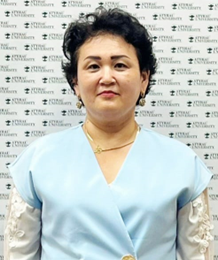
|
Tlepbergenova Anar Acting Head of the Department of Ecology Mobile phone: +7-701-4507919 Contact: E-mail: Anar_2808@mail.ru a.tlepbergenova@asu.edu.kz Author ID in Scopus 57214151460 Researcher ID Web of Science X-3483-2018 ORCID ID https://orcid.org/0000-0001-7373-8944 Researcher ID in Publons X-3483-2018 The Hirsch Index of Scopus is 5 Wos-1 |
Education, academic degree and title: In 1993 she graduated from the Faculty of Natural Geography of Atyrau Pedagogical Institute (now NAO "Atyrau University named after H.Dosmukhamedov"). Specialty "Biology and Chemistry", qualification "Teacher of biology and chemistry". In 2018, she graduated from the Faculty of Law of the M.Utemisov West Kazakhstan State University. Specialty "5B030100 – Jurisprudence", academic degree "Bachelor of Law". In 2021 she graduated from the NAO "Atyrau University named after H.Dosmukhamedov" in the specialty 6B05201-Applied Ecology, Bachelor of Natural Sciences qualification. In 2007, she defended her dissertation for the degree of Candidate of Pedagogical Sciences in the specialty "13.00.01-general pedagogy, history of pedagogy and education, ethnopedagogy". |
|
Scientific interests: environmental education; social ecology and sustainable development; environmental law; environmental monitoring, recycling of secondary raw materials. |
|
|
Scientific research: Research work on the topic "Biogeochemical assessment of the landscapes of the territories of oil fields of Kurmangazinsky district" according to the agreement with "Economativ" LLP (2018-2022). |
|
|
Professional activity: Professional experience 32 years, of which scientific and pedagogical experience 19 years. - 1993-1994. teacher of biology and chemistry in Kudryashovskaya Secondary school. -From 1994 to 1999, he was a teacher of chemistry and geography at secondary school No. 13 in Aktobe. -2000-2001. worked as a teacher at the Aktobe branch of KazNTU named after K.Satpayev. -2001-2003 worked as a leading specialist of the educational part of the West Kazakhstan Law Institute (Aktobe). -2003-2004 worked as a teacher in the Department of Chemistry, head of the student department of ATSU named after H. Dosmukhamedov. -2004-2011 Head of the Administrative and Personnel Department of Atgu named after H. Dosmukhamedov. -2011 - 2025 Lecturer, Department of Ecology. -From April 2025 Acting Head of the Department of Ecology, ATU named after H. Dosmukhamedov. |
Courses taught: Fundamentals of general and environmental toxicology (the course is taught in Russian, Kazakh languages), Methods of studying environmental objects (the course is taught in Russian, Kazakh languages), Sustainable development of the biosphere and humanity (the course is taught in Russian, Kazakh languages), Social ecology and sustainable development (the course is taught in Russian, Kazakh languages). |
|
Textbooks: Biogeochemistry and ecotoxicology, Almaty, "Evero", 2015, 246 P., biogeochemistry and ecotoxicology. Almaty, "Evero", 2015, 237 pp., Fundamentals of Health and Safety. Ewar Trade LLP, 2020-204 p, fundamentals of life safety. LLP "Lantar trade", 2020, 229 P. |
|
|
Publications: The list of works has more than 60 publications, of which in the Scopus database: 1. Yessenamanova, M., Yessenamanova, Z., Tlepbergenova, A., Moldir, M., Nurgul, B. Optimization of Acidity and Electrical Conductivity in Hydroponic Vegetable Production: A STEM Educational Perspective. International Journal of Design and Nature and Ecodynamics, 2023, 18(6), страницы 1517–1524 Scopus (процентиль-54), автор для корреспонденции 2. Ryskalieva, D., Yessenamanova, M., Koroleva, E.G., Yessenamanova Zh., Tlepbergenova A., Amanzholkyzy, S., Turekeldiyeva, R. Monitoring Study of the Effect of Atyrau Evaporation Fields on the Content of Hydrogen Sulfide in the Air. International Journal of Sustainable Development and Planning, 2022, 17(6), страницы 1789–1796, Scopus (процентиль-53), автор для корреспонденции 3. Nursaule, T., Yessenamanova, M., Kossarbay, K., Yessenamanova, Zh., Tlepbergenova, А. Batyrbayeva, G., Maden, S. Chemical Analysis of Groundwater and Wastewater in the Area of the Tengiz Deposit of the Atyrau Region of the Republic of Kazakhstan. International Journal of Design and Nature and Ecodynamics, 2022, 17(5), страницы 691–700 Scopus (процентиль-54), автор для корреспонденции 4. Yessenamanova, M.S., Sangajieva, L.K., Yessenamanova, Z.S., Tlepbergenova, А.Е. Migratory activity at the landfill site of microelements of the Caspian depression. News of the National Academy of Sciences of the Republic of Kazakhstan, Series of Geology and Technical Sciences, 2020, 1(439), с. 155-163, Scopus (процентиль-42), автор для корреспонденции and in the journals recommended by the Committee for Quality Assurance in Science and Higher Education of the Ministry of Education and Science of the Republic of Kazakhstan: 1. А.Tlepbergenova, M. Yesenamanova, Zh. Yesenamanova. Development of hydroponics for the formation of practical skills of the STEM education subjects. Bulletin of National Academy of sciences of the Republic of Kazakhstan ISSN 1991-3494 Volume 6. Number 412 (2024), 232–224 https://doi.org/10.32014/2024.2518-1467.866 2. M. Yessenamanova, Zh. Yessenamanova, A. Tlepbergenova, M. Маkhambet, N. Baitemirova. The relationship between the values of acidity and electrical conductivity in a hydroponic installation. Reports of the National Academy of sciences of the Republic of Kazakhstan ISSN 2224-5227 Volume 3. Number 347 (2023), 7–19 https://doi.org/10.32014/2023.2518-1483.220 3. M. Yessenamanova, Zh. Yessenamanova, A. Tlepbergenova, M. Маkhambet, N. Baitemirova. The relationship between the values of acidity and electrical conductivity in a hydroponic installation. Reports of the National Academy of sciences of the Republic of Kazakhstan Volume 3. Number 347 (2023), 7–19. ISSN 2224-5227 https://doi.org/10.32014/2023.2518-1483.220 4. D. Ryskalieva , M. Yessenamanova , S. Syrlybekkyzy, Zh. Yessenamanova , А.Е. Tlepbergenova , N.R. Tauova L. Sangadzhieva. Monitoring of hydrogen sulfide content in winter in the observation points of Atyrau city. Вестник КазНУ имени Аль-Фараби, Экология сериясы. №3 (72). 2022 ISSN 1563-034Х; ISSN 2617-7358 https://doi.org/10.26577/EJE.2022.v72.i3.04 5. M. Yessenamanova, A. Anuarbekova, D. Ryskalieva, Zh. Yessenamanova, А.Е. Tlepbergenova Analysis of emissions of pollutants into the atmosphere for the facilities of tengizchevroil llp in Atyrau region. Reports of the National Academy of sciences of the Republic of Kazakhstan. ISSN 2224-5227 Volume 1, Number 341 (2022), 84-93 6. Yessenamanova M. S., Davaeva Ts. D., Sangadzhieva L. Kh., Tsombueva B. V., Sangadzhieva O. S., Yessenamanova Zh. S., Tlepbergenova The content and distribution of trace elements in soils during the development of oil fields in the Republic of Kalmykia. News of the national academy of sciences of the Republic of Kazakhstan. Series chemistry and technology. ISSN 2224-5286, Volume 1, Number 445 (2021), 14 – 21 https://doi.org/10.32014/2021.2518-1491.2 7. Yessenamanova M.S., Yessenamanova Zh.S., Tlepbergenova A.E., Abdinov R.Sh., Ryskalieva D.K. Desertification assessment of the territory of Atyrau region. IOP Conference Series: Earth and Environmental Science, 2020, 421(6), 062005 8. M S Yessenamanova, G Kulzhanova, A E Tlepbergenova, Zh S Yessenamanova and G Batyrbayeva. Environmental monitoring of water quality in the interstate Ural river. Journal of Physics: Conference Series, 2021. 1889 032007 9. Yessenamanova M.S., Tlepbergenova А.Е., Zhaksieva G., Sangajieva L.Kh., Bekesh S., Yessenamanova Zh.S. Analysis of the hydrochemical composition of salt brins of lake Inder. News of the National Academy of Sciences of the Republic of Kazakhstan, Series Chemistry and Technology, 2020, 1(439), с. 16 – 14 10. Yessenamanova M.S., Shukbarov A., Zaitsev V.F., Melnik I.V., Yessenamanova Zh.S., Tlepbergenova А.Е. Estimation of oil products content in soil and water objects in the area of location of sludge dressers on the coast of the Volga river. News of the National Academy of Sciences of the Republic of Kazakhstan, Series Chemistry and Technology, 2020, 1(439), с. 29 – 36 |

3.Direction
|
Chingiz Alimbayev PhD, Satbayev University, Associate Professor, Department of “ Department of Robotics and technical means of automation” Email: chingiztdk@gmail.com
Mobile: +7 702 750 6393 |
Education, Academic Degree, and Title
In 2011, he successfully graduated from the Kazakh National Technical University named after K.I. Satpayev with a Bachelor’s degree in Instrument Engineering. In 2013, he earned a Master’s degree in Automation and Control from the Kazakh Academy of Transport and Communications named after M. Tynyshbaev. In 2020, Chingiz A. Alimbayev was awarded the PhD degree in Instrument Engineering.
He holds the academic title of Associate Professor in the field of Electrical Engineering, Electronics, and Information Technology (Order No. 1151 of the Chairman of the Committee for Quality Assurance in Science and Higher Education, dated July 11, 2025). |
|
Scientific Fields Medical Robotics; Industrial Robotics; Biomedical Engineering; Biosensor Technologies; Intelligent Systems for Diagnostics and Rehabilitation; Signal and Image Processing; Intelligent Control Systems in Robotics and Biomedical Devices. |
|
|
Participation in Research and Projects
|
|
|
Professional biography In the period from 2012 to 2017, he worked as a teacher and head of the "Scientific Research Inventions" laboratories at the Taldykorgan Polytechnic College. From 2013 to 2017, he held the positions of head of the research sector and head of the regional youth innovation research center at Zhetysu State University named after I. Zhansugurov; 2018-2022 - worked as a senior researcher and head of the NTI and PR department of the U.Joldasbekov Institute of Mechanics and Engineering. From 2018 to 2021, he worked as a lecturer, senior researcher and deputy director of the Institute of Industrial Automation and Digitalization. A. Burkitbaev at Satbayev University. From 2022 to 2024 - Deputy Director General of the U.Joldasbekov Institute of Mechanics and Engineering. Since 2024 - head of scientific project U.Joldasbekov Institute of Mechanics and Engineering Since 2022 - associate professor in the Department of Robotics and Automation Engineering at Satbayev University. |
Fundamentals of Electronics Fundamentals of Robotics Biomedical Engineering Biomechanics Automation
|
Awards
Honorary Diploma of the Minister of Science and Higher Education of the Republic of Kazakhstan, 2023
|
Publications The author has more than 70 open publications, including: Scopus – 11; WoS – 4; 16 patents. Hirsch index: Scopus – 4; Author ID: 57782820400; ORCID ID: 0000-0003-0160-1943
Selected Publications: 1. Wearable ECG Device and Machine Learning for Heart Monitoring, Alimbayeva, Z.; Alimbayev, C.; Ozhikenov, K.; Bayanbay, N.; Ozhikenova, A., Sensors 2024, 24, 4201. https://doi.org/10.3390/s24134201 2. Ozhikenov, K., Alimbayeva, Z., Alimbayev, C., Ozhikenova, A., Altay, Y. (2025). Neural Network Algorithm Based on LVQ for Myocardial Infarction Detection and Localization Using Multi-Lead ECG Data. Computers, Materials & Continua, 82(3), 5257–5284. https://doi.org/10.32604/cmc.2025.061508 3. Alimbayev, C., Alimbayeva, Z., Ozhikenov, K., Bodin, O., & Mukazhanov, Y. (2020). Development of measuring system for determining life-threatening cardiac arrhythmias in a patient’s free activity. Eastern-European Journal of Enterprise Technologies, 1(9 (103), 12–22. https://doi.org/10.15587/1729-4061.2020.197079 4. Ainur Bekbay, Zhadyra Alimbayeva, Chingiz Alimbayev, Nurlan Bayanbay, Kassymbek Ozhikenov, & Yerkat Mukazhanov. (2022). Development of an atrioventricular block prediction of method for portable heart monitoring system. Eastern-european Journal of Enterprise Technologies, 3(5 (117)), 15–27. https://doi.org/10.15587/1729-4061.2022.258791 5. Zhadyra N. Alimbayeva, Chingiz A. Alimbayev, Nurlan A. Bayanbay, Kassymbek A. Ozhikenov, Oleg N. Bodin and Yerkat B. Mukazhanov, “Portable ECG Monitoring System” International Journal of Advanced Computer Science and Applications(IJACSA), 13(4), 2022. http://dx.doi.org/10.14569/IJACSA.2022.0130408 6. Comparative Analysis of Machine Learning Methods for Prediction of Heart Diseases, Stepanyan, I.V., Alimbayev, C.A., Savkin M. O., Lyu D., Zidun M., Journal of Machinery Manufacture and Reliability, 51, 789–799. 2022. https://doi.org/10.3103/S1052618822080210
|
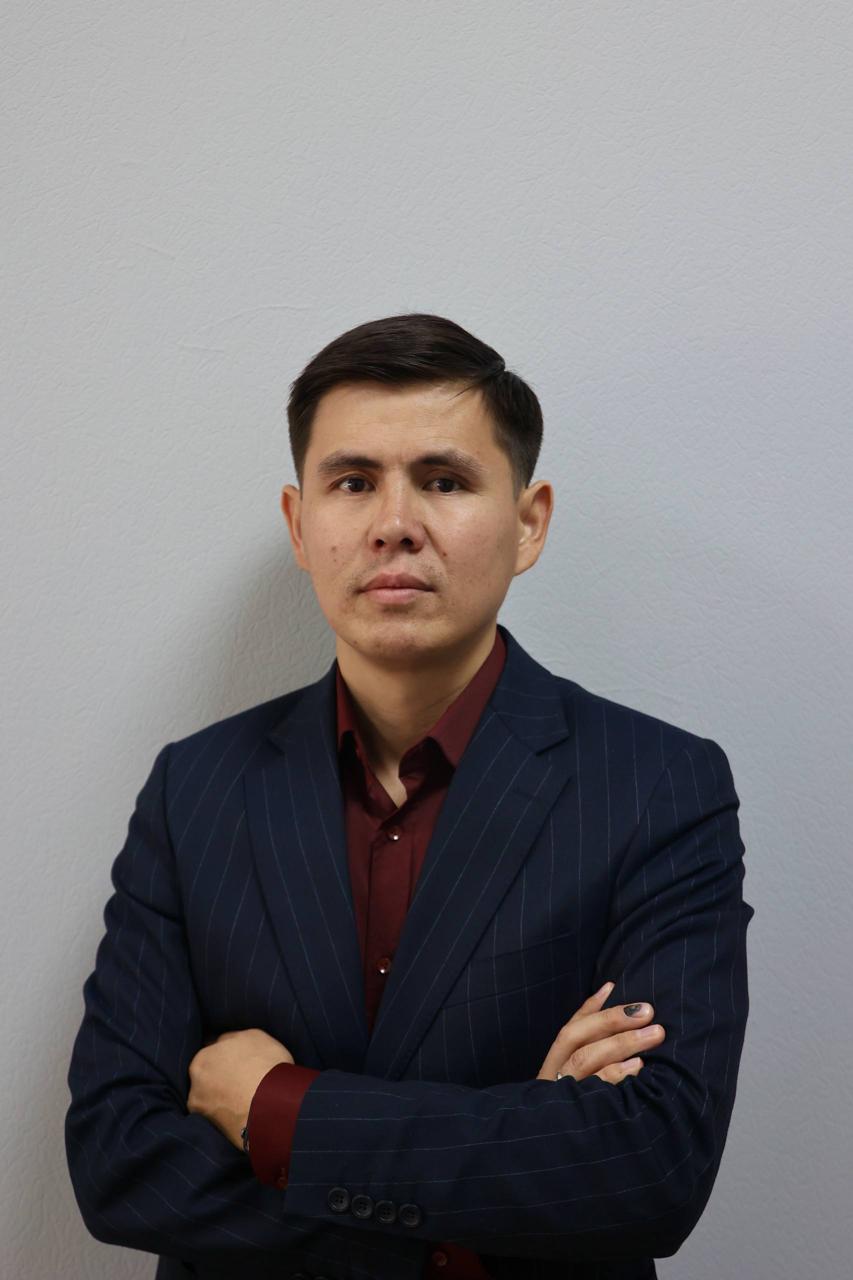
|
Lyailya Taskaliyevna Kurmangazieva Professor, Department of Software Engineering, Kh. Dosmukhamedov Atyrau University Contact Information: Email: Kurmangazieval@mail.ru Mobile: +7-701-4501714 Scopus ID: 55982868400 ORCID ID 0000-0003-0640-7306
|
Education, academic degree, and rank: Graduated from Kainar University in Almaty in 2002, specializing in Information Systems. In 2003, she completed her Master's degree in Information Systems at the Atyrau Oil and Gas Institute. In 2008, she defended her dissertation for the degree of Candidate of Technical Sciences, specializing in 05.13.18 – Mathematical Modeling, Numerical Methods, and Software Systems. In 2021, the Ministry of Education and Science of the Republic of Kazakhstan awarded her the academic title of Associate Professor in specializing in 05.13.00 – Computer Science, Computer Engineering, and Management. |
|
Research interests: Fuzzy mathematical modeling, fuzzy programming, systems analysis, decision making. |
|
|
Scientific grants for applied research programs: 2020-2022 1) AAP08855680: Intelligent decision support system for managing catalytic reforming unit operating modes. 2025-2025 2) BR28713197: Caspian Center for Sustainable Innovation: Scientific and academic promotion of alternative solutions for the region's transition to a greener future |
|
|
Professional experience: 23 years of professional experience. 2002–present – Lecturer, Senior Lecturer, Associate Professor, Head of Department, Professor of the Software Engineering Department at Kh. Dosmukhamedov ATU |
Courses taught: Data Science, Big Data, Machine Learning |
|
More than 70 scientific publications 1. Orazbayev B., Zhumadillayeva A., Orazbayeva K., Kurmangaziyeva L., Dyussekeyev K., Iskakova S. Methods for Developing Models in a Fuzzy Environment of Reactor and Hydrotreating Furnace of a Catalytic Reforming Unit. Applied Sciences (MDPI), 2021, Vol. 11(18), 8317. DOI: 10.3390/app11188317 2. Orazbayev B., Boranbayeva N., Makhatova V., Rzayeva L., Ospanov Y., Kurmashev I., Kurmangaziyeva L. Development and Synthesis of Linguistic Models for Catalytic Cracking Unit in a Fuzzy Environment. Processes (MDPI), 2024, Vol. 12(8), 1543. DOI: 10.3390/pr12081543 3. Amankeldin D., Kurmangaziyeva L., Mailybayeva A., Glazyrina N., Zhumadillayeva A., Karasheva N. Deep Neural Network for Detecting Fake Profiles in Social Networks. Computer Systems Science & Engineering (TechScience Press), 2023, Vol. 47(1). DOI: 10.32604/csse.2023.039503 4. Orazbayev B., Moldasheva Zh., Orazbayeva K., Makhatova V., Kurmangaziyeva L., Gabdulova A. Development of Mathematical Models and Optimization of Operation Modes of the Oil Heating Station of Main Oil Pipelines under Conditions of Fuzzy Initial Information. Eastern European Journal of Enterprise Technologies, 2021, Vol. 6 (2 (114)), pp. 147–162. 5. Abilgazy N., Kurmangaziyeva L., Ievlanov M. Development of a Method for Studying Gas Imbalance in Gas Distribution Systems Using Polynomial Approximation. Eastern European Journal of Enterprise Technologies, 2020. 6. Makhatova V., Kurmangaziyeva L., Utenova B. System Concept for Modelling of Technological Systems and Decision-Making in Their Management. Монография. Одесса / Харьков: Publisher «Леся», 2021. ISBN 978-617-7319-34-3. DOI: 10.15587/978-617-7319-34-3 7. Kurmangaziyeva L., Kodanova Sh. K. Method of Developing Models of Chemical and Technological Systems of Oil Refining under Uncertainty. |
|
Makhatova Valentina Erkinovna Professor of the Department of" software engineering" E-mail:mahve@mail.ru@mail.ru Mo6. teL..::+77014594457
|
Education, academic degree, academic title: In 1986, he graduated from the Faculty of Physics and mathematics of the Ural State University named after A. S. Pushkin, specialty: "Mathematics and physics", qualification: "teacher of Mathematics and physics" НВ №085776. In 2003, at the doctoral Council of the Kazakh Academy of transport and Communications named after M. Tynyshbayev D14.45.03, he defended his dissertation for the degree of candidate of technical sciences in the specialty 01.02.04 – mechanics of solid bodies. Candidate of technical sciences (No. 0010334), specialty "01.02.04-mechanics of a deformable solid body", 23.05.2003, Protocol No. 3 2008-received the academic title of Associate Professor in the specialty mechanics (No. 0000151). 2025-received the academic title of Professor (No. 0000262) in the scientific direction of Computer Science and computer science. |
|
Scientific direction education management, atheory of information systems, computer technologies, computer systems security, development of a heuristic method for solving the problem of reforming process management in an uncertain environment, a method for optimizing the production of stable gasoline at a primary oil refining unit based on uncertainty models. |
|
|
for grant funding of scientific projects projects: Ministry of Education and Science of the Republic of Kazakhstan 2018-2020 AR 05131475 on the priority direction of science development " basic laws of rheological properties of nanocomposite polymer materials"(contract No. 248 dated March 27, 2018, State register No. 18RK00394) project executor of intra-university funding on the topic"intelligent decision-making systems for optimizing the operating modes of technological complexes of the oil refining industry" (2024) «Project manager of intra-university financing on the topic " Application of artificial intelligence methods for creating decision support systems for managing technological complexes of oil refining (2025)
|
|
|
professional activity professional experience of 39 years, including:10 years teacher of mathematics in schools of Atyrau, Zhezkazgan, Zhana Uzen(1986-1996). Since 1996, lecturer of the Department "Algebra and Geometry" of Atyrau University named after H. Dosmukhamedov (1996-1999), senior lecturer (2000-2004), Candidate of Technical Sciences (2003), head of the Department computer science. Order No. 97 p. of 17.09.2004 (2004-2013ж.-2013), Associate Professor of the Higher Attestation Commission of the Republic of Kazakhstan, Associate Professor (2008), academic professor by the decision of the Academic Council of Atyrau State University named after Kh. Dosmukhamedov in 2011, Associate Professor (2009-2017), Professor of the Department of Informatics No. 140/3 of 02.11.2011 G. has been working as a professor since 2017. By decision of the Committee for Quality Assurance in Science and Higher Education of the Ministry of Science and Higher Education of the Republic of Kazakhstan2025dated 20.03.2025 No.436 - Awarded the academic title of professor in the scientific direction of computer science and informatics (No. 0000262) |
courses taught: "cybersecurity", "architecture and organization of computer systems"," information security in computer systems"," information theory"," architecture of computer systems","information security in computer systems"," theory of information systems", Awards" microprocessor systems", "computer technologies", " computer systems security" "education management", "human-computer interaction", "IT management", " application optimization .NET", "information marketing and protection of information processes", "organization and management of an information platform |
|
Awards " 1. Badge "Honorary Worker of Education of the Republic of Kazakhstan". (2008) 2. Winner of the title "Best University Teacher-2020" of the Ministry of Education and Science of the Republic of Kazakhstan. 3. Letter of Thanks from the Ministry of Education and Science of the Republic of Kazakhstan, 2023 4. Certificate of Honor from the Ministry of Education and Science of the Republic of Kazakhstan, 2023 5. Letter of thanks from the head of the Republican public Headquarters E. Koshanov, Astana, 2022 6. Letter of thanks from the secretary of the Amanat Party D. Karibek, Astana, 2024 7. Badge "For merits in the development of science" for outstanding achievements in the field of science of the Republic of Kazakhstan. № 01134 (2025) |
publications 1.Textbook "Fundamentals of teaching a programming language", Makhatova V. E., Khammetov A. 2012, 2. Textbook "Program development equipment", Makhatova V. E., Abykanova B. T. 2016, Atyrau 3. Textbook "Programming on the Internet", Makhatova V. E., Abykanova B. T. 2016, Atyrau 4. "Methods for identifying models of control objects", Kurmangazieva L., Makhatova V. E., Textbook, 2017 5. Exercises and tasks on the main elements of the theory of functions and functional analysis 2017 G. G. Kammatov, Shambilova G., Makhatova V. ISBN 978-601-242-108-8 6. Computer networks. Textbook , Atyrau, 2019 Gabdulova A., Makhatova V. 7. Textbook on object-oriented programming, Makhatova V. E., Khammetov A. Атырау, 13 т. р., 2019 г., 8. Information and communication technologies, Atyrau: Printing house " ASU " of Atyrau state University named after H.Docmukhamedov, 2019 9. "New approaches to studying the dynamics of dinnamics film and detormable systems with variable characteristics" Monograph. Ural: publ. house "IT City", 2020-105 p. 10. monograph "Dynamics of drill strings in the production of launching operations" Atyrau, 2022 11. monograph" approaches to effective management of complex formalized objects based on intelligent information technologies and systems", 2024 |
|
|
selected publications in foreign periodicals 1. Development of mathematical models of R-1 reactor hydrotreatment unit using available information of various types, Journal of Physics: Conference Series 1399 (2019) 044024 2.Development of a Set of Models for Reactors of a Catalytic Reforming Unit Using Information of a Different Nature, 2021 8th International Conference on Electrical and Electronics Engineering 3. 2019 The 5th International Conference on e-Society, e-Learning and e-Technologies (ICSLT 2019) Workshop 2019 4.The 2nd International Conference on Information Management and ProcessingProblems of Multi-Criteria Optimization in the Fuzzy Envi-ronment and Heuristic Methods of Their Solution, January 10-126 2019 Vienna, Austria 5. METHODS OF CONSTRUCTING 6. «System concept for modelling of technological system and decision making in their management» 2021 http://monograph.com.ua/pctc/catalog/book/978-617-7319-34-3 7. «Development of matehematical models and optimization of operation modes of the oil heating station of main oil pipelines under conditions of fuzzy initial information», Eastern-European journal of enterprise technologies.Vol.6 No. 2 (114),147-162, 2021 8. Development of a Set of Models for Reactors of a Catalytic Reforming Unit Using Information of a Different Nature 2021 8th International Conference on Electrical and Electronics Engineering. 9. Structure, Morphology, and Permeability of Cellulose Films Membranes 2022, 12, 297 .https://doi.org/10.3390/membranes12030297 10. Methods of Fuzzy Multi-Criteria Decision Making for Controlling the Operating Modes of the Stabilization Column of the Primary Oil-Refining Unit. 2023 11(13), 2820 DOI:10.3390/math11132820, ISSN: 2227-7390 11.Mathematical Models for Oil Production Optimization in Fuzzy Environments: Well Stock Forecasting and Regulation, Mathematical Modelling of Engineering Problems Vol. 11, No. 2, February, 2024, 12. Decision Making for Control of the Gasoline Fraction Hydrotreating Process in a Fuzzy Environment, Processes 2024, 12(4), 669; https://doi.org/10.3390/pr12040669 13. Forecasting creditworthiness in credit scoring using machine learning methods, International Journal of Electrical and Computer Engineering (IJECE) r 5534 Vol. 14, No. 5, 2024 14. Development and Synthesis of Linguistic Models for Catalytic Cracking Unit in a Fuzzy Environment, https://doi.org/10.3390/pr12081543 Processes 2024, 12, 1543. 15. Approach to automating the construction and completion of ontologies in a scientific subject field, International Journal of Electrical and Computer Engineering http://doi.org/10.11591/ijece.v14i3.pp3064-3072 2024 16. Methods of Multi-Criteria Optimization of Technological Processes in a Fuzzy Environment Based on the Simplex Method and the Theory of Fuzzy Sets, Mathematics, September 2024, 12, 2856 DOI:10.3390/math12182856 In domestic periodicals: 1. Development of a structured model of the technological complex of benzene production at KazNTU named after K. I. Satpayev, 2017 2.Application of electronic textbooks in education "Ulagat" Publishing House of KazNPU named after V. I. Abramovich. Abaya,2018 3.Mathematical modeling and computational investigation of the dependence of the thermal stressed state of the rod on the heat transfer coefficient in the presence of a temperature of constant intensity. Bulletin of the Karaganda University, 2018 4.Construction of a complex of mathematical models of the main units of the sulfur extraction unit based on system analysis. ENU Bulletin 2019 5.The problem of decision-making on controlling the process of producing sulfur in the Claus reactor and the method of solution in a fuzzy environment. Bulletin of PSU, 2019, 3, ISSN 1811-1858 Scientific Journal Pavlodar State University named after S. Toraigyrov,2019 6. Mathematical modeling and numerical study of the dependence of the thermally stressed state of a rod on the heat exchange coefficient in the presence of a temperature of constant intensity Vestnik KarSU, Ser. matematika, Karaganda: KarSU,2018, No. 1 (89), pp. 84-92 7. Psychological aspects of youth education through the Kazakh heritage of the people reports of the Kazakh Academy of Education, Astana, 2019, No. 1 8. The use of multimedia technologies in teaching physics Vestnik KarSU, Ser. Physics, Karaganda: KarSU, 2019, No. 2 (92), pp. 38-45 ISSN 2518-7937 9. On properties of one linear operator in complex spaces of Orlicz. Vestnik KarSU, Ser. Matematika, Karaganda: KarSU Publ., 2019, No. 2 (92), pp. 38-45 10. On properties of one linear operator in complex spaces of Orlich Izvestiya nauchno-tekhnicheskogo obshchestva "Kakhak", 2020, № 4 (71) 2 11.Some statements in Orlicz spaces Proceedings of the Scientific and Technical Society" Kahak "Almaty, 2020, No. 4 (71) 12. Development of a heuristic method for solving problems KazINTUBulletin No. 2 2021 13. Bulletin of S. Toraigyrov University "application of multimedia technologies in teaching physics"2021 14. "structure of an electronic textbook on physics based on interactive computer models" Bulletin of S. Toraigyrov University, No. 3, 2022 15. Reforming unit operation control in oil and gas refining technology. Series of geology and technical shiences. ISSN 2224-5278 Number457(2023) 16. A fuzzy decision-making method for controlling operation modes of a hard-to-formalise rectification column of a delayed coking unit, News of the National Academy of Sciences of the Republic of Kazakhstan, Series of Geology and Technical Sciences 2024, DOI:10.21203/RS.3. RS-4136774 / v1 17.Building models of the atmospheric block of a primary oil refining unit based on available information of various types" communications of the National Academy of Sciences of the Republic of Kazakhstan. Physics and Computer Science series". 2024, https://doi.org/10.32014/2024.2518-1726.283 18. the role of communications in project management: strategies for improving the efficiency of JSC "NIT", " communications of the National Academy of Sciences of the Republic of Kazakhstan. Physics and Informatics Series, 1(349), 2024 https://doi.org/10.32014/2024.2518-1726.283 19. Analysis of information Search Methods and intelligent classification of information from the Darknet, , Kazkka Bulletin, No. 6 (135), 2024, DOI 10.52167 / 1609-1817214-222 20. method for optimizing the stable gasoline production process at a primary oil refining unit based on uncertainty models. KAZGUU MRSTI Bulletin 27.47.19 https://doi.org/10.58805/kazutb.v.3.24-509, 2024г. |
|
Yuriy Mironov Expert in Business Process Automation and Analysis Contact: Email: yuriymironovexkl@gmail.com Mobile phone: +7-701-9529787 |
Education, academic degree and title: In 2002 graduated from the University of International Business, Almaty, with a degree in "Accounting, Analysis and Audit". In 2007 graduated from Almaty Technological University with a degree in "Automation of Technological Processes and Production (by industry)". |
|
Professional interests: Automation in industrial production, robotics, and business process analysis. |
|
|
Key skills: Business Analysis, BPMN, UML, SQL, Atlassian Confluence, Jira, Figma, Draw.io, PlantUML, Camunda, Power BI, JSON, User Flow, Use Case, Strategic Planning, Requirements Specification (BRD, SRS, FR, NFR), Process Modeling & Optimization, Automation of Business Processes, BABOK, User Documentation, Acceptance Testing, Task Formulation for Developers, Technical Task Development |
|
|
Professional experience: Klinkmann Kazakhstan — 2019–2025 Director of Sales for Central Asia and the Caucasus region Emerson — Sales Manager for ZRA Honeywell — Key Account Manager Spirax Sarco — Regional Representative |
Languages: Russian (Native), English (Full Professional), German (Elementary) |
|
Certifications and professional development: Certified Business Analyst (BABOK CPBA®) Effective Sales The Art of Communication Effective Presentation Skills |

Beknur Orazgaliuly Omarbekov
Director of the Institute for Oil and Gas Industry Studies, Associate Professor at Atyrau University of Oil and Gas
E-mail: beknur_84@mail.ru
Mobile: +7-706-400-34-33
Scopus Author ID: 57219744437
Web of Science Researcher ID: AAC-4757-2021
ORCID ID: 0000-0002-8280-2458
Publons Researcher ID: AAC-4757-2021
Education, Academic Degree, and Title:
PhD. Graduate of Satbayev University. Completed doctoral studies at the University of L’Aquila (Italy) under the Erasmus Mundus Target program in the field of “Automation and Digitalization” within the specialization “Industrial and Information Engineering and Economics.”
Research Interests: Uranium and gold mining industry, oil and gas, automation and digitalization, mechanical engineering, instrumentation, robotics and mechatronics, biomedical engineering, programming, and artificial intelligence.
Key Competencies:
– Comprehensive production planning;
– Automation and robotics;
– Technological design of metallurgical products.
Scientific Grants for Applied Research:
1) World Bank grant under the CPS commercialization project “Development of a digital twin and enhancement of the digital maturity of an oil and gas field” (2023–2024).
2) BR28713197 Caspian Center for Sustainable Innovations: Scientific and academic advancement of alternative solutions for the region’s transition to a greener future (2025–2027).
8) Participated in projects of the American companies “Granite Services Int Inc.” and “General Electric (GE),” including those related to the Karachaganak field.
Professional Experience:
01/2013–05/2014 – Chief Metallurgist at “GMK Ayatskoye” JSC. Responsibilities: led the work on calculating production capacities of metallurgical units and equipment loading; developed consumption norms for main and auxiliary materials, as well as other technical and economic standards for metallurgical production.
06/2014–05/2016 – Deputy Head of the Silver Electrolysis Department (Process Engineer) at “Tau-Ken Altyn” LLP. Responsibilities: ensured compliance with technological processes, conducted analyses to obtain finished products of at least 99.99% purity (silver grade SrA-1, gold grade ZP-1A), and introduced innovative technologies in production.
04/2016–07/2018 – Chief Expert of the “Industry 4.0” Competence Center at “Kazakhstan Institute of Industry Development” JSC, Ministry of Investment and Development of the Republic of Kazakhstan. Responsibilities:
– Participated in the implementation of the “Digital Kazakhstan” state program related to the institute’s competence;
– Conducted technological audits of enterprises and developed digitalization roadmaps (model digital factories);
– Contributed to drafting amendments to regulatory legal acts aimed at promoting Industry 4.0 implementation;
– Prepared materials and analytical reports on “Industry 4.0” topics;
– Facilitated cooperation with international organizations.
Professional Activities:
Completed internships at MIT and the University of Munich. Headed the “Industry 4.0” Competence Center (“Kazakhstan Institute of Industry Development”), where he participated in the implementation of the “Digital Kazakhstan” program and was involved in national digitalization initiatives. Participated in projects of “Granite Services Int Inc.” and “General Electric (GE),” including the Karachaganak field. Holder of a professional qualification diploma from the National Instruments Academy. Awarded the title “Best Foreign Doctoral Student” by the Administration of the President of the Republic of Kazakhstan.
Courses Taught:
– Industry 4.0 (taught in Kazakh and Russian);
– IT in Science and Production (taught in Kazakh and Russian);
– Robotics and Mechatronics (taught in Kazakh and Russian);
– Microprocessor Control Devices of Automated Systems (taught in Kazakh and Russian);
– Reliability of Automated Systems (taught in Russian).
Patents and Publications:
• Patent No. 5458 for utility model “Inspection Installation,” 2021
• Patent No. 5981 for utility model “Complex with Manipulator for Automatic Hardening of Iron Products,” 2021
• Patent No. 6371 for utility model “Cardioanalyzer,” 2021
• Patent No. 6549 for utility model “Smart Socket,” 2022
• Patent No. 35733 for invention “Method for Adaptive Filtering of Electrocardiosignal,” 2022
• Eurasian Patent No. 039701 for invention “Method for Adaptive Filtering of Electrocardiosignal,” 2022
• Eurasian Patent No. 042078 for invention “Cardioanalyzer,” 2023
Scientific Publications:
Madina Isametov, Beknur Omarbekov, Rollan Nussipali, Ulan Angarbekov, Aysen Isametov, “Computer simulation and investigation of vibration parameters of a centrifugal submersible pump,” Journal of Vibroengineering, Vol. 22, Issue 5, 2020, pp. 993–1005. https://doi.org/10.21595/jve.2020.21014
Gonzalez, O., Muñoz, J., Germoso, C., Benito, B., Omarbekov, B. “Seismic Vulnerability Assessment of the Municipality of Santo Domingo Este, Dominican Republic.” World Congress on Civil, Structural, and Environmental Engineering, 2023.
Abitkazy, T., He, Y., Chen, F., ... Omarbekov, B., Sarbayev, A. “Research on the influence of mineral heterogeneity under different CO2 injection schemes in low-permeability reservoirs,” Natural Gas Industry B, 2024, 11(3), pp. 291–302.
https://www.sciencedirect.com/science/article/pii/S2352854024000354?via%3Dihub
|
Turmukhanova Gulnur Senior Lecturer of the Department of Software Engineering. Contact: E-mail: turmukhanovag@mail.ru; Author ID в Scopus Researcher ID Web of Science AAP-8682-2022 ORCID ID https://orcid.org/0000-0002-8912-2746 Researcher ID in Publons |
Education, academic degree and title: In 2006, she graduated from the Faculty of Physics, Mathematics, and Information Technology of Kh. Dosmukhamedov Atyrau State University (now Kh. Dosmukhamedov Atyrau University) with a degree in 5B012800 – Physics and Informatics. |
|
Scientific interests: Research in the fields of natural sciences, artificial intelligence, cybersecurity, and web technologies. |
|
|
Scientific grants for applied research programs: AP19678780 "Research on the Barriers to Professional Development in the Formation of Soft Skills at Different Stages of a University Teacher’s Career through Digital Resources"
|
|
|
Professional activity: Professional experience — 19 years. Since 2006, he has been a senior lecturer at the Department of Software Engineering. |
Courses taught: Fundamentals of Artificial Intelligence and Machine Learning (taught in Russian and Kazakh), Cloud Computing and Big Data (taught in Kazakh), Web Technologies and Web Application Development (taught in Russian and Kazakh), Organization and Management of Research and Innovation Activities (taught in Kazakh), Computer Graphics and Multimedia Technologies (taught in Kazakh). |
|
Publications The list of works includes more than 30 publications.
|

|
Sharmukhanbet Saltanat Ruslanovna Head of the Strategic Development Department Contact phone numbers: Next: saltanatsh_84@mail.ru ; sharmukhanbet@gmail.com ; Mobile phone: +7-701-2389338 Author's identification number in Scopus: 57226643218 Researcher ID in the Web of Science, P-9962-2017, ORCID https://orcid.org/0000-0003-4417-0485 Researcher ID in publications, P-9962-2017 |
Education, academic degree and title: In 2005, she graduated from the Faculty of Physics, Mathematics and Information Technology of the Dosmukhamedov Atyrau State University (now Dosmukhamedov ATU). Specialty "030240 – Physics and Computer Science", qualification "teacher of physics and computer science". In 2007, she completed her Master's degree in "6N0604 - Physics", academic degree "Master of Physics". In 2014, he was awarded the degree of Doctor of Philosophy (PhD) in the specialty "6D011100 - Computer Science". |
|
Scientific interests: Artificial intelligence, robotics, management in education |
|
|
Scientific grants for applied research programs: 1) AP26101249 Development of the concept of effective and safe gamification of school education (2025-2027) 2) BR28713197 Caspian Center for Sustainable Innovation: scientific and academic promotion of alternative solutions for the region's transition to a greener future (2025-2027). 3) 0225RKI0135 - 112527/Initiative-OT-24 Integrated Learning Technologies: robotics, 3D modeling and gamification in the educational process in 2024. |
|
|
Professional activity: Professional experience of 12 years. From 2009 to 2010, she worked as a teacher at the Department of Physics and Engineering at ATSU named after H.Dosmukhamedov. 2013 - 2023. lecturer at the Department of IIIO of KazNPU named after Abai. In 2023-2025, Head of the Department of Software Engineering, ATU named after H.Dosmukhamedov. Since January 2025, Head of the Strategic Development Department. |
Courses taught: Methods of teaching computer science, Implementation of multi-level client-server technology, System analysis, information management and processing, statistics. |
|
Publications The list of works includes more than 40 publications. 1. Nurzhamal T. Oshanova, Assel K. Bukanova, Zhadyra S. Kazhiakparova, Makpal T. Salbyrova, Sharmukhanbet, S.R. // Training future computer science teachers in the context of digitalisation based on the “History of informatics” course// World Journal on Educational Technology: Current Issues, 13(3), 354–369// https://doi.org/10.18844/wjet.v13i3.5919 2. Zhabayev Y., Bidaibekov E., 3. Al-Said, S., Findik, O., Assanova, B., Sharmukhanbet, S., Baitemirova, N. // Enhancing Predictive Maintenance in Manufacturing: A CNN-LSTM Hybrid Approach for Reliable Component Failure Prediction// Studies in Systems, Decision and ControlТом 223, Страницы 137 – 1532024// DOI 10.1007/978-3-031-51997-0_11 4. Zh. N. Orazbekov; Abai Kazakh National Pedagogical University; А. K. Moshkalov; S.R. Sharmukhanbet; K. Zh. Sabraev// Корпоративті портал деректер ағынындағы кезекті басқару алгоритмі// Вестники КазНПУ им. Абая. Серия «Физико-математические науки» - Алматы, 2021, - №1(41), С.197-203, https://doi.org/10.51889/2021-4.1728-7901.27 5. A.M. Moshkalov; Abai Kazakh National Pedagogical University, Almaty, Kazakhstan; Zh.N. Orazbekov; K.Zh. Sabraev; S.R. Sharmukhanbe// Пандемия жағдайындағы ақпараттық-коммуникациялық технологиялардың мүмкіндіктері// Вестники КазНПУ им. Абая. Серия «Физико-математические науки» - Алматы, 2021, - №1(41), С.182-187// https://doi.org/10.51889/2021-4.1728-7901.25 6. Г.Р. Кощанова, Э.А. Абдыкеримова, А.Б. Туркменбаев, Б.Т. Кулжагарова, С.Р. Шармұханбет// Условия и механизмы использования программы «geogebra» при преподавании курса стереометрии// Bulletin of national academy of sciences of the republic of Kazakhstan ISSN 1991-3494 Volume 5. №405 (2023), 161-173// https://doi.org/10.32014/2023.2518-1467.583 7. Ю. Челик, О. Финдик, Ю. Аладжа, Б. Асанова, С.Р. Шармұханбет// Implementation of the artificial immune system algorithm for security information and event management systems// Вестники КазНПУ им. Абая. Серия «Физико-математические науки»/ ISSN 2959-5894/ Алматы, 2023, Том 83 №3, С. 176-188// https://doi.org/10.51889/2959-5894.2023.83.3.020 8. А.Г. Батырханов, С.Р. Шармұханбет// О латыни и казахской латинице// News of the national academy of sciencesof the republic of kazakhstan physico-mathematical series/ ISSN 1991-346X/ Volume 1. Namber 349 (2024), С. 59–74// https://doi.org/10.32014/2024.2518-1726.242 9. Б. Т. Абыканова, Г. Б. Турмуханова, Н. Б. Байтемирова, А. Ж. Наукенова, О. Финдик, С.Р. Шармұханбет// Оқушылардың назарын аударумен күресу үшін геймификацияны қолдану (8-сыныптағы физика курсын оқу тәжірибесі)// Международный научно-технический журнал «вестник национальной инженерной академии рк»/ ISSN 2709–4693/ Алматы, 2025, № 1(95), С.84-100 https://doi.org/10.47533/2025.1606-146X.16 10. Касымбеков А., Ускенбаева Р., Ахметов Б., Тынымбаев Б., С.Р. Шармұханбет// Ақылды қалалардағы ауа сапасын бақылау мониторинг станциялары желісін оңтайландыру жүйесінің концептуалды архитектурасы// Труды университета/ / ISSN 1609-1825 / г. Караганда, 2025, №1(98), С. 515-522/ https://doi.org/10.52209/1609-1825_2025_1_515 11. А. Игнатович, А.С. Есенгельдина, Л.Т. Курмангазиева, М.У. Худойберганов, С.Р. Шармұханбет// Машиналық оқыту көмегімен қазақстандағы сот шешімдерін болжауға арналған деректерді құру// INTERNATIONAL JOURNAL OF INFORMATION AND COMMUNICATION TECHNOLOGIES/ ISSN 2708–2032 (print) ISSN 2708–2040 (online)/ Vol. 6. Іs. 2. Number 22 (2025)/ Рр. 79–95 Journal homepage:// https://journal.iitu.edu.kz// https://doi.org/10.54309/IJICT.2025.22.2.005 |

4.Direction
|
El-Sayed Moussa Elashmawy Negim Attia Professor at School of Engineering, KBTU Contact: E-mail: a.negim@kbtu.kz; Mobile phone: +7-708-5221023 Author ID в Scopus 39861833200 Researcher ID Web of Science O-1131-2013 ORCID ID 0000-0002-4370-8995
|
Education, academic degree and title: El-Sayed Moussa Elashmawy Negin attia was born on January 26, 1970 in Sharqiya, Egypt. A major specialist in the field of chemistry and chemical technology. Especially polymer chemistry, nanotechnology and their applications (concrete, paints, fertilizers, antibacterial and antimicrobial applications).
1998 Zagazig University, Egypt. Faculty of Natural Sciences, Department of Organic Chemistry. Master's thesis defense on the topic: "Preparation of non-ionic surfactants for emulsion polymerization of some vinyl monomers".
2005 – Al-Farabi Kazakh National University, Almaty. Faculty of Chemistry, defense of doctoral dissertation on the topic: "Synthesis of new hydrophilic copolymers and its application as modifying chemical additives to cement".
From 2005 to 2006, he was a senior researcher at the National Research Center (SRC), Department of Polymers and Pigments. El-Behus, Dokki 12311 - Cairo - Egypt.
From 2007 to 2009, he was a researcher at the Polytechnic University, South Korea. Project topic: "Synthesis and application of polyurethane in industry". Scientific researcher at Jindo Chemical Co., Ltd, South Korea, R&D center of the company. As a result of the study, a project was implemented for the production of industrial new polyurethane paints for Kazatomprom in Kazakhstan.
From 2010 to 2012, Sainz Malaysia University, Penang. From this university, he was invited as a visiting professor to the Al-Farabi Kazakh National University, as well as to the Kazakh National Technical University named after K. Satpayev, where a memorandum of cooperation was signed between Al-Farabi Kazakh National University and the University of Sainz Malaysia, Penang. A memorandum was also signed between the universities of M. Auezov SKSU and the University of Sainz Malaysia. On the basis of the memorandum from Kazakhstan, more than forty students, undergraduates and PhD doctoral students underwent a scientific internship under the academic mobility program at the University of Science Malaysia, Penang, Malaysia. Under his scientific supervision, all undergraduates and PhD doctoral students listened to lectures. In scientific laboratories, they developed their scientific research. And they successfully defended their scientific dissertations in Kazakhstan.
From 2013 to 2015, he worked as an academic lecturer at the University of Wolverhampton, UK. He won Marie Curie's European Union project. As the head of the project "Production of sustainable self-compacting concrete", a memorandum of cooperation was signed between two universities of Kazakhstan, Al-Farabi Kazakh National University and Taraz State University named after M.Kh. Dulati and Wolverhampton University. Within the framework of this agreement, more than 20 students, undergraduates and PhD doctoral students have been trained at the University of Wolverhampton under the academic mobility program. And also several students underwent scientific internships in laboratories, listened to lectures of the British University. During this period, all the best universities in Kazakhstan, namely Al-Farabi Kazakh National University, K. Satpayev Kazakh National Technical University and M.Kh. Dulati TarSU, invited Dr. Negim Elsaid Musa Elishmawi Attia to give lectures to students and to consult on the program for inviting foreign specialists.
2015 Negim Attia Elsaid Musa Elishmawi won a "Workshop" grant between the UK and Kazakhstan. He published over 164 scientific papers, including in journals with a high impact factor. 6 South Korean copyright certificates and patents have been obtained, many of them have been introduced into production (paints and concrete), 4 books have been written, one in English.
From 2015 to 2020, he worked as a professor at the Kazakh-British Technical University, Almaty. He gives lectures to undergraduates and doctoral students of various faculty of KBTU as REC HI, KMA and at the Faculty of Energy and Oil and Gas Industries. Over the past 5 years, during his work at KBTU, he has published 67 articles in international scientific journals with impact factor and Scopus and received 10 Kazakhstani copyright certificates and patents.
Currently, he is the scientific supervisor of 8 PhD doctoral students from different universities. Of these, 3 are PhD at KBTU, 1 is PhD at Al-Farabi Kazakh National University, 1 is PhD at Satpayev University, 3 are PhD at S. Seifulin Kazakh State Technical University. Thanks to his extensive experience in the research and development of polymers for the construction industry, Prof. Elside Negim is currently leading three grant funding projects. One of them is at KBTU and two are under the Science Fund, in which it is implemented with a 35% share of the Company's business partner Warda Star and 10% of the Company's business partner Vaste.
|
|
Scientific interests: Polymer, coating, paint, anti-corrosion, waterproof, concrete |
|
|
Scientific grants for applied research programs: AP19676595 Development of a paint with high electrical conductivity to prevent corrosion in concrete structures BR21882301 "Comprehensive Solution of Topical Issues Related to Geology, Production and Processing of Mineral and Hydrocarbon Raw Materials" in the section "Development and Research of MoCrN Thin Films and Environmentally Friendly Polyurethane-Acrylic Hybrid Polymers as Anti-Corrosion Coatings for Oil and Gas Equipment and Pipelines" BR24992812 "Development of Materials and Technologies Aimed at Integrated Anti-Corrosion Protection of Technological Equipment in the Petrochemical, Machine-Making and Instrument-Making Industries" AR19676789 "Production of biodegradable plastic bags based on ethylene and corn starch" |
|
|
Professional activity: Professional experience of 10 years. 2015 - 2025 worked as professor at School of Chemical Engineering at KBTU |
Courses taught: Technology of fine organics synthesis; Modern Chemistry and Engineering of Polymer; Chemistry I, Chemistry II; Technology of Polymer Production & Processing Specialization; Industrial catalysis and Chemistry of Oil & Gas; Chemical process in corrosion; Anti-corrosion coating for materials; Fundamental of materials |
|
Publications Публикации: Список трудов насчитывает более 56 публикаций.
|
|
Imangaliyeva Assem Uteshkaliyevna Senior Lecturer at the N.K. Nadirov Institute of Petrochemical Engineering and Ecology Contact Information: Email: imas.1996@mail.ru Mobile: +7-705-632-39-94 Researcher ID (Web of Science): AAP-4406-2020 ORCID ID: 0000-0003-0482-9900 ResearcherID (Web of Science): MCY-3505-2025 |
Education, academic degree and title: In 2012 she graduated from the Faculty of Natural and Agricultural Sciences of Atyrau State University named after H.Dosmukhamedov (now AtU named after H.Dosmukhamedov). Specialty "5B080500 - Water resources and water use", academic degree "Bachelor of Agriculture". In 2015, she graduated from the Faculty of Hydraulic Engineering, Land Reclamation and Business of the Kazakh National Agrarian University. Specialty "6M080500 - Water resources and water use", academic degree "Master of Agriculture". In 2022, she defended her dissertation for the degree of Doctor of Philosophy (PhD) in the specialty "6D080500 - Water resources and water use". |
|
Scientific interests: Waste-free chemical technology, treatment of industrial waste, production of pure sulfur |
|
|
Scientific grants for applied research programs: 1. Study of the properties of new oxygenates that increase the octane number of gasoline (2022–2024) 2. BR21882402 “Development of new technologies for materials and energy storage systems for the green economy” (2023–2026) 3. “Research on the distillation of heavy oil residues” – industrial contract with ANPZ (2020–2022) |
|
|
Professional activity: Professional experience: 5 years. Since September 7, 2020, I have been working as a lecturer at the N.K. Nadirov Institute of Petrochemical Engineering and Ecology, Atyrau University of Oil and Gas named after Safi Utebayev. |
Courses taught: Chemistry (course taught in Russian), Inorganic Chemistry (course taught in Russian), Analytical Chemistry (course taught in Russian), General Chemical Technology and Chemical Reactors (course taught in Russian), Physical and Colloidal Chemistry (course taught in Russian) |
|
Publications 1. Imangaliyeva A.U., Satayeva S.S. “Technology for producing construction bricks by recycling polystyrene and rubber waste” // Proceedings of the Republican Scientific and Practical Youth Conference “We Are the Energy of the Future”. – Uralsk. – 2015. – pp. 119–123. 2. Imangaliyeva A.U., Satayeva S.S. “Improving the operational characteristics of gasoline through the use of various additives” // Proceedings of the VI International Integration Congress “Eurasian Interfluve: Integration of Production, Science and Education”, dedicated to the 25th anniversary of the Independence of the Republic of Kazakhstan and the Day of Science. – Uralsk. – 2016. 3. Imangaliyeva A.U., Satayeva S.S. “Production of styrene mass by recycling household waste” // Proceedings of the Republican Scientific and Practical Conference of Students and Master's Students dedicated to EXPO–2017 “The Role of Youth in the Development of Science and Innovation in the 21st Century”. – Uralsk. – 2016. – pp. 262–266. 4. Imangaliyeva A.U., Satayeva S.S. “Application of rubber technical waste in the technology of producing construction bricks” // Proceedings of the International Scientific and Practical Conference dedicated to the 25th anniversary of the Republic of Kazakhstan “Kazakhstanis – a United Nation of the Future”. – Uralsk. – 2016. 5. Imangaliyeva A.U., Satayeva S.S. “Use of aluminum oxide trihydrate to reduce the flammability of polystyrene” // Proceedings of the Republican Scientific and Practical Conference “Kazakhstan–2050 Strategy Through the Eyes of Youth – Path to Eternal Nation”. – Zhezkazgan. – 2016. – pp. 115–118. 6. Imangaliyeva A.U., Satayeva S.S. “Development of asphalt concrete production technology for road paving by recycling rubber technical waste” // Electronic collection of materials from the Republican Competition of Innovative Projects “Scientific Mirror”, organized by the Scientific and Educational Center “Ziyat”. – Astana. – 2016. – pp. 119–123. 7. Imangaliyeva A.U., Satayeva S.S. “Use of oil residues as a modifier in the production of sulfur cement” // Innovations in Natural Sciences as the Basis for Export-Oriented Industrialization of Kazakhstan: Proceedings of the International Scientific and Practical Conference dedicated to the 10th anniversary of the Kazakhstan National Academy of Natural Sciences and the 25th anniversary of the National Center for Complex Processing of Mineral Raw Materials. – Almaty. – 2019. – pp. 547–550. 8. Imangaliyeva A.U., Satayeva S.S. “Use of fuel oil as a modifier in sulfur cement production” // VI GLOBAL SCIENCE AND INNOVATIONS: CENTRAL ASIA 2019, International Conference Proceedings. – Nur-Sultan. – 2019. – pp. 337–341. 9. “Research of the operational characteristics of bitumen modified with polyethylene waste” // Scientific and Practical Journal of Zhangir Khan West Kazakhstan Agrarian-Technical University. – Uralsk. – 2019. – pp. 396–400. 10. Imangaliyeva A.U. “Technologies for the production of building bricks from the processing of polymeric and rubber products” // International Journal “Science Among Us”. – Moscow. – 2017. – pp. 343–348. 11. Satayeva S.S., Imangaliyeva A.U. “Determination of the physicochemical properties of sulfur waste from the Atyrau Oil Refinery” // Chemical Journal of Kazakhstan. – Almaty. – 2019. – No. 4 (68). – pp. 84–91. (KKSON MES RK) 12. Satayeva S.S., Imangaliyeva A.U. “Use of oil waste for the production of sulfur cement” // Chemical Journal of Kazakhstan. – Almaty. – 2019. – No. 4 (68). – pp. 113–119. (KKSON MES RK) 13. Satayeva S.S., Imangaliyeva A.U. “Research of the operational characteristics of bitumen modified with polyethylene waste” // Science and Education. – Uralsk. – 2019. – No. 1 (54). – pp. 396–400. 14. Satayeva S.S., Imangaliyeva A.U. “Production of sulfur cement from hydrocarbon raw material waste” // Bulletin of KazNTU. – Almaty. – 2020. – No. 2. – pp. 615–620. (KKSON MES RK) 15. Satayeva S.S., Imangaliyeva A.U. “Development of sulfur cement production technology” // Bulletin of KazNTU. – Almaty. – 2020. – No. 3. – pp. 737–741. (KKSON MES RK) 16. Gilazhov E.G., Aronova A.A., Nurmukanova K.E., Imangaliyeva A.U. “Comparison of the effectiveness of methyl-tert-amyl ether and ethynylcyclohexanol in increasing the octane number of gasoline composition (UZK gasoline + reforming)” // “Trends in the Development of Science and Education” (RSCI, DOI). – 2022. – No. 84 (Part 1). – pp. 79–85. 17. S.S. Satayeva, Imangaliyeva A.U. “Obtaining sulfur cement from waste hydrocarbon raw materials” // RASAYAN Journal of Chemistry. – Special Issue – 2022. – pp. 118–122. (Q3, percentile 53%, CiteScore 1.8) 18. Kalauova A.S., Imangaliyeva A.U. “Methodological guide for laboratory work in the discipline ‘Physical and Colloidal Chemistry’ for students of the Chemical Technology of Inorganic Substances program” // Approved and implemented by the Academic and Methodological Council of AtMGU. Protocol No. 6, June 24, 2022. |

|
Rinat M ISKAKOV Head of the Department of Chemistry and Chemical Technology Contact: E-mail: dikuwa_90@mail.ru; zh.kadasheva@mail.ru Mobile phone: +7-701-6765896 Author ID в Scopus 57219055987 Researcher ID Web of Science AAP-4406-2020 ORCID ID 0000-0002-7633-5566 Researcher ID in Publons AAP-4406-2020 |
Education, academic degree and title: In 1994, he graduated from the Moscow Institute of Chemical Technology with a degree in Chemical Engineering of Polymer Materials. After completing his postgraduate studies in 1999, he defended his PhD in Chemistry with a dissertation entitled "Novel Segmented Polyurethane Materials with Controlled Release of Substances." From 1999 to 2002, he completed postdoctoral research at Tokyo Medical University studying the pulsating diffusion of substances in polymers. From 2002 to 2003, he completed postdoctoral research at Texas State University working with special-purpose polymer materials. In 2004, he defended his doctoral dissertation entitled "Alginate-Based Biomaterials: Synthesis, Design, Production, and Application." |
|
Scientific interests: Special-purpose polymer materials, polymer technologies, and the use of mathematical models and artificial intelligence in optimizing polymer production processes and materials |
|
|
Scientific grants for applied research programs: 2004-2007 - Executive Project Manager, NATO SFP972813, for the development of self-healing coatings for space solar panels with Catalyse Sarl 2007-2009 - Executive Manager of the ISTC K-1117 project, for the creation of metallized polymer materials for space and flexible solar cells, together with the Sukhumi Institute of Institute of Physics & Technology, Georgia 2009-2011 - Executive project manager of NATO SfP982813, to create metal-polymer structural materials with surface metallic properties and light specific gravity, together with Universite Montpellier 2 Sciences et Techniques 2007 - 2011 - Scientific Director of PolyAB Ltd for the implementation of the production of flexible polymer chips based on polyimide films 2018-2020 - Project Manager, PCF BR05236302 Scientific and technical substantiation of the innovation of the chemical cluster in the field of creating new materials and technologies to increase the efficiency and environmental sustainability of industrial production. |
|
|
Professional activity: 30 years of professional experience. From a chemical engineer in production to the head of a scientific project group and a scientific laboratory. The last 15 years have been spent in research and teaching – he was or is a professor at the Kazakh-British Technical University (2008-2016), Satbayev University (2016-2023), and Atyrau University of Oil and Gas (2023-present), combining this with administrative and managerial work at universities. |
Courses taught: Plant Design, Process Modelling, Life Cycle Analysis, Polymer Processing, Green Approaches in Modern Chemistry |
|
Publications The list of works includes more than 120 publications including below for the last 5 years.
|

|
Zhanar Kadasheva Kadyrbaуevna Head of the Department of Chemistry and Chemical Technology Contact: E-mail: dikuwa_90@mail.ru; zh.kadasheva@mail.ru Mobile phone: +7-701-6765896 Author ID в Scopus 57219055987 Researcher ID Web of Science AAP-4406-2020 ORCID ID 0000-0002-7633-5566 Researcher ID in Publons AAP-4406-2020 |
Education, academic degree and title: In 2012 she graduated from the Faculty of Natural and Agricultural Sciences of Atyrau State University named after H.Dosmukhamedov (now AtU named after H.Dosmukhamedov). Specialty "5B080500 - Water resources and water use", academic degree "Bachelor of Agriculture". In 2015, she graduated from the Faculty of Hydraulic Engineering, Land Reclamation and Business of the Kazakh National Agrarian University. Specialty "6M080500 - Water resources and water use", academic degree "Master of Agriculture". In 2022, she defended her dissertation for the degree of Doctor of Philosophy (PhD) in the specialty "6D080500 - Water resources and water use". |
|
Scientific interests: Agriculture, water resources, land reclamation, integrated management, green chemistry, multidisciplinary earth sciences |
|
|
Scientific grants for applied research programs: 1) AP05131274 Improving the efficiency of water resources use in rice irrigation systems of Kazakhstan (2018 – 2020) 2) BR10764920 Irrigation technologies and technical means for the introduction of new irrigation lands, reconstruction and modernization of existing irrigation systems under activity 5: "Development and optimization of energy-efficient reclamation technologies for managing the soil potential of irrigated agricultural landscapes of the Republic of Kazakhstan" (2021-2023). 3) BR10764915 Development of new technologies for restoration and rational use of pastures (use of pasture resources) according to the event: "Development of resource-saving technology for creating a hay-pasture conveyor for the production of full-fledged fodder and multicomponent pasture lands in semi-desert and desert zones of Kazakhstan" (2021-2023). 4) BR21881871 Development of new technologies for restoration and rational use of pastures (use of pasture resources) according to the event: "Development of a resource-saving technology for creating a hay and pasture conveyor for the production of full-fledged forages and multicomponent pasture lands in the semi-desert and desert zones of Kazakhstan" (2023-2025). 5) The study of abnormal growth and development of the prostrate barnacle and ways to overcome it (2023-2024). 6) BR22883585 Development of effective technologies for increasing productive potential and rational use of pastures according to the event: "Development of effective technologies for cultivating arid plants that are promising for improving pastures in semi-desert and desert areas of Kazakhstan" (2024-2026). 7) BR28713197 Caspian Center for Sustainable Innovation: scientific and academic promotion of alternative solutions for the region's transition to a greener future (2025-2027). 8) AP26100713 The fundamental foundations of creating sustainable asphalt concrete pavements using secondary polymers and lignin to solve environmental and infrastructural problems (2025-2027). |
|
|
Professional activity: Professional experience of 10 years. 2015 - 2018 worked as a teacher of the Department of Geography, Tourism and Water Resources, Head of the Department of Scientific and Technical Information of the Department of Science of the AtSU named after H.Dosmukhamedov. 2021 - 2022 Head of the Department of Development of Research Activities of the Department of Science. In 2022 Head of the SWAPTEL ASU Scientific Laboratory. Since September 2022 Head of the Department of Chemistry and Chemical Technology of the AtU named after H.Dosmukhamedov. |
Courses taught: Chemical monitoring of air, water, soil and plants (the course is taught in Russian, Kazakh), Modern methods of environmental object analysis (the course is taught in Russian, Kazakh), Organization and planning of scientific research (the course is taught in Russian, Kazakh), Organization and management of research and innovation activities (Russian Russian and Kazakh languages are taught), Molecular spectroscopy (the course is taught in Russian). |
|
Publications The list of works includes more than 30 publications. 1. Рау А.Г., Калыбекова Е.М., Абдибай А.М., Кадашева Ж. Влияние асинхронности колебаний речного стока на параметры водообеспеченности оросительных систем (на примере бассейна реки Иле). Сборник материалов Международной научно-практической конференции «Трансграничное сотрудничество в Центральной Азии – стабильность и благополучие всего региона» (7-8 сентября, 2017 год), посвященной 25-летию Межгосударственной Координационной Водохозяйственной Комиссии и процессу по подготовке к 8-му Всемирному Водному Форуму (март 2018 г., Бразилия). 2. A.K. Zaurbek., E.M. Kalybekova, A.T. Suleimenova, Kadasheva Zh.K. The factors that have the greatest impact on the state of the environment in the basin of Talas river and ways to solve the problem. «Тransboundary cooperation in central asia – sustainability and prosperity of the region» Materials of international scientific-practical conference 7-8th of September, 2017 3. Kalybekova Y.M., Seitasanov I.S., Aldiyarova A.E., Kadasheva Zh.K. Problems and ways to improve the hydro-ecological situation in the Talas river basin. «Тransboundary cooperation in central asia – sustainability and prosperity of the region» Materials of international scientific-practical conference 7-8th of September, 2017 4. Б. Мухамбетов, А.А.Мусаева, Ж.К. Кадашева, Р. Альжанова. Изучение влияния эдафических и метеорологических условий на всхожесть и плодофуражную продуктивность прутняка черного глинистого // Вестник науки Казахского агротехнического университета им. С.Сейфуллина (междисциплинарный). - 2018. - №3 (98). - С.24-34 5. Rau A., Bakirova A., Anuarbekov K., Kadasheva Zh.K., Lubos Jurik. Water geochemistry on Akdala rice irrigation systems. News of the National Academy of Sciences of the Republic of Kazakhstan. Series of geology and technical sciences. Volume 5, Number 437 (2019), pp. 74 – 81 https://doi.org/10.32014/2019.2518-170X.127 ISSN 2518-170X (Online), ISSN 2224-5278 (Print) Процентиль 40 Q-3; 6. Рау А.Г., Кадашева Ж.К., Калыбекова Е.М., Такиева Ж.М. Пути и методы увеличения продуктивности агроландшафтов рисовых оросительных систем Казахстана. Сборник научных трудов по материалам Международной научной экологической конференции 24–26 марта 2020 года. Аграрные ландшафты, их устойчивость и особенности развития. Краснодар, КубГАУ; РИНЦ 7. Rau A.G., Kadasheva Zh.K., Rau G.A., Anuarbekov K.K., Meranzova R. Geological structure of soils and rice yield in the Ili river basin. News of the National Academy of Sciences of the Republic of Kazakhstan. Series of geology and technical sciences. Volume 6. 2020. Q - 3 8. Rau A.G., Kadasheva Zh.K., Rau G.A., Meranzova R. Natural features and rational use of water resources in rice irrigation systems of Kazakhstan/ IOP Conf. Series: Earth and Environmental Science 548 (2020) 022061 doi:10.1088/1755-1315/548/2/022061; Q - 4 РИНЦ 9. Shakibayev, I., Barmakova, D., Yerikuly, Z., Kadasheva, Zh., Begmatov, I. Methodology for creating a geoinformation-analytical system to monitor irrigated lands in the south-east of Kazakhstan. Maps and GIS in agriculture and land use 286 DOI: 10.35595/2414-9179-2020-3-26-286-293 Q - 4 РИНЦ 10. Mukhambetov, B., Abdinov, R., Alzhanova, R., Kadasheva, Zh. Growth and development of Kochia prostrate (L.) Schrad in the extraordinary year in the north desert of Atyrau region in Kazakhstan// IOP Conference Series: Earth and Environmental Science, 2020, 548(7), 072037 11. Rau, A., Begmatov, I., Kadasheva, Z., Rau, G. Water resources management in rice irrigation systems and improvement of ecological situation in rice growing river basins. 2020 IOP Conf. Ser.: Earth Environ. Sci. 614 012151. 1st International Conference on Energetics, Civil and Agricultural Engineering 2020 14-16 October 2020, Tashkent, Uzbekistan Q – 4. РИНЦ 12. Рау А.Г., Кадашева Ж.К., Калыбекова Е.М.Управление водными ресурсами бассейна Аральского моря. Ізденістер, нәтижелер – Исследования, результаты. № 1 (85) 2020.,С 245-251 ISSN 2304-3334 13. Рау А.Г., Саркынов Е.С., Калыбекова Е.М., Кадашева Ж.К. Рекомендации по повышению эффективности использования водных ресурсов на рисовых оросительных системах Акдалинского массива орошения. Казахский национальный аграрный университет, 2020 г. 14. Mukhambetov B., Abdinov R., Kadasheva Zh., Doskaliyeva S., Kabiyev Y. Soil cultivation efficiency in pasture management of the arid zone of Central Asia and Kazakhstan//IOP Conference Series: Earth and Environmental Science, 2021, 839(2), 022029 15. Мухамбетов Б., Абдинов Р.Ш., Кадашева Ж.К., Кабиев Е.С. Каспий маңы тұзды жерлерінде суармалы жайылымдар құру // Ғылым және білім. – №3-3 (68) 2022 г. 16. Мухамбетов Б., Абдинов Р., Кадашева Ж., Кабиев Е. Создание орошаемых культурных пастбищ на засолённых землях Прикаспия. Кормопроизводство, № 1, 2022 ISSN 1562-0417 17. Kadasheva, Z., Mukhambetov, B., Abdinov, R., Kabiyev, Y., Meranzova, R. Studying dwarfism in Kochia Prostrata growth on saline lands of the Northern Caspian desert, News of the National Academy of Sciences of the Republic of Kazakhstan, Series of Geology and Technical Sciences, 2024, 1(461), рр 143–154 18. B. Mukhambetov, B. Nasiyev, Zh. Kadasheva, R. Abdinov, R. Meranzova, 2024 Adaptability of Kochia Prostrata (L.) Schrad and Camphorosma Monspeliaca agricultural ecosystems on saline lands of the Northern Caspian desert. News of the National Academy of Sciences of the Republic of Kazakhstan, Series of Geology and Technical Sciences, Volume 4. Number 466 (2024), 197–208 https://doi.org/10.32014/2024.2518-170X.435 19. Bolat Mukhambetov., Beybit Nasiyev., Zhanar Kadasheva., Rauan Abdinov., Zhadyra Zhanabaeva., Vladimir Shibaikin. Особенности возделывания прутняка простертого в северной пустыне Западного Казахстана. // находятся на рецензировании в журнале International Journal of Agriculture and Biosciences (ISSN 2306-3599). Процентиль 50 по CiteScore в базе Scopus. URL журнала в базе Scopus:https://www.scopus.com/sourceid/21101162543 20. Рекомендация по технологиям возделывания адаптивных видов кормовых культур для условий засушливого климата обеспечивающие развития животноводства в полу-пустынной и пустынной зонах Казахстана: рекомендация / Б. Мухамбетов, Ж.К. Кадашева - Атырау: Ат. ун.-т им. Х.Досмухамедова, 2025: – 14 с. ISBN 978-601-262-589-9 21. Кадашева Ж.К., Мухамбетов Б., Абдинов Р.Ш. Изучение адаптивных и продуктивных свойств Камфоросмы монпелийской (Camphorosmeta monspeliacae) в почвенно-климатических условиях Атырауской области // «Наука, исследования, образование: тенденции развития»: Мат. межд. науч.прак. конф. ЗКАТУ имени Жангир хана, 10 апреля 2025 года 22. Мухамбетов Б., Абдинов Р.Ш., Кадашева Ж.К., Алешова А.А., Мухамедин А.Б. Патент на полезную модель «Способ возделывания прутняка простертого (Kochia prostrata (L.) Schrad.)» №10221 от 21.02.2025г. 23. Кадашева Ж.К., Мухамбетов Б., Абдинов Р. Ш. Использование Камфоросмы монпелийской (camphorosma monspeliaca) для восстановления биоразнообразия и продуктивности деградированных пастбищ в аридных регионах Казахстана // Ғылым және білім. – 2025. – №1-2(78). – Т.2. – С.35-43. DOI 10.52578/2305-9397-2025-1-2-35-43 URL:https://ojs.wkau.kz/index.php/gbj/issue/view/99/291 24. Mukhambetov, B. Influence of soil and climatic conditions on the chemical composition and nutritional value of Kochia prostrata feed in the arid zone of Western Kazakhstan / B. Mukhambetov [and etc.] // Caspian Journal of Environmental Sciences. – 2023. – Т. 21. – №. 4. – С. 853-863 25. Makarov, I., Shambilova, G., Bukanova, A., Kairliyeva, F., Bukanova, S., Kadasheva, Z., ... & Nebesskaya, A. (2025). Low-Alpha-Cellulose-Based Membranes. Polymers, 17(5), 598. |

Үлгі
|
Kalauova Altynay Salykhovna Associate Professor of the Department of Chemistry and Chemical Technology Contact numbers: +7-701-3289707 E-mail: altynay.kalauova@gmail.com; Author ID в Scopus 58194052000 ORCID ID 0000-0003-3024-6020 |
Education, academic degree and title: In 1985, she entered the Abai Kazakh Pedagogical Institute in Almaty and graduated in 1990 with a diploma in “Chemistry and Biology.” She defended her dissertation at the A.B. Bekturov Institute of Chemical Sciences under the specialty code 05.17.01 – Inorganic Substances Technology, and on June 14, 2011, she was awarded the degree of Candidate of Chemical Sciences. |
|
Scientific interests: Technology of Inorganic Substances, Integrated Management, Green Chemistry, Polymer Technology. |
|
|
Scientific grants for applied research programs: 1) BR28713197 Caspian Center for Sustainable Innovation: scientific and academic promotion of alternative solutions for the region's transition to a greener future (2025-2027) |
|
|
Professional Experience: Has 35 years of professional experience. From 1990 to 2024, served as an Associate Professor at the Department of Chemical Technology of Organic Substances, Atyrau University of Oil and Gas named after Safi Utebayev. Since September 2024, has been working as an Associate Professor at the Department of Chemistry and Chemical Technology named after Kh. Dosmukhamedov. |
Courses taught: Chemistry, Inorganic Chemistry, Organic Chemistry, Physical and Colloidal Chemistry, Chemical Bonding, Modern Nanotechnology in Chemistry, Stability and Environmental Safety of Polymeric Materials, Current State and Development Prospects of the Petrochemical Industry in Kazakhstan, Basic Organic and Petrochemical Synthesis, Organization and Management of Petrochemical Production. |
|
Publications : 1. Мультиплетная структура, возникающая в результате взаимодействия между неспаренным электроном и несколькими эквивалентными протонами. Материалы XIV Международной научно-практической конференции 26-28 мая 2020 года под общей редакцией к.х.н. Джигола Л. А. 2. Связующий d- элемент 4-го периода V-группы периодической системы Д. И. Менделеева и его парамагнитные свойства. Известия НАН РК №5(443), 2020 сентябрь-октябрь 3. Квантово-химическое исследование алкениладамантанов. International scientific journal «GLOBAL SCIENCE AND INNOVATIONS 2021: CENTRAL ASIA» 4. OBTAINING SULFUR CEMENT FROM WASTE HYDROCARBON RAW MATERIALS. RASAYAN J. Chem. 118-122| Special Issue | 2022 ISSN: 0974-1496 | e-ISSN: 0976-0083 | CODEN: RJCABP. 5. Investigation of ways to increase the efficiency of absorption processes in the purification of hydrocarbons streams from sulfur compounds and carbon dioxide. Переработка углеводородного сырья: проблемы и инновации–2022. Международная научно-практическая конференция, Астрахань, 10 ноября 2022 года, С.129-131. 6. STUDY OF INFLUENCE OF STABILIZING THIOKOL ON PROPERTIES OF SULFUR CEMENT. Cборник научных трудов международного форума Ташкент, 10-14 февраля 2023 г. 7. Бетулиновые растворы в морфологии и реологических свойствах ДМСО этанола/An Experimental Study on the Solubility of Betulin in the Complex Solvent Ethanol-DMSO (SCOPUS) Basel, June 2024. 2024 by the authors. Licensee MDPI, Basel, Switzerland. 8. Polypropylene Crystallinity Reduction through the Synergistic Effects of Cellulose and Silica Formed via Sol–Gel SynthesisPolymers 2024, 16(20), 2855; MDPI, Basel, Switzerland. ISSN 2073-4360. Q1. https://doi.org/10.3390/polym16202855 9. Өнеркәсіптік ағынды суды мұнай қалдықтарынан тазарту тәсілі. Патент № 9783 08.08.2024. 10. Суық полимерлі таңбалау. Патент № 10156 11.11.2024. 11. Specificity of Thermal Destruction of Nonwoven Mixture Systems Based on Bast and Viscose Fibers. Polymers 2025, 17(9), 1223; MDPI, Basel, Switzerland. ISSN 2073-4360. Q1. https://doi.org/10.3390/polym17091223 12. Eco-Friendly Polypropylene Composites Reinforced with Cellulose Fibers and Silica Nanoparticles. Polymers 2025, 17(10), 1290; MDPI, Basel, Switzerland. ISSN 2073-4360. Q1. https://doi.org/10.3390/polym17101290 13. Күкірт қышқылын алу. Патент №10905 25.07.2025. |
|
Kalimanova Danagul Zhaskairatovna Associate Professor of the Department of Chemistry and Chemical Technology Contact: E-mail: dana80_04@mail.ru; Mobile phone: +7-701-3773742 Author ID в Scopus 59198325900 Researcher ID Web of Science ORCID ID 0000-0001-6904-3218 Researcher ID in Publons |
Education, academic degree and title: In 2001 he graduated from the Faculty of Natural Geography of Atyrau State University named after H. Dosmukhamedov. Specialty "050112-Chemistry", chemistry teacher. In 2008, he defended his thesis for the degree of Candidate of Biological Sciences in the specialty "03.00.18-Hydrobiology" at the Department of Hydrobiology and General Ecology of Astrakhan State Technical University in Astrakhan (Russia). In 2009, by the decision of the Committee for Control in the field of Education and Science of the Ministry of Education and Science of the Republic of Kazakhstan, he was awarded the degree of Candidate of Biological Sciences. |
|
Scientific interests: Chemistry, hydrochemistry, chemical technology, methods of teaching chemistry |
|
|
Scientific grants for applied research programs: - |
|
|
Professional activity: 24 years of professional experience. From 2001 to 2003, he worked as a chemistry teacher at the A. Zhangeldina Secondary School in Atyrau. Since 2003, he has worked as a senior lecturer at the Department of Chemistry at Atyrau State University named after H. Dosmukhamedov, in the 2013-2014 academic year - Head of the Department of Chemistry, in the 2014-2015 academic year - Head of the Department of Chemistry and Biology. Since 2016, he has been working as an associate professor at the Department of Chemistry and Chemical Technology at Dosmukhamedov ATU. |
Courses taught: Russian Russian languages), inorganic chemistry (the course is taught in Kazakh), biochemistry (the course is taught in Kazakh and Russian languages), methods of teaching chemistry Russian Russian), technology of criterion assessment (the course is taught in Kazakh, Russian), methods of teaching chemistry in higher education (the course is taught in Kazakh), methods of solving problems in chemistry in higher education (the course is taught in Kazakh), innovative technologies in teaching chemistry in higher education (the course is taught in Kazakh), atomic structure and periodicity (the course is taught in Kazakh, Russian), catalysis in organic synthesis (the course is taught in Kazakh), theory and problems of physical chemistry (the course is taught in Kazakh), basic organic and petrochemical synthesis (the course is taught in Kazakh). |
|
Publications The list of works includes more than 30 publications. 1. D.Kalimanova, J.A. Tөruliev, G.A. Orazova, O. Yu. Panchenko «Karachachanak deposit gas condensate - perspective raw material for petrochemistry» Доклады национальной академии наук Республики Казахстан, - Алматы, 2019г. №2 ISSN 2224-5227 С.187 – 191 2. D.Kalimanova, A.A.Nazhetova, A.A. Kopasheva, M.I. Berzhanova «CONTENTS OF DIFFERENT FORMS OF NITROGEN, PHOSPHORUS AND SILICON IN THE WATER UNIT OF THE NORTH-EASTERN PART OF THE CASPIAN SEA» ИЗВЕСТИЯ НАЦИОНАЛЬНОЙ АКАДЕМИИ НАУК РЕСПУБЛИКИ КАЗАХСТАН Казахский национальный педагогический университет им. Абая ISSN 2224-5294 6 (328) NOVEMBER – DECEMBER 2019г. ALMATY, NAS RK 174 – 177 стр.
3. А.Д.Калимукашева, Ж.А.Кубашева, А.А.Нажетова, Д.Ж. Калиманова «Features of hydrochemical and geochemical indicators of the north-eastern part of the caspian sea (zones, oil and gas fields of the kazakhstan sector)» Известия национальной академии наук РК АО «Институт топлива, катализа и электрохимии им. Д.В. Сокольского» SERIES CHEMISTRY AND TECHNOLOGY 1 (433) JANUARY – FEBRUARY 2019г. г.Алматы ISSN 2224-5286 Стр. 27-31
4. Кубашева Ж., Галимова Н.Ж., Калиманова Д.Ж. «Гидрохимическая характеристика воды северо-восточной части Каспийского моря» XIII Международная научно-практическая конференция молодых ученых «Фундаментальные и прикладные проблемы получения новых материалов: исследование, инновации и технологии» 23-26 апреля 2019г. г.Астрахань Астраханский государственный университет. Стр. 111-114
5. Калиманова Д.Ж. «ГЕОЭКОЛОГИЧЕСКАЯ ХАРАКТЕРИСТИКА ВОСТОЧНОЙ ЧАСТИ СЕВЕРНОГО КАСПИЯ» XIV Международная научно-практическая конференция «Фундаментальные и прикладные проблемы получения новых материалов: исследования, инновации и технологии» 26-28 мая 2020 года г.Астрахань 95-98 стр.
6. Сатенов К.К., Мадиева Л.К., Калиманова Д.Ж. «Смазочные масла из нефти Республики Казахстан» Сборник материалов Международной научно-практической конференции «Новые импульсы развития: Вопросы научной иследований». Диплом 1 степени. г.Саратов 2020г
7. Калиманова Д.Ж., Сатенов К.К.,
Мадиева Л.К. «Попутный нефтяной газ и проблема его утилизации» Сборник материалов Международной научно-практической конференции «НАСЛЕДИЕ УЧЕНОГО И ПЕДАГОГА», I Международные научные Сериковские чтения, посвященные памяти доктора химических наук, профессора Академика международной инженерной академии и национальной инженерной академии Республики Казахстан Т.П. Серикова, Май 2020, Атырау
8. Калиманова Д.Ж., Сатенов К.К.,
Мадиева Л.К. «Технология очистки сырой нефти от сероводорода и меркаптанов на основе экстракционных процессов» Сборник материалов Международной научно-практической конференции «НАСЛЕДИЕ УЧЕНОГО И ПЕДАГОГА», I Международные научные Сериковские чтения, посвященные памяти доктора химических наук, профессора Академика международной инженерной академии и национальной инженерной академии Республики Казахстан Т.П. Серикова, Май 2020, Атырау.
9. Калиманова Д.Ж., Галимова Н.Ж., Нажетова А.А. «Использование информационных технологий в обучении химии средней школы» XV Международная научно-практическая конференция «Фундаментальные и прикладные проблемы получения новых материалов: исследования, инновации и технологии» г. Астрахань 20-22 апреля 2021 года.
10. Калиманова Д.Ж., Нажетова А.А., Куанышбек И. «ЭЛЕКТРОННЫЙ УЧЕБНИК - КАК ОДНО ИЗ СРЕДСТВ ОБУЧЕНИЯ ХИМИИ» XVІ Международная научно-практическая конференция «Фундаментальные и прикладные проблемы получения новых материалов: исследования, инновации и технологии» г. Астрахань 26-28 апреля 2022 года.
11. Калиманова Д.Ж., Нажетова А.А., Гумарова С.А. «Орта мектепте химия курсын оқушыларға кәсіби бағдар бере отырып оқыту» XІІ Международная научно-практическая конференция «Наука и образование в современном мире: вызовы ХХІ века» 15 февраля 2023 года г. Астана РК. 32 – 35 беттер. Сертификат № 2073
12. Калиманова Д.Ж., Нажетова А.А. «Формирование экологических понятий на уроках химии» XVII Международная научно-практическая конференция «Фундаментальные и прикладные проблемы получения новых материалов: исследования, инновации и технологии» 25-27 апреля 2023 года г. Астрахань РФ.
13. Қопашева А., Максутова А., Калиманова Д.Ж. «Жайық өзені суының гидрохимиялық режимі» «Жастар мен ғылым: бүгін және болашақ» халықаралық ғылыми-тәжірибелік конференциясы. Х.Досмұхамедов атындағы Атырау университеті 10 сәуір 2023, Атырау 313 – 317 беттер 14. Куанышбек И., Калиманова Д.Ж. «TEACHING CHEMISTRY AND BIOLOGY USING COOPERATIVE GROUP WORK» BİLSEL BİLSEL INTERNATIONAL AHLAT SCIENTIFIC RESEARCHES CONGRESS 15-16 AUGUST 2023 BİTLİS/TURKEY ISBN: 978-625-99040-6-1 15. Тажиханов А., Балабекова Ш., Калиманова Д.Ж. «CLIL ПО ХИМИИ: ОЦЕНКА ТЕКУЩИХ УЧЕБНЫХ РЕСУРСОВ ДЛЯ КАЗАХСТАНСКИХ ШКОЛ» ХХІ Международной научно-практической конференции «GLOBAL SCIENCE AND INNOVATIONS 2023: CENTRAL ASIA» № 3(21). НОЯБРЬ 2023 СЕРИЯ «ХИМИЧЕСКИЕ НАУКИ» ISSN 2664-2271 г.Астана Стр. 50-53 16. Мендигалиева А., Балабекова Ш., Калиманова Д.Ж. «ОРТА МЕКТЕП ХИМИЯ ПӘНІНДЕ ОҚУШЫЛАРДЫҢ БІЛІМІН ТЕКСЕРУДЕ ТЕСТ ЖӘНЕ РЕЙТИНГ ӘДІСТЕРІН ҚОЛДАНУ» ХХІ Международной научно-практической конференции «GLOBAL SCIENCE AND INNOVATIONS 2023: CENTRAL ASIA» № 3(21). НОЯБРЬ 2023 СЕРИЯ «ХИМИЧЕСКИЕ НАУКИ» ISSN 2664-2271 г.Астана Стр. 62-64 17. A.A. Aleshova, Sh.T. Balabekova, A.K. Mendigalieva, D.Kalimanova «FORMATION OF THE BASICS OF ENVIRONMENTAL EDUCATION IN TEACHING CHEMISTRY» NEWS OF THE NATIONAL ACADEMY OF SCIENCES OF THE REPUBLIC OF KAZAKHSTAN SERIES CHEMISTRY AND TECHNOLOGY (ИЗВЕСТИЯ РОО «НАЦИОНАЛЬНОЙ АКАДЕМИИ НАУК РЕСПУБЛИКИ КАЗАХСТАН» ЧФ «Халық») ISSN 2224–5286 Volume 1. Number 458 (JANUARY – MARCH 2024), 40–53 https://doi.org/10.32014/2024.2518-1491.206 ALMATY, NAS RK 18. A.K. Mendigalieva, A.B. Medetova, O.S. Sembay., D.Kalimanova «SUMMATIVE ASSESSMENT OF STUDENTS’ RESULTS IN CHEMISTRY LESSONS USING ELECTRONIC EDUCATIONAL RESOURCES, GAME TECHNOLOGIES» REPORTS OF THE NATIONAL ACADEMY OF SCIENCES OF THE REPUBLIC OF KAZAKHSTAN ISSN 2224-5227 Volume 2. Number 350 (April – June 2024), 140–151 https://doi.org/10.32014/2024.2518-1483.285 ALMATY, NAS RK 19. Gulbarshin K. Shambilova, Aigul S. Bukanova, Altynay S. Kalauova, Danagul Zh. Kalimanova, Amangeldi I. Abilkhairov, Igor S. Makarov, Markel I. Vinogradov, Sergey A. Yakimov, Alexander V. Koksharov and Egor M. Novikov «An Experimental Study on the Solubility of Betulin in the Complex Solvent Ethanol-DMSO» Processes 2024, Vol.12, 6, 1179; MDPI, Basel, Switzerland. ISSN 2227-9717 https://doi.org/10.3390/pr12061179 Q2, процентиль 60 20. Altynay S. Kalauova, Ekaterina E. Palchikova, Igor S. Makarov, Georgiy A. Shandryuk, Amangeldi I. Abilkhairov, Danagul Zh. Kalimanova, Meirbek Zh. Naukenov, Gulbarshin K. Shambilova, Egor M. Novikov, Junlong Song and Alexander G. Smyslov «Specificity of Thermal Destruction of Nonwoven Mixture Systems Based on Bast and Viscose Fibers» Polymers 2025, 17(9), 1223; MDPI, Basel, Switzerland. ISSN 2073-4360 https://doi.org/10.3390/polym17091223 Q1, процентиль 81 21. by Yulia Sevastyanova, Natalya Shcherbak, Ksenya Konshina, Alexander Potashev, Ekaterina Palchikova, Igor Makarov, Danagul Kalimanova, Lidiya Sakipova, Zhannat Kareshova, Sholpan Balabekova, Gulbarshin Shambilova, Markel Vinogradov, and Egor Novikov «Study of the Change in Properties by Artificial Aging of Eco-Papers» Processes 2025, 13(6), 1750; MDPI, Basel, Switzerland. ISSN: 2227-9717 https://doi.org/10.3390/pr13061750 Q2 процентиль 60 22. Қалимұқашева А.Д., Калиманова Д.Ж. Оқу-әдістемелік құрал «Орта мектепте химия пәнінен тәжірибелік есептер шығарудың тиімді әдістері» Атырау: Х.Досмұхамедов атындағы Атырау университеті, 2025ж. – 143 бет Баспаға Х.Досмұхамедов атындағы Атырау университетінің Ғылыми кеңесі ұсынған (№ 6 хаттама, 26 наурыз 2025ж.) ISBN 978-601-262-594-3 23. Калиманова Д.Ж. Монография «Каспий теңізінің солтүстік-шығыс бөлігінің гидрохимиялық және геохимиялық жүйесі: құрылымы, жағдайы және өзгерісі» Атырау: Х.Досмұхамедов атындағы Атырау университеті, 2025ж. – 132 бет Баспаға Х.Досмұхамедов атындағы Атырау университетінің Ғылыми кеңесі ұсынған (№ 9 хаттама, 19 маусым 2025ж.) ISBN 978-601-262-611-7 |
|
KUANBAEVABAYANULZHAGALIEVNA Acting Professor of the «Department of Physics and Technical Disciplines» Email. пошта: bayan.kuanbayeva69@gmail.com Mo6.тeм.::+77015001069 Researcher ID Web of Science - AAQ-4809-2020 Scopus ID: 5924392340 Хирша -5
|
Education, academic degree and title: In 1992 she graduated from the Faculty of Physics of the Karaganda State University named after E.A.Buketov, Specialty: "Physics", qualification: "Physicist. Teacher". In 2004, she defended her dissertation for the degree of Candidate of Pedagogical Sciences in the specialty 13.00.01—General Pedagogy, history of pedagogy and education, ethnopedagogy. (No. 0011707) In 2007 - academic title of Associate Professor (Associate Professor) in the specialty of pedagogy (DC No. 0000089) In 2025, he received the academic title of Professor in the scientific direction of Education (FR 0000255). |
|
Research interests: Education, current problems of physics and teaching physics, methods of teaching physics, didactic problems in teaching, pedagogical, digital technologies, computer modeling of physical processes. |
|
|
Scientific grants for basic research programs: 1) АР09562417 The effectiveness of physical interactive computer modeling in the implementation of online learning in a modern school. (No.0121RK00658; 2021); 2) Modernization of polytechnic education in the process of teaching physics in secondary school in the conditions of modern production (No. 6; 2021) 3) AP19678865 Optimization of the process of teaching the solution of physical problems based on STEM technologies in the professional training of a future teacher (2023-2025). 4.) DP23691820 Development of a manual based on dynamic images and interactive models of augmented reality in Physics . Commercialization of the results of scientific and (or) scientific and technical activities in 2024-2026). 5). AP25796073 "Development of a methodology for creating a distance learning platform based on the principles of artificial intelligence" (2025-2027). 6). AP26105437 Integration of Library Service and STEM education: development of research competencies of future teachers based on the TVET program (2025-2027) 7)BR28713197 Caspian Center for Sustainable Innovation: scientific and academic promotion of alternative solutions for the region's transition to a greener future (2025-2027).
|
|
|
Professional activity: Professional experience of 31 years, Including 2 years as a physics teacher at the regional National Gymnasium for gifted children of Atyrau region and deputy director for Educational Work (1992-1994). Since 1994, a teacher (1994-96), senior lecturer (1996-2005), head of the Department of Physics and Technical Disciplines (2005- 2014), Associate Professor (2014-2023), acting professor since 2023. Since 2024 professor |
Courses taught: Electricity and magnetism Electrodynamics Technologization of physical education Selected chapters of the Physics course Actual problems of modern physics Solution of level physical problems Crystallography Selected Chapters on Electrics and Optics A physical experiment in a modern school |
|
Awards: 1. Breastplate "Y.Altynsarin" (2010) 2. The best university teacher -2019 3. A. Baitursynov Silver Medal (2021) 4."Certificate of Honor" 12.04.2023. 5.Badge"For merits in the development of science". 12.08.2024, Certificate No. 00573 |
Monographs, textbooks, electronic textbooks: Monographs: 1. Kuanbaeva B.U. «Technologization of the pedagogical system.». 2019, Monograph, «Otan» Publishing House, Almaty, 130 p. 2. Kuanbaeva B.U. «Interactive computer models in physical education.» Monograph. Atyrau, Kaz "Project" publishing house, 2020. 130 p. 3. Kuanbaeva B.U., Tumysheva A.A. «The effectiveness of using interactive computer models in online physics teaching». Monograph. Atyrau, publishing house "ASSEM", 2021.112p 4.Innovative methods of teaching physics in the context of STEM education: monograph. - Uralsk, LLP TORUS.KZ " 2025 -114 P. Textbooks and electronic textbooks:
3. Kuanbaeva B.U., Muratkalieva A.N. «Pressure of solids, liquids and gases.» Electronic textbook. Copyright. №2283. July 10, 2018. 4. Kuanbaeva B.U., Tumysheva A.A. «Physical experimental problems», PhD, Atyrau, «Kaz Project». 2020, 112 р. 5. Kuanbaeva B.U. «Development of physical interactive laboratory work using FLASH», Atyrau textbook, publishing house "ASSEM", 2021. -96р 6. Kuanbaeva B.U., Tumysheva A.A., Salykbaeva Zh.K. «Collection of physical problems of polytechnic content R.K.», Atyrau, Kaz Project, 2021.111р 7. Imashev G., Kuanbaeva B.U., Tumysheva A.A., Salykbaeva Zh. «Polytechnic problems in the study of physics course, Methodological manual, ed. Atyrau University named after H.Dosmukhamedov», 2021. -101р 8. Kuanbaeva B.U., Bektemirkyzy G "Conservation laws", Electronic textbook, . Copyright Certificate No. 19940 dated August 26, 2021. 9. Kuanbaeva B.U., Muratkalieva A.N. "Interactive models on the topic of pressure", Grade 7, Electronic textbook, copyright certificate №. 19940 dated August 26, 2021. 10. Rakhmetov M.E., Kuanbaeva B. U. "Distance learning platforms" Electronic textbook . 33454 dated March 10, 2023.DOI: https://doi.org/10.48371/PEDS.2023.68.1.013 |
|
Scientific internships:
|
Selected publications (for the 2022-2025 academic year) In foreign periodicals: 1. Kuanbayeva, B., and others. Investigating the Role of Augmented Reality in Supporting Collaborative Learning in Science Education: A Case Study. International Journal of Engineering Pedagogy (iJEP), 14(1), pp. 149–161. https:// doi.org/10.3991/ijep.v14i1.42391 ( Q1) 2. Bayan Kuanbaeva and others. The effectiveness of using interactive computer models as methodological tools in science school education World Transactions on Engineering and Technology Educa Vol.20, No.4, 2022. (Q2. procintil -65) 3. Abirov, D., Ybyraimzhanov, K., Turkmenbayev, A., Abdykerimova, E., & Kuanbayeva. Innovative features of education in Kazakhstan’s Lyceum-Gymnasium Cypriot Journal of Educational Science. 17(1), 169-183.2022. ( Q3. procintil -36) DOI: https://doi.org/10.18844/cjes.v17i1.6693 4.. Peter Schmidt, Sadvakasova A.K., Rakhmetov M.E. Moldabayeva Zh.Sh., Kuanbayeva B.U. Systems and effective management methods in the conditions of digitalization. «Sustainable and Innovative Development in the Global Digital Age » Dela Press Conference Series: Economics, Business and Management Vol. 003 023 (2022)Web of Science. https://doi.org/10.56199/dpcsebm.tfer7491 5.Rakhmetov M, Kuanbayeva B Improving the training on creating a distance learning platform in higher education: evaluating their results Frontiers in Education 9:1372002. Том 9 – 2024. p.1-9 | https://doi.org/10.3389/feduc.2024.1372002 6. Kuanbayeva B, Imashev G, Mailybayeva A, Mukhanbetzhanova A, Koshchanova G. The effectiveness of using interactive computer models when teaching physics in modern school. Sci Herald Uzhhorod Univ Ser Phys. 2024;(55):1640-1647. DOI: 10.54919/physics/55.2024.164vu0 https://doi.org/10.54919/physics/55.2024.164vu0 https://physics.uz.ua/en/article/1b8411ccebb6b3729c4266195808cbf5
STEAM technologies on improving the professional competence of natural science students. Front. Educ. 10:1659717. doi: 10.3389/feduc.2025.1659717 In domestic periodicals: 1. Abdykerimova E.A., Turkmenbayev A.B., Kuanbayeva B.U. Formation of research skills of students in the process of teaching the subject of Robotics. Bulletin of the National Academy of Sciences of the Republic of Kazakhstan 5 (399) 2022. B.5-18. https://doi.org/10.32014/2022.2518-1467.354 2. Abdykerimova E.A., Turkmenbayev A.B., Kuanbayeva B.U. Case technologies are a modern form of control and evaluation of educational achievements of students. Bulletin of the National Academy of Sciences of the Republic of Kazakhstan №. 6 (400), 2022 https://doi.org/10.32014/2022.2518-1467.354 . B 5-22 3. Kuanbayeva B. U. Et al. Fizikadan interaktivti computerlik modelder negizindegi electrondyk okulyktyn kurylymy. Toraigyrov universitetinin Khabarshysy, 2022 №.3 . B. 97-107 4. Abdikerimova E. A., Turkmenbayev A. B., Kuanbayeva B. U.. Experience in the use of information and communication technologies in the educational process. "Bulletin of the National Academy of Sciences of the Republic of Kazakhstan". №. 1 (401), 2023. pp. 223-237. 5. Abdikerimova E. A., Turkmenbayev A. B., Kuanbayeva B. U.. Methodology for creating and applying virtual laboratory work in the process of distance learning "kazumoimya bulletin named after Abylai Khan", series "Pedagogical Sciences", №. 1, 2023. 6. B.U Kuanbaeva, G. K. Zhusupkalieva, M. E. Rakhmetov, A. Zh. Iyarova, P. Schmidt. Assessment of the effectiveness of physical interactive computer models in the implementation of online learning in a modern school. https://journals.nauka-nanrk.kz/bulletin-science/issue/view/374 Bulletin the National academy of sciences of the Republic of Kazakhstan, 2. 2024. P. 222-233 7..G. Zhusupkalieva, 1B.Kuanbaeva1*, M. Rakhmetov problems of studying the training of physics teachers in the implementation and development of STEM technology. Bulletin of Atyrau University named after H. Dosmukhamedov", 2024. №3(74). P.170-178 DOI 10.47649/vau.24.v74.i3.15 8. Rakhmetov M.E., Zhussupkaliyeva G.K., Saltanova G.A., and Kuanbayeva B.U. Improving the Training of Future Computer Science Teachers Based on Stem Technology: Methodology for Creating a Robot Artist. Izvestiya of the Kazakh University of Education, Science and Arts named after Abylai Khan, Series "Pedagogical Sciences", 2024, No. 4, pp. 325-340. 9. Rakhmetov M. E., Sadvakasova A. K., Kuanbaeva B. U., Zhusupkalieva G. K. the importance of using the IOC for preparing schoolchildren for the Olympiad in computer science. 3i: intellect, idea, innovation - Intelligence, Idea, Innovation, # 1 (2025). 389-397 https://doi.org/10.52269/22266070_2025_1_389 10. Rakhmetov M. E., Kuanbayeva B. U. improving the training of computer science teachers in teaching PYTHON: gamification and artificial intelligence platforms https://doi.org/10.48371/PEDS.2025.78.3.026 Bulletin of Abylai Khan Kazguu No. 3 (78) 2025, pp. 420-435. |
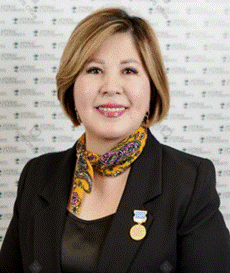
|
Makhatova Valentina Erkinovna Professor of the Department of" software engineering" E-mail:mahve@mail.ru@mail.ru Mo6. teL..::+77014594457
|
Education, academic degree, academic title: In 1986, he graduated from the Faculty of Physics and mathematics of the Ural State University named after A. S. Pushkin, specialty: "Mathematics and physics", qualification: "teacher of Mathematics and physics" НВ №085776. In 2003, at the doctoral Council of the Kazakh Academy of transport and Communications named after M. Tynyshbayev D14.45.03, he defended his dissertation for the degree of candidate of technical sciences in the specialty 01.02.04 – mechanics of solid bodies. Candidate of technical sciences (No. 0010334), specialty "01.02.04-mechanics of a deformable solid body", 23.05.2003, Protocol No. 3 2008-received the academic title of Associate Professor in the specialty mechanics (No. 0000151). 2025-received the academic title of Professor (No. 0000262) in the scientific direction of Computer Science and computer science. |
|
Scientific direction education management, atheory of information systems, computer technologies, computer systems security, development of a heuristic method for solving the problem of reforming process management in an uncertain environment, a method for optimizing the production of stable gasoline at a primary oil refining unit based on uncertainty models. |
|
|
for grant funding of scientific projects projects: Ministry of Education and Science of the Republic of Kazakhstan 2018-2020 AR 05131475 on the priority direction of science development " basic laws of rheological properties of nanocomposite polymer materials"(contract No. 248 dated March 27, 2018, State register No. 18RK00394) project executor of intra-university funding on the topic"intelligent decision-making systems for optimizing the operating modes of technological complexes of the oil refining industry" (2024) «Project manager of intra-university financing on the topic " Application of artificial intelligence methods for creating decision support systems for managing technological complexes of oil refining (2025)
|
|
|
professional activity professional experience of 39 years, including:10 years teacher of mathematics in schools of Atyrau, Zhezkazgan, Zhana Uzen(1986-1996). Since 1996, lecturer of the Department "Algebra and Geometry" of Atyrau University named after H. Dosmukhamedov (1996-1999), senior lecturer (2000-2004), Candidate of Technical Sciences (2003), head of the Department computer science. Order No. 97 p. of 17.09.2004 (2004-2013ж.-2013), Associate Professor of the Higher Attestation Commission of the Republic of Kazakhstan, Associate Professor (2008), academic professor by the decision of the Academic Council of Atyrau State University named after Kh. Dosmukhamedov in 2011, Associate Professor (2009-2017), Professor of the Department of Informatics No. 140/3 of 02.11.2011 G. has been working as a professor since 2017. By decision of the Committee for Quality Assurance in Science and Higher Education of the Ministry of Science and Higher Education of the Republic of Kazakhstan2025dated 20.03.2025 No.436 - Awarded the academic title of professor in the scientific direction of computer science and informatics (No. 0000262) |
courses taught: "cybersecurity", "architecture and organization of computer systems"," information security in computer systems"," information theory"," architecture of computer systems","information security in computer systems"," theory of information systems", Awards" microprocessor systems", "computer technologies", " computer systems security" "education management", "human-computer interaction", "IT management", " application optimization .NET", "information marketing and protection of information processes", "organization and management of an information platform |
|
Awards " 1. Badge "Honorary Worker of Education of the Republic of Kazakhstan". (2008) 2. Winner of the title "Best University Teacher-2020" of the Ministry of Education and Science of the Republic of Kazakhstan. 3. Letter of Thanks from the Ministry of Education and Science of the Republic of Kazakhstan, 2023 4. Certificate of Honor from the Ministry of Education and Science of the Republic of Kazakhstan, 2023 5. Letter of thanks from the head of the Republican public Headquarters E. Koshanov, Astana, 2022 6. Letter of thanks from the secretary of the Amanat Party D. Karibek, Astana, 2024 7. Badge "For merits in the development of science" for outstanding achievements in the field of science of the Republic of Kazakhstan. № 01134 (2025) |
publications 1.Textbook "Fundamentals of teaching a programming language", Makhatova V. E., Khammetov A. 2012, 2. Textbook "Program development equipment", Makhatova V. E., Abykanova B. T. 2016, Atyrau 3. Textbook "Programming on the Internet", Makhatova V. E., Abykanova B. T. 2016, Atyrau 4. "Methods for identifying models of control objects", Kurmangazieva L., Makhatova V. E., Textbook, 2017 5. Exercises and tasks on the main elements of the theory of functions and functional analysis 2017 G. G. Kammatov, Shambilova G., Makhatova V. ISBN 978-601-242-108-8 6. Computer networks. Textbook , Atyrau, 2019 Gabdulova A., Makhatova V. 7. Textbook on object-oriented programming, Makhatova V. E., Khammetov A. Атырау, 13 т. р., 2019 г., 8. Information and communication technologies, Atyrau: Printing house " ASU " of Atyrau state University named after H.Docmukhamedov, 2019 9. "New approaches to studying the dynamics of dinnamics film and detormable systems with variable characteristics" Monograph. Ural: publ. house "IT City", 2020-105 p. 10. monograph "Dynamics of drill strings in the production of launching operations" Atyrau, 2022 11. monograph" approaches to effective management of complex formalized objects based on intelligent information technologies and systems", 2024 |
|
|
selected publications in foreign periodicals 1. Development of mathematical models of R-1 reactor hydrotreatment unit using available information of various types, Journal of Physics: Conference Series 1399 (2019) 044024 2.Development of a Set of Models for Reactors of a Catalytic Reforming Unit Using Information of a Different Nature, 2021 8th International Conference on Electrical and Electronics Engineering 3. 2019 The 5th International Conference on e-Society, e-Learning and e-Technologies (ICSLT 2019) Workshop 2019 4.The 2nd International Conference on Information Management and ProcessingProblems of Multi-Criteria Optimization in the Fuzzy Envi-ronment and Heuristic Methods of Their Solution, January 10-126 2019 Vienna, Austria 5. METHODS OF CONSTRUCTING 6. «System concept for modelling of technological system and decision making in their management» 2021 http://monograph.com.ua/pctc/catalog/book/978-617-7319-34-3 7. «Development of matehematical models and optimization of operation modes of the oil heating station of main oil pipelines under conditions of fuzzy initial information», Eastern-European journal of enterprise technologies.Vol.6 No. 2 (114),147-162, 2021 8. Development of a Set of Models for Reactors of a Catalytic Reforming Unit Using Information of a Different Nature 2021 8th International Conference on Electrical and Electronics Engineering. 9. Structure, Morphology, and Permeability of Cellulose Films Membranes 2022, 12, 297 .https://doi.org/10.3390/membranes12030297 10. Methods of Fuzzy Multi-Criteria Decision Making for Controlling the Operating Modes of the Stabilization Column of the Primary Oil-Refining Unit. 2023 11(13), 2820 DOI:10.3390/math11132820, ISSN: 2227-7390 11.Mathematical Models for Oil Production Optimization in Fuzzy Environments: Well Stock Forecasting and Regulation, Mathematical Modelling of Engineering Problems Vol. 11, No. 2, February, 2024, 12. Decision Making for Control of the Gasoline Fraction Hydrotreating Process in a Fuzzy Environment, Processes 2024, 12(4), 669; https://doi.org/10.3390/pr12040669 13. Forecasting creditworthiness in credit scoring using machine learning methods, International Journal of Electrical and Computer Engineering (IJECE) r 5534 Vol. 14, No. 5, 2024 14. Development and Synthesis of Linguistic Models for Catalytic Cracking Unit in a Fuzzy Environment, https://doi.org/10.3390/pr12081543 Processes 2024, 12, 1543. 15. Approach to automating the construction and completion of ontologies in a scientific subject field, International Journal of Electrical and Computer Engineering http://doi.org/10.11591/ijece.v14i3.pp3064-3072 2024 16. Methods of Multi-Criteria Optimization of Technological Processes in a Fuzzy Environment Based on the Simplex Method and the Theory of Fuzzy Sets, Mathematics, September 2024, 12, 2856 DOI:10.3390/math12182856 In domestic periodicals: 1. Development of a structured model of the technological complex of benzene production at KazNTU named after K. I. Satpayev, 2017 2.Application of electronic textbooks in education "Ulagat" Publishing House of KazNPU named after V. I. Abramovich. Abaya,2018 3.Mathematical modeling and computational investigation of the dependence of the thermal stressed state of the rod on the heat transfer coefficient in the presence of a temperature of constant intensity. Bulletin of the Karaganda University, 2018 4.Construction of a complex of mathematical models of the main units of the sulfur extraction unit based on system analysis. ENU Bulletin 2019 5.The problem of decision-making on controlling the process of producing sulfur in the Claus reactor and the method of solution in a fuzzy environment. Bulletin of PSU, 2019, 3, ISSN 1811-1858 Scientific Journal Pavlodar State University named after S. Toraigyrov,2019 6. Mathematical modeling and numerical study of the dependence of the thermally stressed state of a rod on the heat exchange coefficient in the presence of a temperature of constant intensity Vestnik KarSU, Ser. matematika, Karaganda: KarSU,2018, No. 1 (89), pp. 84-92 7. Psychological aspects of youth education through the Kazakh heritage of the people reports of the Kazakh Academy of Education, Astana, 2019, No. 1 8. The use of multimedia technologies in teaching physics Vestnik KarSU, Ser. Physics, Karaganda: KarSU, 2019, No. 2 (92), pp. 38-45 ISSN 2518-7937 9. On properties of one linear operator in complex spaces of Orlicz. Vestnik KarSU, Ser. Matematika, Karaganda: KarSU Publ., 2019, No. 2 (92), pp. 38-45 10. On properties of one linear operator in complex spaces of Orlich Izvestiya nauchno-tekhnicheskogo obshchestva "Kakhak", 2020, № 4 (71) 2 11.Some statements in Orlicz spaces Proceedings of the Scientific and Technical Society" Kahak "Almaty, 2020, No. 4 (71) 12. Development of a heuristic method for solving problems KazINTUBulletin No. 2 2021 13. Bulletin of S. Toraigyrov University "application of multimedia technologies in teaching physics"2021 14. "structure of an electronic textbook on physics based on interactive computer models" Bulletin of S. Toraigyrov University, No. 3, 2022 15. Reforming unit operation control in oil and gas refining technology. Series of geology and technical shiences. ISSN 2224-5278 Number457(2023) 16. A fuzzy decision-making method for controlling operation modes of a hard-to-formalise rectification column of a delayed coking unit, News of the National Academy of Sciences of the Republic of Kazakhstan, Series of Geology and Technical Sciences 2024, DOI:10.21203/RS.3. RS-4136774 / v1 17.Building models of the atmospheric block of a primary oil refining unit based on available information of various types" communications of the National Academy of Sciences of the Republic of Kazakhstan. Physics and Computer Science series". 2024, https://doi.org/10.32014/2024.2518-1726.283 18. the role of communications in project management: strategies for improving the efficiency of JSC "NIT", " communications of the National Academy of Sciences of the Republic of Kazakhstan. Physics and Informatics Series, 1(349), 2024 https://doi.org/10.32014/2024.2518-1726.283 19. Analysis of information Search Methods and intelligent classification of information from the Darknet, , Kazkka Bulletin, No. 6 (135), 2024, DOI 10.52167 / 1609-1817214-222 20. method for optimizing the stable gasoline production process at a primary oil refining unit based on uncertainty models. KAZGUU MRSTI Bulletin 27.47.19 https://doi.org/10.58805/kazutb.v.3.24-509, 2024г. |

Naukenov Meirbek Zhusupbekovich
Leading Engineer of the Civil Protection Department, KPI Inc. LLP
Contact Details:
Email: meirbekk@mail.ru, Meirbek.Naukenov@kpi.kz
Phone: +7 (702) 512-76-09
Education:
In 2009, graduated from the Caspian Modern College with a degree in Information Systems.
In 2013, graduated from Al-Farabi Kazakh National University with a degree in 05В050710 - Materials Science and Technology of New Materials. Bachelor of Engineering and Technology from the Faculty of Physics and Technology.
In 2015, graduated from Kh. Dosmukhamedov Atyrau State University with a degree in 6M060600 - Chemistry. Master of Natural Sciences.
Professional Experience:
From January 2015 to July 2016, worked as a “Junior Researcher” at the Department of Science and Innovation.
From 2016 to 2017, worked at ANPZ LLP as a Technological Unit Operator.
January-April 2018: PSR Mechanic of the Hydrogen Production and Purification Unit;
April 2018 - December 2019: Corrosion Engineer at OKiMTsO (Department of Maintenance of Piping and Pressure Equipment), ANPZ LLP.
December 2019 - December 2021: Head of the Department of Mechanical Integrity of Equipment, ANPZ LLP.
January 2022 - September 2022: Head of the Expert Department at the Research Center “Kazakhstan Research and Development” LLP.
January - December 2023: Engineer of the Civil Protection Department, KPI Inc. LLP.
From December 2023 to the present: Leading Engineer of the Civil Protection Department, KPI Inc. LLP.
Publications:
- “Design and Fabrication of Membranes Based on PANCopolymer Obtained from Solutions in N-methylmorpholine-N-oxide” Polymers 2022, 14, 2861;
- “Specificity of Thermal Destruction of Nonwoven Mixture Systems Based on Bast and Viscose Fibers” Polymers 2025, 17, 1223;
|
Rafikova Khadichakhan Sabirzhanovna Professor of the Department of Chemical and Biochemical Engineering Contact: E-mail: kh.rafikova@satbayev.university; Mobile phone: +7-747-9448583 Author ID в Scopus 56050765000 Researcher ID Web of Science AAF-5319-2019 ORCID ID 0000-0001-8028-2244
|
Education, academic degree and title: In 2006, she graduated from the Chemistry Department of Al-Farabi Kazakh National University. Specialization "510730 - Chemistry", academic degree "Bachelor of Chemistry". In 2008, she completed her master's program at the L.N. Gumilyov Eurasian National University. Specialization "6N0112 - Chemistry", academic degree "Master of Chemistry". In 2014, she defended her dissertation for the degree of Doctor of Philosophy (PhD) in the specialty "6D073900 - Petrochemistry". In 2023, she received the title of Associate Professor in the specialty "Chemistry". |
|
Scientific interests: Ionic liquids, metal complex catalysis, deep eutectic solvents. |
|
|
Scientific grants for applied research programs: 1) BR 05236800, in the section "Catalysts based on ionic liquids for fine and industrial organic synthesis processes." (2018-2020) 2) Development of Ionic Liquid-Based Catalysts for New Green Technologies of Petrochemical Synthesis (2015-2018) 3) Development of Methods for Synthesizing New Bifunctional Ionic Liquids (2015-2018)
4) AP05132833 "Metal-Containing Ionic Liquids for Extractive Desulfurization and Denitrogenation of Motor Fuels" (2018-2020) 5) AP08857516 Metal-Containing Ionic Liquids in Agrochemistry (2020-2022) 6) AP13068542 Hydrogen Transfer Hydrogenation Reactions under the Action of Ionic Liquid-Containing Metal Complex Catalysts (2022-2024) 7) AP19676664 Deep Eutectic Solvents for Fuel Desulfurization (2023-2025) |
|
|
Professional activity: From 2014 to 2017, she worked as a lecturer at the Scientific and Educational Center for Chemical Engineering at the Kazakh-British Technical University. In July 2016, she was hired as a senior lecturer at the Institute of Chemical Engineering, Department of Chemical Engineering, KazNTU named after K.I. Satpayev. In 2017, Kh.S. Rafikova won the national project "100 New Faces of Kazakhstan." That same year, she received the title of "Best University Teacher 2017." From 2019 to 2020, Kh.S. Rafikova served as an associate professor, and from 2020 to 2021, she headed the Department of Chemical and Biochemical Engineering. During her tenure as head of the department, she successfully accredited undergraduate, graduate, and doctoral programs in the specialties "Chemical Technology of Organic Substances" and "Chemical and Biochemical Engineering." From October 2020 to November 2023, Kh.S. Rafikova was a member of the National Scientific Council for the priority: Scientific Research in the Natural Sciences. In July 2022, to improve her qualifications and exchange experience, Kh.S. Rafikova completed an internship at Sapiens University as part of the Erasmus+ Academic Mobility Program. From September 2022 to August 2023, Kh.S. Rafikova completed an internship at the School of Education at the University of Birmingham under the "Leadership in Higher Education Management" program. From September 2024 to the present, he is a professor at the Department of Chemical and Biochemical Engineering. |
Courses taught: 1. Environmental Aspects of Petrochemical Production (Russian); 2. Polymer Production and Processing Technology (Russian); 3. Organometallic Chemistry (Russian); 4. Fundamentals of Monomer Chemistry and Technology (Russian); 5. Prospects and Development of the Oil Industry (English) 6. Catalytic Methods in Organic Synthesis (English) 7. Chemmotology of Oil Products (English) 8. Chemical Analysis of Oil Products (Kazakh) |
|
Publications The list of works includes more than 30 publications. 1. Rafikova K.S.,Zazybin A.G., Bigaliyeva F.B., Meric N., Aydemir M., Pasa S., Temel H., Yu V.K.Towards the application of new ionic liquids based Ru (II) catalysts in transfer hydrogenation reactions. 12th European Congress on Catalysis – EuropaCat-XII, Kazan, Russia, 30 August – 4 September, 2015. 2. Rafikova K.S. Ionic liquids in petroleum and hydrocarbon industry. Химический журнал Казахстана, 2015, 3, С. 361-365. 3. Рафикова Х.С., Зазыбин А.Г., Кыстаубаева Н.У., Ю В.К.Cопряженное гидрирование карбонильных соединений без использования молекулярного водорода. Химический журнал Казахстана, 1, 2016, СС. 4. D. ElmaKarakaş, F. Вurap, A.Baysal, Y.S. Оcak,K. Rafikova, E. Çavuş Kaya, A.Zazybin, H.Temel, C.Kayan, N.Meriç, M.Aydemir.Synthesis аnd Characterization Of Novel Ionic Liquid Based Rh(I), Ir(III) – Phosphinite Complexes. European Conference on Molten Salts. 2016, Vienna,Austria, 3-8 July, 2016. 5. Rafikova K.S., Aydemir M., Zazybin A.G., Cavus E., Temel H. Transfer Hydrogenation Reaction Catalyzed by Homogeneous and Polymer Supported Ruthenium Complexes. Kaliningrad, Russia, 2016, 2-6 October. 6. Rafikova K.S., Meric N., Aydemir M., Zazybin A.G. Use of Transition Metal Complexes of An Ionic Liquid based Phosphinite as Catalyst in Transfer Hydrogenation of Aromatic Ketones. Kaliningrad, Russia, 2016, 2-6 October. 7. Karakaş, D. E., Durap, F., Baysal, A., Ocak, Y. S., Rafikova, K., Kaya, E. Ç., Aydemir, M. Transfer hydrogenation reaction using novel ionic liquid based Rh (I) and Ir (III)-phosphinite complexes as catalyst. Journal of Organometallic Chemistry, 2016, 824, 25-32. (Входит в базы данных Scopus и Thomson Reuters). (Impact Factor: 2.0) 8. Pasa, S., Gürler, N., Temel, H., Rafikova, K.,& Aydemir, M. Developments in transfer hydrogenations of aromatic ketones catalyzed by boron compounds. Journal of Coordination Chemistry, 2017, 70(8), 1357-1367. (IF=1.78) Входит в базы данных Scopus и Thomson Reuters).http://dx.doi.org/10.1080/00958972.2017.1300659. 9. A. Zazybin, Rafikova K.S., V.Yu, D.Zolotareva, V.M.Dembitsky, T.Sasaki. Metal-containing ionic liquids: current paradigm and applications. Russian Chemical Review, 2017, 86(12) 1254 -1270 (IF=4.085). 10. D. Zolotareva, A. Zazybin, K. Rafikova, V. M. Dembitsky, A. Dauletbakov, V. Yu. Ionic liquids assisted desulfurization and denitrogenation of fuels. Vietnam J. Chem., 2019, 57(2), 133¬163.
11. N. Meriç, C. Kayan, K. Rafikova, A. Zazybin, V. Okumuş, M. Aydemir, F. Durap. Synthesis of ionic liquid-based Ru(II)–phosphinite complexes and evaluation of their antioxidant, antibacterial, DNA-binding, and DNA cleavage activities Сhemical papers2019, Volume 73, Issue 5, pp 1199–1208. (IF=0.9) 12. N. Meriç, N. Arslan, C. Kayan, K. Rafikova, A. Zazybin, A. Kerimkulova, M. Aydemir. Catalysts for the Asymmetric Transfer Hydrogenation of Various Ketones from [3-[(2S)-2-[(diphenylphosphanyl)oxy]-3-phenoxypropyl]-1-methyl-1H-imidazol-3-ium chloride] and [Ru(η6 -arene)(μ-Cl)Cl]2 , Ir(η5 -C5Me5)(μ-Cl)Cl]2 or [Rh(μ-Cl)(cod)]2Inorganica Chimica Acta, 2019 (IF=2.4). 13. Rafikova K.S., Zazybin A.G., M. Aydemi, N. Meric, Kerimkulova A.Zh., Islam Sh.S. Asymmetric transfer hydrogenation of various ketones by complex of imidazolium with [Rh(μ-Cl)(cod)]2 6th International Caucasian Symposium on Polymers and Advanced Materials, 17-19 July, 2019 r 14. Rafikova K.S., Zazybin A.G, Kerimkulova A.Zh., Aimbekova A.. Desulfurization of Fuels by Metal-containing Ionic Liquids. 6th International Caucasian Symposium on Polymers and Advanced Materials, 17-19 July, 2019 15. Рафикова Х.С,, Зазыбин А.Г., Керимкулова А.Ж., Турсынбекова М.М,, Ислам Ш.. Синтез металлосодержащих ионных жидкостей для очистки моторных топлив. Успехи современной науки, №2,2019, Р. 18 (Журнал входит в международную базу данных Chemical abstract.) 16. Rafikova, K., Binbay, N.E., Meriç, N., Kerimkulova, A., Zazybin, A., Binbay, V., Okumuş, V., Kayan, C., Işik, U., Arslan, N. and Aydemir, M., 2020. Biological assays and theoretical density functional theory calculations of Rh (I), Ir (III), and Ru (II) complexes of chiral phosphinite ligand. Applied Organometallic Chemistry, Q2 34(7), p.e5658. 17. Akimbek A.O., Jamalova G.A. Rafikova, Kh S.Islam S., Nauryzova S.Kerimkulova A., Selenova B., Yernazarova A.K., Kaiyrmanova G.K., Yelikbayev, B.K., Pagano, M.C.,Biodesulfurization of high-sulfur oil from the Karazhanbas field by Deep Eutectic Solvents. 2 nd International Symposium on Emerging Materials and Devices June 21-25 2024, Astana, Nazarbayev University. 18. Rafikova, K., Meriç, N., Güzel, R., Arslan, N., Binbay, N.E., Kayan, C., Okumuş, V., Zazybin, A., Seilkhanov, T., Binbay, V. and Aydemir, M., 2022. Transition metals of arene derivatives with functionalized ionic liquid: DFT investigation, biological applications and electrochemical behavior of complexes. Inorganica Chimica Acta, Q2 542, p.121142. 19. Dauletbakov, A., Zazybin, A., Yu, V., Belyankova, Y., Ten, A., Rafikova, K., Zolotareva, D., Anapiyayev, B., Seilkhanov, T. and Aydemir, M., 2022. Ultrasound‐and Microwave‐promoted Synthesis, Growth‐regulating Activity and Antimicrobial Behavior of Trimecaine‐based Ionic Compounds. ChemistrySelect, Q2 7(22), p.e202104363. 20. Karakaş, D.E., Rafikova, K., Baysal, A., Meriç, N., Zazybin, A., Kayan, C., Işik, U., Saparbaykyzy, I.S., Durap, F. and Aydemir, M., 2022. Ketone transfer hydrogenation reactions catalyzed by catalysts based on a phosphinite ligand. Journal of Coordination Chemistry, Q2 75(3-4), pp.493-506. Meriç, N., Rafikova, K., Zazybin, A., Güzel, R., Kayan, C., Elma Karakaş, D., Dündar, A., Islam, S., Okumuş, V. and Aydemir, M., 2023. Application of Half‐Sandwich Metal‐Phosphinite Compounds to Biological Activities: Determine the energies of the HOMO and LUMO levels. Zeitschrift für anorganische und allgemeine Chemie, 649(2), p.e202200126. Q4 21. Rafikova, K., Meriç, N., Binbay, N.E., Okumuş, V., Erdem, K., Belyankova, Y., Tursynbek, S., Dauletbakov, A., Bayazit, S., Zolotareva, D. and Yerassyl, K., 2024. Well designed iridium-phosphinite complexes: Biological assays, electrochemical behavior and density functional theory calculations. Spectrochimica Acta Part A: Molecular and Biomolecular Spectroscopy, 318, p.124448. Q2 22. Rafikova, K., Meriç, N., Binbay, N.E., Okumuş, V., Sever, M.Ş., Belyankova, Y., Tursynbek, S., Dauletbakov, A., Sarah, B., Zolotareva, D. and Yerassyl, K., 2024. Biological assays, electrochemical behavior, and theoretical DFT calculations of Ru (II) complexes of chiral phosphinite based based on β-amino alcohols: Transfer hyrogenation of ketones using a HCOOH/Et3N mixture. Journal of Molecular Structure, 1303, p.137556.Q2 23. Işik, U., Rafikova, K., Meriç, N., Güzel, R., Kerimkulova, A., Akimbek, A., Okumuş, V., Durap, F., Kayan, C. and Aydemir, M., 2024. Half‐sandwich ruthenium (II) and iridium (III) complexes of imidazole based phosphinite ligands: antioxidant and antibacterial activities as well as electrochemical properties. ChemistrySelect, 9(6), p.e202304785. Q2 24. Ryspaeva, S., Kerimkulova, A., Rafikova, K., Nauryzova, S., Islam, S., Aydemir, M. and Kozhaisakova, M., 2024. Deep Eutectic Solvents for Sustainable Management of Asphaltene Deposition in Oil Production. Engineered Science, 29, p.es1102. Q1 25. Serikov, T.A., Jamalova, G.А., Rafikova, K.S., K Yelikbayev, B., Yernazarova, A.K., Serikovna, K.L., Zazybin, A.G., Sakhanin, V.S. and Egutkin, V.Y., 2024. Ecological, biological and biotechnological aspects of Saccharomyces Cerevisiae biomass production. Caspian Journal of Environmental Sciences, 22(2), pp.499-512. Q2 26. Sholpan Islam, Camille Rubio, Khadichakhan Rafikova, and Fabrice Mutelet. Desulfurization and Denitrogenation Using Betaine-Based Deep Eutectic Solvents. Journal of Chemical & Engineering Data Article ASAP. Q2, 76 2024 DOI:https://dx.doi.org/10.1021/acs.jced.4c00052 |
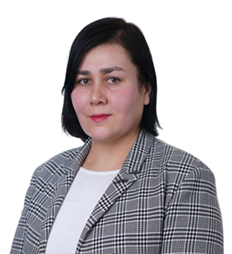
|
Shambilova Gulbarshin Kozhakhmetovna Head of the Project Office “Center for Academic Excellence” Contact: E-mail: shambilova_gulba@mail.ru Mobile phone.: +77028126200 Author ID в Scopus 6504740203 Researcher ID Web of Science М-9998-2015 ORCID ID 0000-0002-2733-986X |
Education, academic degree and title: In 1985, she graduated from the Faculty of Physics and Mathematics of the Guryev Pedagogical Institute (now Kh. Dosmukhamedov Atyrau University) with a degree in “Mathematics and Physics.” In 2005, she completed her studies at the Faculty of Economics of Kh. Dosmukhamedov Atyrau State University with a degree in “Finance and Credit.” In 1992, she defended her dissertation at the M.V. Lomonosov Moscow Institute of Fine Chemical Technology, earning the degree of Candidate of Chemical Sciences in the specialty “01.04.19 – Physics of Polymers.” In 2002, she was awarded the academic title of Associate Professor (Docent) by the Higher Attestation Commission of the Republic of Kazakhstan in the specialty “Mathematics.” In 2010, she defended her doctoral dissertation at the E.A. Buketov Karaganda State University in the specialty 02.00.06 – “High- Molecular Compounds.” In 2016, she was awarded the academic title of Professor by the Committee for Control in the Sphere of Education and Science of the Republic of Kazakhstan in the specialty “Chemistry.” |
|
Scientific interests: rheology of polymer solutions and mixtures, experimental rheology, physical chemistry of polymers |
|
|
Scientific grants for applied research programs: She participated in projects funded by the Ministry of Education and Science of the Republic of Kazakhstan (2009–2011), the Russian Foundation for Basic Research (Rheology Laboratory of INKhS RAS, Moscow) (2003–2005), contractual research with the Atyrau Oil Refinery (2001), and the Department of Entrepreneurship and Industrial-Innovative Development of the Atyrau Region Akimat (2016). She led the Grant Funding Project of the Ministry of Education and Science of the Republic of Kazakhstan for 2018–2020 titled “Fundamental Regularities of the Rheological Properties of Nanocomposite Polymeric Materials.” She is currently leading the Grant Funding Project of the Committee of Science of the Ministry of Science and Higher Education titled “Fundamental Principles for Creating Durable Asphalt Concrete Pavements Using Recycled Polymers and Lignin to Address Environmental and Infrastructure Challenges.” |
|
|
Professional activity: She has a professional experience of 43 years. Her career began in 1985–2011 at Kh. Dosmukhamedov Atyrau University in the Department of Mathematical Analysis, Mathematics, Algebra, and Geometry of the Faculty of Mathematics, Physics, and Information Technology, holding positions of research intern, lecturer, senior lecturer, head of department, associate professor, and professor. From 2011 to 2013, she served as Vice-Rector for Science and International |
Courses taught: Modern Technologies of Polymer Production (course taught in Russian and Kazakh), Current State and Prospects for the Development of the Petrochemical Industry in Kazakhstan (course taught in Russian and Kazakh), Organization and Management of Petrochemical Production (course taught in Russian and Kazakh), Catalysis in Organic Synthesis (course taught in Russian and Kazakh) |
|
Relations at the Eurasian Academy in Uralsk, and from 2013 to 2014, as Deputy Director for Academic Affairs at APEC Petrotechnic College in Atyrau. From 2014 to 2016, she was Director of the Department of Science and Innovations, and in 2016–2017, Professor of the Department of Chemistry and Chemical Technology. From 2018 to 2021, she served as Head of the Strategy Implementation and Analytics Department and Director of the Department of Strategic, Innovative, and International Development. From 2021 to 2022, she was Professor of the Department of Chemistry and Chemical Technology at Kh. Dosmukhamedov Atyrau University, and from 2022 to 2024, Professor at S. Utebayev Atyrau University of Oil and Gas. Since September 2024, she has been Head of the Project Office “Center for Academic Excellence” and concurrently Professor of the Department of Chemistry and Chemical Technology. |
Publications: The list of works includes over 200 publications.
MDPI, Basel, Switzerland. ISSN 2227-9717. www.mdpi.com/journal/processes. Q 2
L.K. Golova, G.K. Shambilova, V.G. Kulichikhin. Kinetics of Dissolution of Polyacrylonitrile in N- Methylmorpholine-N-oxide in the Absence and Presence of Cellulose. Polymer Science, Ser. B, Maik nauka/interperiodica /SPRINGER, 233 Spring st, New York, NY 10013-1578 USA, 2021, Vol. 63, No. 6, PP. 833–842, ISSN 1560-0904. DOI: 10.1134/S156009042106021X. Q 3
Switzerland, ISSN 2077-0375. DOI: 10.3390/membranes12030297. Q1, IF=4,509
K. Golova, Natalia A. Arkharova, Gulbarshin K. Shambilova, Valentina E. Makhatova, and Meirbek Zh. Naukenov. Desing and Fabrication of Membranes Based on PAN Copolymer Obtained from Solutions in N-methylmorpholine-N-oxide. Polymers 2022, 14, 2861; MDPI, Basel, Switzerland, ISSN 2073-4360. DOI: 10.3390/polym14142861. Q1, IF= 4, 967
10.3390/fib11070065. Q1
I. Vinogradov, Tatyana S. Anokhina, Aigul S. Bukanova, Fazilat B. Kairliyeva, Saule K. Bukanova and Ivan S. Levin. Membranes based on cellulose and copolymers of acrylonitrile prepared from joint solutions. Membranes, MDPI, Basel, Switzerland, 2023, 13(7), 667. ISSN 2077-0375. DOI 10.3390/membranes 13070667. Q2
1179; MDPI, Basel, Switzerland. ISSN 2227-9717. https://doi.org/10.3390/ pr12061179. Q2
|
|
|
Патент РК №6318 на полезную модель. 2021/0435.2, 05.05.2021, дата регистр. 13.08.2021
p. Авт. право № 14296, 05.01.2021 |
5.Direction
|
Barabanov Vitaly Viktorovich Head of the Center for Resource Research of the Volga-Caspian Branch of the SSC RF VNIRO Federal State Budgetary Scientific Institution (KaspNIRKh) Contact phone numbers: E-mail:barabanov2411@yandex.ru; Mobile phone: +7-917-0837665 The author's ID in Scopus is the Researcher's ID in the Web of Science - ORCID Identifier 0000-0003-0971-7465 Researcher's ID in publications - |
Education, academic degree and title:
In 2009, he graduated from the Master's degree program of Astrakhan State Technical University in Ichthyology. In 2012, he completed full-time postgraduate studies at the Department of Aquaculture and Aquatic Bioresources of Astrakhan State Technical University (AVB). In 2016, he defended his thesis for the degree of Candidate of Biological Sciences in the specialty "Aquaculture and aquatic bioresources". |
|
Research interests: fisheries, aquatic biological resources, aquaculture, fishing |
|
|
Research grants for applied research programs:
|
|
|
Professional activity: Professional experience of 18 years. 2008-2025 worked in the laboratory of marine fishes of KaspNIRKh. In 2011, he joined the Laboratory of Amateur and sport fishing as a junior researcher. In 2012, he was transferred to the position of a researcher. In 2015, Barabanov V. V. was transferred to the laboratory of semi-aquatic and riverine fish as a researcher. In 2021, he will be the head of the laboratory of semi-aquatic and riverine fish. Since February 2022, he has been the head of the Center for Resource Research of the Volga-Caspian branch of the SSC RF VNIRO Federal State Budgetary Scientific Institution (KaspNIRH).
|
Courses taught: training scientific observers to collect primary materials for various types of fishing in the Caspian Sea, amateur fishing |
|
Publications: The list of works includes about 100 publications. 1. Levashina N.V., Barabanov V.V., Myagyi N.A., Kalashnikov N.E. The state of the crayfish population in the Astrakhan region. In the collection: Fisheries science. History, modernity, prospects. Materials of the International Scientific and Practical Conference dedicated to the 110th anniversary of the establishment of GosNIORH named after L.S. Berg. Moscow, 2024. pp. 304-308. 2. Barabanov V.V., Gorokhov M.N., Zozulenko Yu.M., Kharchenko N.N., Shipulin S.V. Stocks and catches of roach, and its availability to the population of the Astrakhan region. In the collection: Russian fisheries complex: 300 years of Russian academic science. II International Scientific and Practical Conference. Moscow, 2024. pp. 53-57. 3. Barabanov V.V., Gorokhov M.N., Abdusamadov A.S., Taibov P.S., Safaraliev I.A., Shipulin S.V. Assessment of IUU fishing of sturgeon species in the Russian part of the Caspian basin. Fishing industry. 2024. No. 4. pp. 52-59. 4. Gorokhov M.N., Shipulin S.V., Barabanov V.V. About the Volga pre-estuary forbidden area. Fishing industry. 2024. No. 3. pp. 63-70. 5. Solokhina T.A., Barabanov V.V., Gorokhov M.N. On THE PROBLEM OF ANNUAL OVERFISHING of GUSTERA BLICCA BJOERKNA (CYPRINIDAE) in industrial fishing in the Astrakhan region. Fishing issues. 2024. Vol. 25. No. 3. pp. 117-130. 6. Kanieva N.A., Taibov P.S., Kozlova N.V., Ayupova A.K., Barabanov V.V., Voronina D.A., Osipova Yu.Y. On the issue of assessing the quality of raw materials from the Caspian atherina (ATHERINA BOYERI CASPIA (RISSO, 1810)). Bulletin of the Astrakhan State Technical University. Series: Fisheries. 2024. No. 2. pp. 128-133. 7. Barabanov V.V., Mikhailova A.V., Shipulin S.V., Gavrilova D.A., Myagyi N.A. Alien species of the Lower Volga and the Caspian Sea: ichthyofauna and feeding sites (deliberate introduction) Russian Journal of Biological Invasions. 2024. Vol. 17. No. 2. pp. 2-12. 8. Barabanov V.V., Vlasenko S.A., Razinkov V.P., Lepilina I.N., Levashina N.V., Fomin S.S., Vasilchenko O.M., Nikitin E.V., Mukhanova R.S., Tkach V.N., Konopleva I.V., Voynova T.V., Chakaltana-Sepulveda D.A., Shipulin S.V., Klyukina E.A., Leontiev S.Y. Results of fishing and research of stocks of commercial fish species in the Southern fisheries region of the Volga-Caspian fisheries basin in the period 2000-2020. Proceedings of VNIRO. 2024. Vol. 195. pp. 45-60. 9. Khasbulatova Z.A., Taibov P.S., Kanieva N.A., Barabanov V.V. Parasitofauna of ATHERINA BOYERI (RISSO, 1810) of the Caspian Sea. In the collection: Current problems and prospects for the development of fisheries and aquaculture in the regions. Materials of the All-Russian (national) scientific and practical conference with international participation. Makhachkala, 2023. pp. 109-117. 10. Barabanov V.V., Levashina N.V., Ponomarev R.A. The current state of commercial crayfish stocks in the Astrakhan region. In the collection: Russian fisheries complex: problems and prospects of development. I International Scientific and Practical Conference. Moscow, 2023. pp. 175-180. 11. Barabanov V.V., Levashina N.V., Klyukina E.A., Myagyi N.A. Features of amateur fishing for roach RUTILUS RUTILUS CASPICUS (YAKOVLEV, 1870) in the Astrakhan region in 2021. In the collection: Game and fish resources: use and reproduction. Materials of the III All-Russian (national) Scientific and Practical conference dedicated to the 70th anniversary of Krasnoyarsk State Agrarian University. Responsible for the issue: L.P. Vladyshevskaya, O.A. Timoshkina, E.A. Alekseeva. Krasnoyarsk, 2023. pp. 209-212. 12. Taibov P.S., Kanieva N.A., Barabanov V.V., Gavrilova D.A. The current state of the Caspian Sea's aterine reserves. In the collection: Problems of preserving the ecosystem of the Caspian Sea in the context of the development of oil and gas fields. Materials of the IX scientific and practical conference with international participation. Astrakhan, 2023. pp. 210-214. 13. Barabanov V.V., Levashina N.V., Nikitin E.V., Vasilchenko O.M., Lardygina E.G. On the issue of admission of roach producers to the spawning grounds of the Volga River delta. In the collection: Actual problems of the development of aquatic biological resources of the Russian Federation. Materials of the All-Russian conference of scientists and specialists dedicated to the 160th anniversary of N.M. Knipovich. Editor-in-chief K.M. Sokolov. Murmansk, 2023. pp. 56-58. 14. Kharchenko N.N., Romanenkova E.N., Gerlova Yu.R., Barabanov V.V. Regional specifics of exploitation of aquatic biological resources of the Caspian basin. In the collection: Russian fisheries complex: problems and prospects of development. I International Scientific and Practical Conference. Moscow, 2023. pp. 663-668. 15. Alieva A.K., Nasibulina B.M., Barabanov V.V., Kurochkina T.F., Barkhalov R.M. Biological features of the population of walleye SANDER LUCIOPERCA (LINNAEUS, 1758) of the Dagestan coast of the Caspian Sea. Bulletin of the Dagestan Scientific Center of the Russian Academy of Sciences. 2023. No. 91. pp. 6-13. 16. Shipulin S.V., Barabanov V.V., Levashina N.V., Lepilina I.N., Nikitin E.V., Vasilchenko O.M., Klyukina E.A. Reproduction and state of reserves of aquatic biological resources in the lower reaches of the Volga in 2003-2022. Fishing issues. 2023. Vol. 24. No. 3. pp. 96-119. 17. Barabanov V.V., Gorokhov M.N., Solokhina T.A., Levashina N.V. The influence of fishing on the biological structure of the population of pike ESOX LUCIUS (L.) avandelta of the Volga River. Bulletin of the Astrakhan State Technical University. Series: Fisheries. 2023. No. 4. pp. 18-25. 18. Taibov P.S., Kanieva N.A., Barabanov V.V. the current state of biology, reserves and fishing of ATHERINA (ATHERINA BOYERI CASPIA (EICHWALD)) in the western part of the Middle and Northern Caspian Sea. Bulletin of the Astrakhan State Technical University. Series: Fisheries. 2023. No. 1. pp. 7-17. 19. Taibov P.S., Kanieva N.A., Barabanov V.V., Kozlova N.V. morphophysiological and biochemical studies of Caspian ATHERINA (ATHERINA BOYERI CASPIA RISSO, 1810). Vestnik of Astrakhan State Technical University. Series: Fishing Industry. 2023. No. 3. pp. 82-89. 20. Safaraliev I.A., Barabanov V.V., Maznikova O.A. An indicator approach in the qualitative assessment of the state of the long-toed crayfish reserve in the Volga River and its watercourses (Astrakhan region). Proceedings of VNIRO. 2023. Vol. 191. pp. 25-36. 21. Akentieva E.M., Aleynikova A.M., Alekseev G.V., Amosova V.M., Ananicheva M.D., Andreeva A.P., Anisimov O.A., Arzhanova N.M., Afanasyev D.F., Bardina S.V., Baklanov A.A., Baloshnikova Zh.A., Barabanov V.V., Bardin M.Yu., Belousov V.N., Bogdanovich A.Yu., Varentsov M.I., Vertyankina V.Yu., Voloshchuk E.V., Gavrilova S.Yu. and others. The third assessment report on climate change and its consequences on the territory of the Russian Federation. St. Petersburg, 2022. 22. In Chekhomov S.P., Barabanov V.V., Razinkov V.P. The influence of changes in climatic conditions on the ecosystem of the Northern Caspian Sea. In the collection: Climate change in the Caspian Sea region. Materials of the International Scientific Conference. Astrakhan, 2022. pp. 178-179. 23. Kostyanoy A.G., Eremina T.R., Ivanov V.V., Lobanov V.B., Krovnin A.S., Amosova V.M., Afanasyev D.F., Barabanov V.V., Belousov V.N., Voloshchuk E.V., Ginzburg A.I., Gordeeva S.M., Dolgov A.V., Zhukova S.V., Zezera A.S., Zuenko Yu.I., Lardygina E.G., Lebedev S.A., Luchin V.A., Mezentseva L.I., Mikhailova A.V., Razinkov V.P., Rostov I.D., Serykh I.V., Trusenkova O.O., Ustinova E.I., Khen G.V. Marine natural systems. 2022. P. 192. 24. Taibov P.S., Kanieva N.A., Barabanov V.V., Magomedova K.M. Commercial and biological characteristics of the common sprat CLUPEONELLACULTRIVENTRISCASPIA and ATHERINA ATHERINAMOCHONCASPIA In the Tersko-Caspian fisheries subdistrict (Republic of Dagestan) In 2021 In the collection: Biological diversity: study, conservation, restoration, rational use. Materials of the III International Scientific and Practical Conference . Simferopol, 2022. pp. 238-243. 25. Barabanov V.V., Razinkov V.P., Chaplygin V.A., Petrushkieva D.S., Taibov P.M., Shipulin S.V. Observers at fisheries in the southern fisheries region of the Volga-Caspian fisheries basin. In the collection: Materials of the First All-Russian Conference of observers at the fishery. Conference materials. The editor is Ch.M. Nigmatullin. Kaliningrad, 2022. pp. 72-79. 26. Gorokhov M.N., Tkach V.N., Barabanov V.V. A mechanism for assessing anthropogenic impact on aquatic biological resources in the Astrakhan region. Fishing industry. 2022. No. 6. pp. 16-20. 27. Barabanov V.V., Gorokhov M.N., Shipulin S.V. On measures to preserve and restore the population of the RUTILUS RUTILUS CASPICUS roach (JAKOVLEV, 1870). Fishing industry. 2022. No. 5. pp. 77-81. 28. Barabanov V.V. Vobla – 150 years of research: past, present and future. Astrakhan, 2020, 96 p . 29. Barabanov V.V., Klyukina E.A. The main periods of prohibition of fishing for aquatic biological resources in the Volga delta and their biological meaning. Fishing industry. 2020. No. 3. pp. 76-79. 30. Barabanov V.V., Izherskaya V.A. Assessment of the state of freshwater ichthyofauna of the Volga-Akhtuba floodplain at the present stage (in 2018-2019). Bulletin of the Astrakhan State Technical University. Series: Fisheries. 2020. No. 2. pp. 52-58. |
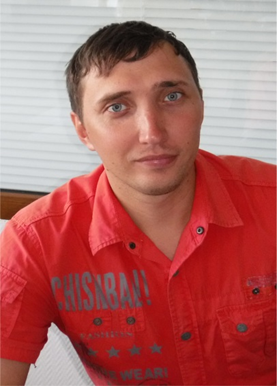
|
Ganbarov Khudaverdi Ganbar Doctor of Biological Sciences, Professor. Head of the Microbiology and Virology Research Laboratory at Baku State University. Baku, Azerbaijan Tel: +994 503270556 Email: khganbarov@bsu.edu.az Orcid ID: https://orcid.org/0000-0002-6847-3598 Web of Science Research ID: E-2717-2017 AD Scientific Index ID: 1388248 |
Education, academic degree and title: In 1973, he graduated from the Faculty of Biology at Baku State University with a degree in Biology. In 1979, he defended his dissertation for the degree of Candidate of Biological Sciences in the specialty "03.00.07-Microbiology" at the Institute of Biochemistry and Physiology of Microorganisms of the USSR Academy of Sciences. In 1987, he received the academic title of Senior Researcher in Microbiology. In 1990, he defended his dissertation for the degree of Doctor of Biological Sciences at Moscow State University. In 1995, he received the academic title of Professor in Microbiology. |
|
Research interests: Biochemistry and physiology of microorganisms, microbiology, biotechnology, bioconversion of plant waste, fungal hydrolytic enzymes, microbial synthesis of nanoparticles, production of probiotics, and the search for new antimicrobial agents. |
|
|
Research grants for applied research programs: 1. UN Grant Project: "Reducing Transboundary Degradation of the Kura-Araks River Basin (2011-2012)". 2. EU Grant Program: "Creation of a Virtual Microbiology Laboratory (2014-2015)". 3. Grant from the Ministry of Education and Science of the Republic of Kazakhstan (in collaboration with the Biotechnology Research Center of Atyrau State University): "Isolation and Study of Starter Culture Strains for New Fermented Milk Drinks from Camel Milk (2015-2017)". 4. ISESCO Grant Project: "Creation of an Interdisciplinary Research Center for the Production and Testing of Advanced Materials and Compounds for Application in Biomaterials (2021-2023)" |
|
|
Professional activity: Professional activity: 1967-1968 - Keshli Machine-building Plant, worker, 2nd class turner (Baku, Azerbaijan); 1973 -1974 - Institute of Microbiology of the Academy of Sciences of the Azerbaijan SSR, Senior laboratory assistant, Junior Researcher (Baku, Azerbaijan); 1974-1982 – IBFM, Biological Research Center of the USSR Academy of Sciences: intern in 1974-1975; full-time postgraduate in 1975-1978; researcher from 1979 to 1982 (Pushchino -on-Oka, Moscow region, Russia); 1983-1992 - Institute of Microbiology of the Academy of Sciences of Azerbaijan, Deputy Director and Head of the Laboratory (Baku, Azerbaijan)); 1992-2010 - Baku State University, Professor of the Department of Microbiology (Baku); 2011-2019 - Baku State University, Head of the Department of Microbiology (Baku); From 2020 to the present, he has been the Head of the Scientific Research Laboratory of Microbiology and Virology at the Center of Excellence for Research, Development and Innovation at Baku State University (Baku). |
Courses taught: (in Azerbaijani, Russian, and English) Microbiology, biotechnology, microbial biochemistry, industrial microbiology, and biotechnological methods of environmental protection. |
|
Publications: Textbooks 1. Ganbarov H.G., Shbrahimov A.Sh., Abushev R.A. Fundamentals of Biotechnology. Baku, 1994, 283 pages (in Azerbaijani). 2. Genberov H.G., Abışov R.A., İbrahimov A.Ş. Bioteknoloji. Ankara, 1995, 173 pages (in Turkish). 3. Ganbarov H.G., Tagizade Z.A., Kuliyeva N.A. Biotechnologists. Baku, 2005, 359 pages (in Russian). 4. Ganbarov H.G., Abdullayeva N.A. Biochemistry of microorganisms. Baku, 2008, 204 pp. (in Russian) Baku, 2013, 172 pp. (in Azerbaijani) 5. Ganbarov Kh.G., Abushev R.A., Suleymanova G.Ch., Gasanova S.A. Virology. Baku, 2013, 191 pp. (in Azerbaijani) 6. Ganbarov Kh.G., Jafarov M.M., Guseinova S.I., Abdulgamidova S.M. Biology of yeast. Baku, 2016, 234 pp. (in Azerbaijani) 7. Ganbarov H.G., Jafarov M.M. Fundamentals of industrial microbiology. Baku, 2018, 292 p. (in Azerbaijani) 8. Mammadov Z., Ganbarov H.G., Agayeva N.A. Immunology. Baku, 2018, 311 pages (in Azerbaijani) 9. Ganbarov H.G., Jafarov M.M., Huseynova S.Sh. Genetics of Microorganisms. Baku, 2014, 235 pages (in Azerbaijani) Monographs 1. Ganbarov Kh.T. Ecological and physiological characteristics of wood-destroying higher basidiomycetes. Baku: Elm, 1990, 197 p. (in Russian) 2. Ganbarov Kh.G., Jafarov M. Microbiology of medicinal and dietary fermented milk products. Baku, 2001, 129 p. (in Azerbaijani) 3. Ganbarov Kh.G., Kerimov V.M. Ecological and biological characteristics of wood-destroying basidiomycetes in the northern part of Azerbaijan. Baku, 2011, 152 p. (in Azerbaijani). 4. Ganbarov Kh.G., Agayeva S.A., Sadikhoa A.S. Mycorrhiza-forming fungi in the Talysh Forests, Baku, 2012, 178 p. (in Azerbaijani). 5. Ganbarov H.G., Abdulgamidov S.M. Variability of yeast and correction of their properties by electromagnetic fields. Saarbruchen (Germany): LAP Lambert Academic Publishing, (Germany) 2012, 144 pages. (in Russian) 6. Ganbarov H.G., Mammadov R.M. Antibacterial properties of essential oils obtained from aromatic plants of Azerbaijan, Baku, 207 pages. (in Azerbaijani). 7. Ganbarov H.G., Jafarov M.M. Microbiology of spontaneous home-made curdled milk in Azerbaijan. Baku, 2013, 345 p. (in Azerbaijani). 8. Ganbarov K., Mammadova R., Ağayeva N., Abdulgamidova S. Antimicrobial activity of essential cils of aromatic plants. Saarbruchen (Germany): LAP Lambert Academic Publishing, 2016, 191 p. Inventions 1. Mekhtieva N.A., Ismailov N.M., Ganbarov Kh.G. "Pseudomonas aeroginosa 10 strain producing 3, 4-dimethylbenzoic acid". USSR. Author's Certificate No. 548045, 1975. 2. Golovleva L.A., Ganbarov Kh.G., Chermensky D.N. "Strain of somatic structures of the fungus Panus tigrinus BKMF-2475D, degrading lignins and cellulose in plant waste". USSR. Author's Certificate No. 1097676, 1982. 3. Ganbarov Kh.G., Ismailov E.I., Muradov P.Z. "The Bjerkandera adusta1 fungus strain is a producer of a complex of cellulolytic enzymes during surface cultivation." USSR. Author's Certificate No. 1295745, 1985. 4. Ganbarov Kh.G., Muradov P.Z. "Method for producing a protein feed product." USSR. Author's Certificate No. 1511272, 1986. 5. Ganbarov Kh.G., Mammedyarov M.A., Muradov P.Z. "The somatic structure strain of the Bjerkandera adusta1 fungus is a xylanase producer for surface cultivation." USSR. Author's Certificate No. 1566718, 1988. 6. Ganbarov Kh.G., Moshkovich F., Muradov P.Z., Kostyshin S., Rasulova I.D. Method for Obtaining Hydrolytic Enzymes. USSR. Author's Certificate No. 4942939, 1992. 7. Ganbarov Kh.G., Jafarov M.M. Lactic Acid Bacteria Strain Lactobacillus pentosum BDU-KD27 with High Antimicrobial Activity. Patent of the Republic of Azerbaijan No. İ 2008 0070, 2008. 8. Jafarov M.M., Ganbarov Kh.G. Selective Nutrient Medium for Growing Lactic Acid Bacteria. Patent of the Azerbaijan Republic No. İ 20090081, 2009 9. Ismailov K.S., Mammadov R.M., Ganbaro H.G. No. İ 2009 0081, 04/21/2009 İsmayılov R.C., Məmmədova R.M., Qənbərov X.Q. Composition with antimicrobial activity. Patent of the Republic of Azerbaijan No. İ 2011 0039, 2011 10. Ganbarov Kh.G., Abishev I.M., Abdulgamidova S.M. A method for restoring the properties of the yeast fungus Candida kefir BD2. Patent of the Republic of Azerbaijan No. İ 2013 0051, 2013 11. Magerramov A.M., Ganbarov H.G., Shikhaliyev N.G., Israilov A.A. Complex tris-(2-4 bis (trixlormetyl))-1,3,5-triazapentadienato Mn (III) as an antimicrobial agent. Patent of the Republic of Azerbaijan No. İ 2017 0059, 2017 12. Ganbarov H.G., Shafieva S.M., Agayeva N.A. Method for long-term preservation of non-spore-forming yeasts of the genus Candida. Patent of the Republic of Azerbaijan No. İ 2020 0016, 2020 13. Ganbarov H.G., Ismiev A.I., Shoaib M., Israilova A.A., Maharramov A.M. “Ethyl-6-hydroksi-6-methyl-3-oxo-4-phenyl-1,3,4,5,6,7-hexanhidrobenzo {c} {1,2} oxazol-5-carboxylamide as an antimicrobial agent against gram-negative bacteria. Patent of the Republic of Azerbaijan No. İ 2020 0097, 2020 14. Magerramov A.M., Bayramov M.R., Ganbarov H.G., Mamedov I.G., Javadova Z.M., Agayeva M.A., Javadov M.A., Israilova A.A., Gasanova G.M. (2-hydroxy-3-allyl-5-isodecyl-benzyl)-diethylammonium chloride as a specific bactericide against the dangerous pathogen Staphylococcus aureus.” Eurasian Patent No. 037888, 2021 15. Ganbarov H.G., Ismailoa V.M., Yusubov N.N., Binate G., Mammadov I.A. Antibacterial and antifungal agent. Patent of the Republic of Azerbaijan No. İ 2025 0051, 2024 Publications in scientific journals and collections: Publications in scientific journals and collections total over 450 works. Below are scientific articles from 2020-2025. 1.Mehrabani M.G., Safa K.D., Rahimi M., Alyari M., Ganbarov K., Kafil H. Thiazolidine-2-thione and 2-imino-1,3-dithiolane derivatives: synthesis and evalution of antimicrobial activity /Pharmaceutical chemistry Journal, 2020, V.54, N6, p.556-563 2.Gholizadeh P., Aghazadeh M.,Ghotaslou R., Rezaee M., Pizzadeh T., Köse S., Ganbarov Kh., Yousefi M., Kafil H. CRISPR-cas system in the acquisition of virulence genes in dental-root canal and hospital-acquired isolates of Enterococcus faecalis // Virulence, 2020, 11 (1), p.1257-1267 http://doi.org/10.1080/21505594.2020.1809329 3.Shoaib M., Ismiyev A., Ganbarov K., Israyilova A. Antimicrobial activity of novel functionally substituted monocyclic and Spirocyclic cyclohexane derivatives // Pakistan Jour.Zoology, 2020, V.52 (1), p.1-4 4.Barhaghi M., Taghizadeh S., Kashi P., Asgharzadeh M., Gholizadeh P., Ganbarov K., Tanomand A., Bastami M., Moaddab S., Shokouhi B., Kafil H. Trends in Mycobacterium tuberculosis transmission during a 10-year period (2006-2016) in the Northwest of Iran by MIRU-VNTR Molecular typing // Jundishapur J.microbiol., 2020, 13(1), e95891 doi:10.5812/jjm.95891 5. Исмиев А.И., Шоаиб М., Доценко В.В., Ганбаров Х.Г., Исраилова А.А., Магеррамов А.М. Синтез и биологическая активность диэтиловых эфиров 8 – (диалкиламино) – 3 – арил – 6 – оксо – 2,4 – дицианобицикло (3,2,1) октан – 2,4 – дикарбоновой кислоты // Журнал общей химии, 2020, т.90, №8, с.1207-1215. 6.Abdi S., Ghotaslou R., Asgharzadeh M.,Mehramouz B., Hasani A., Baghi B., Tanomand A., Narenji H., Yousefi B., Gholizadeh P., Yousefi M., Bastami M., Ganbarov K.,Hossein K. Adeb Efflux pump gene knockdown by mRNA mediated peptide nucleic acid in multidrug resistance Acinetobacter baumanii //Microbial Pathogenesis, 2020, 139:103825, p.1-5 7.Narenji H., Teymournejad O., Rezaee M., Taghizadeh S., Mehramouz B., Aghazadeh M., Asgharzadeh M., Madhi M., Gholizadeh P., Ganbarov K., Yousefi M., Pakravan A., Dal T., Ahmadi R., Kafil H. Antisense peptide nucleic acids against fts Z and efa A genes inhibit growth and biofilm formation of Enterococcus faecalis // Microbiol. Pathogenesis, 2020, 139:103907. https://doi.org/10.1016/j.micpath.2019.103907 8.Yousefi L., Leylabadlo H., Pourlak T., Eslami H., Taghizadeh S., Ganbarov K., Yousefi M., Tanomand A., Yousefi B., Kafil H. Oral spirochetes: Pathogenic mechanisms in periodontal disease // Microbiol. Pathogenesis, 2020, 144:104193. P.1-7. https://doi.org/10.1016/j.micpath.2020.104193 9.Khodadadi E., Maroufi P., Esposito I., Ganbarov K., Esposito S., Yousefi M., Zeinalzadeh E., Kafil H. Study of combining virtual screening and antiviral treatments of the Sars-CoV-2 (Covid-19) // Microbial Pathogenesis, 2020, 146:104241. p.1-9. https://doi.org/10.1016/j.micpath.2020.104241 10.Karimi N., Jabbari V., Nazemi A., Ganbarov K., Tanomand A., Karimi S., Abbasi A., Yousefi B., Khodadadi E., Kafil H. Thymol, cardamom and Lactobacillus plantarum nanoparticles as a functional candy with high protection against Streptococcus mutans and tooth decay // Microbial pathogenesis , 2020, 148:104481, p.1-8. https://doi.org/10.1016/j.micpath.2020.104481 11.Fathizadeh H., Taghizadeh S., Safari R., Khiabani S., Babak B., Hamzavi F., Ganbarov K., Esposito S., Zeinalzadeh E., Dao S., Koze S., Kafil H. Study presence of Covid-19 in the sweat of patients infected with Covid-19 //Microbial pathogenesis. 2020, 149:104556, p.1-5 https://doi.org/10.1016/j.micpath.2020.104556 12.Leylabadlo H., Ghotaslou R., Feizabadi M., Farajnia S., Moaddab S., Ganbarov K., Khodadadi E., Tanomand A., Sheykhsaran E., Yousefi B., Kafil H. The critical role of Faecalibacterium prausnizii in human health: An overview // Microbial pathogenesis, 2020, 149:104344, p.1-12 https://doi.org/10.1016/j.micpath.2020.104344 13.Abdi S., Ghotaslou R., Ganbarov K., Mobed A., Tanomand A., Yousefi M., Asgharzadeh M., Kafil H. Acinetobacter baumannii efflux pumps and antibiotic resistance // Infection and Drug Resistance, 2020, 13, p.423-434. https://doi.org/10.2147/IDR.5228089 14.Gholizadeh P., Koze S., Dao S., Ganbarov K., Tanomand A., Dal T., Aghazadeh M., Ghotaslou R., Ahangarzadeh M., Yousefi B., Kafil H. How CRISPR-cas system could be used to Combat Antimicrobial Resistance // Infection and Drug Resistance, 2020, 13, p.1111-1121 https://doi.org/10.2147/IDR.S247271 15.Khodadadi E., Zeinalzadeh E., Taghizadeh S., Mehramous B., Kamounah F., Khodadadi E., Ganbarov K., Yousefi B., Bastami M., Kafil H. Proteomic Applications in Antimicrobial resistance and Clinical Microbiology Studies // Infection and Drug Resistance, 2020, 13, p.1785-1806 https://doi.org/10.2147/IDR.S238446 16.Fathizadeh H., Hayat S., Dao S., Ganbarov K., Tanomand A., Asgharzadeh M., Kafil H. Long non-coding RNA molecules in tuberculosis // International Journal of Biological Macromolecules, 2020, 156, p.340-346. https://doi.org/10.1016/j.ijbiomac.2020.04.030 17.Fakhri E., Eslami H., Maroufi P., Pakdel F., Taghizadeh S., Ganbarov K., Yousefi M., Tanomand A., Yousefi B., Mahmoudi S., Kafil H. Chitosan biomaterial application in dentistry // International Journal of Biological Macromolecules, 2020, 162, p.956-974 https://doi.org/10.1016/j.ijbiomac.2020.06.211 18.Gholizadeh P., Safari R., Marofi P., Zeinalzadeh E., Pagliano P., Ganbarov K., Esposito S., Khodadadi E., Yousefi M., Kafil H. Alteration of liver biomarkers in Patients with SARS-CoV-2 // Journal of inflammation research, 2020, 13, p.285-292. https://doi.org/10.2147/JIR.S257078 19.Ismiev A.I., Shoaib M., Dotsenko V.V., Ganbarov K.G., Israilova A., Magerramov A.M. Synthesis and Biological Activity of 8-(Dialkylamino)-3-aryl-6-oxo-2,4-dicyanobicyclo[3.2.1]octane-2,4-dicarboxylic Acids Diethyl Esters //Russian Journal of General Chemistry, 2020, V.90, N8, p.1-8 DOI:10.1134/S1070363220080071 20.Khanmohammadi S., Karimian R., Mehrabani M., Mehramuz B., Ganbarov K., Ejlali L., Tanomand A., Kamounah F., Resaee M., Yousefi M., Sheykhsaran E., Kafil H. Poly (ε-Caprolactone)/Cellulose Nanofiber Blend Nanocomposites Containing ZrO2 Nanoparticles: A New Biocompatible Wound Dressing Bandage with Antimicrobial Activity // Advanced Pharmaceutical Bulletin, 2020, 10 (4), p.577-585. doi:10.34172/apb.2020.069 21.Rad A., Abbasi A., Kafil H., Ganbarov K. Potential Pharmaceutical and Food Applications of Postbiotics: A Review // Current Pharmaceutical Biotechnology, 2020, 21(15), p.1576-1587 DOI: 10.2174/1389201021666200516154833 22.Rahimi M., Noruzi E., Sheykhsaran E., Ebadi B., Molaparast M., Mehrabani M., Mehramouz B., Yousefi M., Ahmadi R., Yousefi B., Ganbarov K., Kamounah F., Kafil H. Carbohydrate polymer-based silver nanocomposites: recent progress in the antimicrobial wound dressing // Carbohydrate polymers, 2020, 231:115696. https://doi.org/10.1016/j.carbpol.2019.115696 23.Najafi K., Ganbarov K., Gholizadeh P., Tanomand A., Rezaee M., Mahmood S., Asgharzadeh M., Kafil H. Oral cavity infection by Enterococcus faecalis: virulence factor and pathogenesis // Reviews in Medical Microbiology, 2020,31, p.51-60. DOI: 10.1097/MRM.0000000000000168 24.Ozma M., Maroufi P., Khodadadi E., Kose S., Esposito I., Ganbarov K., Dao S., Esposito S., Zeinalzadeh E., Dal T., Kafil H. Clinical manifestation, diagnosis, prevention and control of SARS-CoV-2 (COVID-19) during the outbreak period // Le Infezioni in Medicina, 2020, N2, p.153-161 25.Fathizadeh H., Maroufi P., Dao S., Koze S., Ganbarov K., Pagliano P., Esposito S., Kafil H. Protection and disinfection policies against SARS-CoV-2 //Le Infezioni in Medicina, 2020, 2, 185-191. 26.Aghamali M., Taghizadeh S., Mehramuz B., Gholizadeh P., Tanomand A., Ganbarov K., Leylabadlo H., Asgharzadeh M., Kafil H. Nasal carriage of methicillin-resistant Staphylococci among healthcare workers of a university teaching hospital, Iran // GMS hygiene and infection control, 2020, V.15, p.1-6. DOI:10.3205/dgkh000352 27.Ganbarov K.,Shoaib M.,Ismiyev A.Evaluation of anti-Candida properties of 2,4-diethoxycarbonyl-1,5-hydroxy-5-methyl-3-phenyl-N-oxyethyl-1cyclohexanyl-amine // Journal of Microbiology and Biotechnology with Research and Reports, 2020, 1(1):1001, p.1-4 28.Mirzayeva Sh.A., Ganbarov Kh. Influence of sugars on the growth of lactic acid bacteria strains isolated from the phyllosphere of plants // Abstract of III International Scientific and Practical Conference, February 1-3, 2021, Rome, p.45-48 29.Israyilova A.A., Shoaib M., Ganbarov K.G. The antimicrobial activity of 1-(6-hydroxy-3,6-dimethyl)-2,4-diphenyl-4,5,6,7-tetrahydro-2h-indazol-5-)ethane-1-one derivative // Materials of the International scientific and practical conference “ Modern problems of native sciences and Interdisciplinary research”, Аtirau (Kazakhstan), 2021, part 1, p.11-13 30.Huseynzada A.E., Jelsch C., Akhundzadeh H.N., Soudani S., Nasr C.B., Doria F., Hasanova U.A., Freccero M., Gakhramanova Z., Ganbarov K.G., Najafov B. Synthesis, crystal structure and antibacterial studies of 2,4,6- trimetoxybenzaldehyde based dihydropyrimidine derivatives //Journal of Molecular Stucture, 2021,1241:130678, p.1-9 https://doi.org/10.1016/j.molstruc.2021.130678 31.Shoaib Muhammad, Ganbarov Khudaverdi, Ismiyev Arif, Babayeva Irada, Iftikhar Hussain. Agar well diffusion assay to evaluate anti-yeast properties of diethyl 1-5-(2-(1-(4-bromophenyl)ethylidene)hydrazinyl)-3-methyl-1,2-dihydro-(1,1-diphenyl)-2,6-dicarboxylate// Microbiology and Biotechnology pages, 2021, Vol.1(1):1, p.1-4 32.Азадалиева С.Ф., Ганбаров Х.Г., Джафаров М.М., Гусейнова С.И. Влияние количества биомассы на образование наночастиц серебра грибом Saccharomyces ellipsoideus BSU-XR1 // Научно-практический журнал «Современная наука». Серия естественные и технические науки, 2021, №5, С.7-11. DOI:10.37882.2223-2966.2021.05.02 33.Babakhani S., Fahmi A., Katebi H., Quria A., Majnouni A., Ganbarov K., Kafil H. Non-sterile corn steep liquor a novel, cost effective and powerful culture media for Sporosarcina pasteurii cultivation for stand improvment // Journal of Applied Microbiology, 2021, V.130(4), P.1232-1244. DOI:10.1111/jam.14866 34.Азадалиева С.Ф., Джафаров М.М., Гусейнова С.И. Ганбаров Х.Г. Влияние концентрации AgNO3 на формирование наночастиц серебра штаммом дрожжевого гриба Saccharomyces ellipsoideus BSU-XR1 // Международный научно-исследовательский журнал, 2021 (Екатеринбург), №12 (114), часть 1, с.174-179 35.Fathizadeh H., Afshar S., Masoudi M., Gholizadeh P., Asgharzadeh M., Ganbarov Kh., Koze S., Yousefi M., Kafil H. SARS-CoV-2 vaccines stucture, mechanisms and effectivenees: A review // International journal of Biological Macromolecules, 2021, V.188, p.740-750. https://doi.org/10.1016/j.ijbiomac.2021.08.076 36.Ozma M., Khodadadi E., Rezaee M., Kamounah F., Asgharzadeh M., Ganbarov K., Aghazadeh M., Yousefi M., Pirzadeh T., Kafil H. Induction of proteome changes involved in biofilm formation of Enterococcus faecalis in response to gentamisin // Microbial Pathogenesis, 2021, 157:105003. https://doi.org/10.1016/j.micpath.2021.105003 37.Ozma M., Khodadadi E., Pakdel F., Kamounah F., Yousefi M., Yousefi B., Asgharzadeh M., Ganbarov K., Kafil H. Baicalin, a natural antimicrobial and anti-biofilm agent // Journal of Herbal Medicine, 2021, V.27:100432. https://doi.org/10.1016/j.hermed.2021.100432 39.Yousefi L., Osquee H., Ghotaslou R., Rezaee M., Pirzadeh T., Sadeghi J., Hemmati F., Yousefi B., Moaddab S., Yousefi M., Shirmohammadi M., Somi M., Ganbarov K., Kafil H. Dysregulation of IncRNA in Helicobacter pylori- infected gastric cancer cells // Biomed Research International, 2021, article ID 6911734, p.1-10. https://doi.org/101155/2021/6911734 40.Faezi N., Gholizadeh P., Sanogo M., Oumarou A., Mohamed M., Cissoko Y., Sow M., Keita B., Baye Y., Akouda P., Iknane A., Diallo M., Gansame Z., Khan B., Koze S., Allahverdiopur H., Ganbarov Kh., Soumare M., Asgharzadeh M., Dao S, Kafil H. Peoples attitude toward Covid-19 vaccine, acceptance and social trust among African and Middle East countries // Health Promotion Perspectives, 2021, V.11(2), P.171-178. DOI:10.34172/hpp.2021.21 41.Azizian K., Osquee H., Pourlak T., Hosseinpour R., Asgharzadeh M., Ganbarov K., Kafil H. Genetic diversity of Lactobacillus spp. isolates from oral cavity and their probiotic and antimicrobial properties // Gene reports, 2021, 24:101231, p.1-5 https://doi.org/10.1016/j.genrep.2021.1011231 42.Hosseinnejad S., Mammadov Z., Shafiyeva S., Asefi Z., Ganbarov K. Isolation and characterization of Pedicoccus sp. with antimicrobial activity from phyllosphere of fruities trees // Eurasian Chemical communications, 2021, 3, p.693-699. DOI:10.22034/ecc.2021.296023.1205 43.Aghamali M., Gholizadeh P., Moadab S., Yousefi M., Asgharzadeh M., Ganbarov K., Kafil H. Multi-drug resistant and carbapenemase co-producing gram-negative bacilli in northwest of Iran // Gene Reports, 2021, V23, 101181, p 1-6. 44.Сафарова А.Х., Ганбаров Х.Г. Характеристика частично очищенной внеклеточной кислой протеазы гриба Aspergillus flavus BDU-44 // Научно-практический журнал «Современная наука. Серия естественные и технические науки», 2021, №6, с.41-46. 45. Сафарова А.Х., Ганбаров Х.Г. Свойства частично очищенной внеклеточной кислой протеазы полученной из Penicillium notatum BDU-M5 // Международный научно-исследовательский журнал. Биологические науки, 2022, №2 (116), часть 2, с.6-12. 46.Israyilova A., Shoaib M., Ganbarov K., Huseynzada A., Hajieva S., Ismiyev A. Antimicrobial activity and time kill curve study of newly synthesized dialkyl carboxylate cyclohexane derivative; A novel anti-Pseudomonas aeruginosa compound // Acta Scientiarum Technology, 2022, 44:058868 https://doi.org/10.4025/actascitechnol.v44i1.58868 47.Kazeminava F., Javanbakht S., Nouri M., Adibkia K., Ganbarov K., Yousefi M., Ahmadi M., Gholizadeh P., Kafil H. Electrospun nanofibers based on carboxymethyl cellulose/polyvinil alcohol as a potential antimicrobial wound dressing // İnternational Journal of Biological Macromolecules, 2022, 214, 111-119. https://doi.org/10.1016/j.ijbiomac.2022.05.175 48.Hasanova U.A., Aliyev A.R., Hasanova I.R., Gasimov E.M., Hajiyeva S.F., Israyilova A.A., Ganbarov K.G., Gakhramanova Z.O., Huseynova P.F., Amrahov N.R. Functionalization of surgical meshes with antibacterial hybrid Ag@crown nanoparticles // Digest Journal of Nanomaterials and biostructures, 2022, V.17, N1, p11-19. DOI:10.15251/djnb.2022.171.11 49.Hajiagha M., Taghizadeh S., Asgharzadeh M., Dao S., Ganbarov K., Köze S., Kafil H. Gut microbiota and human body İnteractions; İts impact on health: A review // Current Pharmaceutical Biotechnology, 2022, 23, 4-14. DOI:10.2174/1389201022666210104115836 50.Fathizadeh H., Pakdel F., Saffari M., Esmaeili D., Heravi M., Dao S., Ganbarov K., Kafil H. Bacteriocins: Recent advances in its Application as an Antimicrobial Alternative // Current Pharmaceutical Biotechnology, 2022, 23 (8), p.1028-1040 DOI:10.2174/1389201022666210907121254 51.Ozma M., Khodadadi E., Rezaee M., Asgharzadeh M., Aghazadeh M., Zeinalzadeh E., Ganbarov K., Kafil H. Bacterial proteomics and its application in pathogenesis studies // Current Pharmaceutical Biotechnology, 2022, 23 (10), 1254-1256 DOI: 10.2174/1389201022666210908153234 52.Nezhadi J., Taghizadeh S., Khodadadi E., Yousefi M., Ganbarov K., Yousefi B., Leylabadlo E., Asgharzadeh M., Tanomand A., Kazeminaya F., Kafil H. Antisens agents against antibiotic-resistant bacteria//CurrentPharmaceuticalBiotechnology,2022,23(15),p.1813-1823 https://doi.org/10.2174/1389201023666220114160216 53.Hasheminya S., Dehghannya J., Ganbarov K., Kafil H. Development and structural characterization of novel biomaterial polymeric films based on the mucilage extracted from Salvia mirzayanii seed gum incorporated with zinc oxide nanoparticles // Journal of food measurement and characterization, 2022, 16, p.3042-3053. https://doi.org/10.1007/s11694-022-01405-2 54.Mehramouz B., Taghizadeh S., Zeinalzadeh E., Ganbarov K., Moaddab S., Asgharzadeh M., Kafil H. Molecular and phenotypic characterization of Lactobacillus delbrueckii subsp. bulgaricus with antimicrobial properties as a potential probiotic and postbiotic // Acta microbiologica bulgarica, 2022, 38(4), p.324-329 55.Kazeminaya F., Javanbakht S., Nouri M., Gholizadeh P., Nezhad P., Ganbarov K., Tanomand A., Kafil H. Gentamicin-loaded chitosan/folic acid-based carbon quantum dots nanocomposite hydrogel films as potential antimicrobial wound dressing // Journal of Biological Engineering, 2022, 16:36, p.1-13. https://doi.org/10.1186/s13036-022-00318-4 56.Ozma M., Abbasi A.,Akrami S., Lahouty M., Shahbazi N., Ganbarov K., PaglianoP., Sabahi S., Köze Ş., Yousefi M., Dao S., Asgharzadeh M., Hosseini H., Kafil H. Postbiotics as the key mediators of the gut microbiota - host interactions // Le Infezioni in medicine, 2022, 30(2), p. 180-193 DOI: DOI:10.53854/liim-3002-3 57.Najafi K., Maroufi P., Khodadadi E., Zeinalzadeh E., Ganbarov K., Asgharzadeh M., Kafil H. SARS-CoV-2 receptor ACE2 and molecular pathway to enter target cells during infection // Reviews and Research in Medical Microbiology, 2022, 33, p e105-e113 DOI: 10.1097/MRM.0000000000000237 58.Alihosseini S., Leylabadlo H., Parsaei M., Sarafraz N., Ghanbarov K., Esposito S., Kafil H. Current drugs with potential for coronavirus disease 2019 therapy: a literature review //Reviews and Research in Medical Microbiology, 2022, 33, p e148-e160 DOI: 10.1097/MRM.0000000000000258 59.Мирзаева Ш.А., Ганбаров Х.Г. Антимикробная активность штаммов молочнокислых бактерий, выделенных из филлосферы плодовых деревьев // Современная наука: Актуальные проблемы, теории и практики. Естественные и технические науки. 2022. №7, стр. 7-12. DOI:10.37882/2223-2966.2022.07.21 60.Мирзаева Ш.А., Ганбаров Х.Г. Протеолитическая активность молочнокислых бактерий, выделенных из филлосферы плодовых деревьев // Современная наука: серия естественные и технические науки, 2022. №12, стр. 19-22. DOI:10.37882/2223-2966.2022.12.22 61. Feizi H., Rezaee M., Ghotaslou R., Sadrkabir M., Jadidi F., Gholizadeh P., Taghizadeh S., Ganbarov K., Yousefi M., Kafil H. Gut microbiota and colorectal cancer risk factors // Current Pharmaceutical Biotechnology, 2023, 24 (8), 1018-1034. doi:10.2174/1389201023666221005103340 62. Resai T., Mehramouz B., Gholizadeh P.,Yousefi L., Ganbarov K.,Ghotaslou R., Taghizadeh S., Kafil H.. Factor associated with Streptococcus mutans pathogenicity in the oral cavity // Biointerface Research in Applied Chemistry, 2023, Vol.13 (4), 368. https://doi.org/10.33263/BRIAC134.368 63. Rezaei T., Kamounah F., Khodadadi E., Mehramouz B., Gholizadeh P., Yousefi L., Ganbarov K., Ghotaslou R., Yousefi M., Asgharzadeh M., Eslami H., Taghizadeh S., Pirzadeh T., Kafil H. Comparing proteome changes involved in biofilm formation by Streptococcus mutans after exposure to sucrose and starch // Biotechnology and Applied Biochemistry, 2023, 11:33, p. 1-12. https://doi.org/10.1002/bab.2442 64. Mehramouz B., Khodadadi E., Khodadadi E., Taghizadeh S., Ganbarov K., Köse S., Kafil H.. The Use of MALDI-TOF Mass Spectrometry Technology in Molecular Analysis of Microbial Pathogenesis // Biointerface Research in Applied Chemistry, 2023, Vol.13 (5), 450 ( p.1-22). https://doi.org/10.33263/BRIAC135.450 65. Jafarov M., Ganbarov K., Kariptaş E., Huseynova S., Guliyeva S.. The impact of temperature on the synthesis of silver nanoparticles by Candida macedoniensis // Black Sea Journal of health Sciences, 2023, 6(1), p.163-166 https://doi.org/10.19127/bshealthscience.1189775 312. Binate G., Ganbarov K.. Biological activity of chalcones as carbonyl compound derivatives // Advances in Biology and Earth Sciences, 2023, V.8, N1, p.19-26 66. OzmaM., Moaddab S., Hosseini H., Khodadadi E., Ghotaslou R., Asgharzadeh M., Abbasi A., Kamounah F., Maleki L., Ganbarov K., Kafil H.. A critical review of novel antibiotic resistance prevention approaches with a focus on postbiotics // Critical reviews in food science and nutrition, 2023, 19, p.1-19. DOI: 10.1080/10408398.2023.2214818 67. Bahandeh S., Khodadadi E., Ganbarov K., Asgharzadeh M., Köse Ş., Kafil H. Natural products as a potential source of promising therapeutics for Covid -19 and viral diseases // Evidence-Based Complementary and alternative medicine, 2023, article İD 5525165, p.1-15. https://doi.org/10.1155/2023/5525165 68. Shikhaliyev N., Ganbarov K.G., Gaoussou B., Qajar A., Atakishiyev G., Ahmedova N., Mukhtarova S.H., Akkurt M., Babayeva G.V., Maharramov A.M. Synthesis of dichlorodiazadienes and hydrozo derivative of α-ketoether and assessment of their antibacterial activity: crystal structure of (E) – 4 – (1 – (4 - ) Tert – butyl)phenyl) – 2,2 – dichloravinyl)diazinyl)benzonitrile // İnternational Scientific Journal Theoretical and Applied Science, 2023, V.125, İssue 09, p.132-152. DOI: 10.15863/TAS 69. Nezhadi J., Rezaee M., Ozma M., Ganbarov K., Kafil H. Gut micrbiota exchange in domestic animals and rural-urban people acidXR1 // Biosciences Biotechnology Research Asia, 2023, 20(3) p. 837-844. https://dx.doi.org/10.13005/bbra/3135 70. Feizi H., Alizadeh M., Azimi h., Khodadadi E., Kamounah F., Ganbarov K., Ghotaslou R., Rezaee M., Kafil M. Induction of proteome changes involved in the cloning of mcr-1 and mcr-2genes in Escherichia coli DH5-a strain to evaluate colistin // Journal of Global Antimicrobial Resistance,2024, 30, p.151-159. Q2, IF-4.6. https://doi.org/10.1016/j.jgar.2023.12.018 71. Binate G., Ismailov V.M., Yusubov N.N., Sadikhova N.,Ganbarov K.G. Antibacterial activity of three organic compound:2-(2,2-diethoxyethil)-5,5-dimethylcyclohexan-1,3-dion(I), 3-ethoxyprop-1-en-2-yldiethylphosphate(II) and allyi-1,4-dimethylfuran-3-carboxylate(III) // German Science Herald,2024, N1,p.8-12. DOI: 10.19221/202412 72. Yousefi L., Kadkhuda H., Shizmahammadi M., Moaddab S., Ghotaslou R., Pirzadeh T., Sudeghi J., Ganbarov K., Kafil H.CRISPR-like sequences association with antibabiotic resistance and biofilm formation in Helicobacter pylori clinical isolates // Helion, 2024, 10, e26809,p.1-7. Q1, IF- 3,776 https://doi.org/10.1016/j.heliyon.2024.e26809 73. Feizi H., Plotnikov A., Resaee M., Ganbarov K., Kamounah F., Nikitin S., Kadkhova N., Gholizadeh P., Pagliano P., Kafil H. Postbiotics versus probiotics in early anset colorectal cancer / Critical reviews in food science and nutrition, 2024, Vol.64, Issue11, p. 3573 - 3582. https://doi.org/10.1080/10408398.2022.2132464 74. Binate G., Ismailov V., Yusubov N., Ganbarov K. Antimicrobial effect of (2-chloro-4-cyano-5-ethoxy-3,5- dioxopent-2-YI) phosphonik acid against pathogenic bacteria and fungi // Advances in Biology and earth sciences, 2024,9(2), p.223-227.https://doi.org/10.62476/abcs9223 75. Gholizadeh P.,Faghfari E., Ganbarov K., Kafil H. Exploiting CRISPR/Cas system in controlling antibiotic resistance of bacteria // BioSosial helth Journal, 2024,1(2), p.61-63 https://biosocialhealthjournal.com 76. Ozma M., Moaddab S., Hosseini H., Khodaadi E., Ghotaslou R., Azgharzadeh M., Abbasi A., Kamounah F., Maleki L., Ganbarov K., Kafil H. A critical review of novel antibiotic resistance prevention approaches with a focus on Postbiotics // Critical Review in Food Science and Nutrition, 2024, 64(26), p. 9637-9655. DOI:10.1080/10408398.2023.2214818 2. Nezhadi.J., RezaeeM., OzmaM., Ganbarov K.,Kafil H. Gut micribiota Exchange in Domestic animals and Ruraurban People Axis // Current Pharmaceutical Biotechnology, 2024, 25(7),P. 825-83. DOI: 10.2174/0113892010261535230920062107 77. Shafiyeva S., Ganbarov K., Huseynova S., Shoaib M., Riaz A., Agaeva N., Mirzayeva S., Faiz M., The efficacy of fluconazole alaectronically-activated physiological saline against Candida guilliermondii BDU-217 // Malasian Journal of Microbiology, 2024, 20(5), p.652-656. DOI:http://dx.doi.org/10.21161/mjm.230173 78. Ganbarov K., Binate G., Ismailov V., Yusubov N., Fiaz >, Shoaib M. two synthetic organic compounds containing phosphorus against Patogenic microorganism // Pakistan Journal of Zoology, 2024, p.1-4. DOI:https://dx.doi.org/10.17582/journal.pjz/20240229055643 79. Faezia N., Zeinalzadeh E., Sukran K. Khodadadid E., Fathizadeh H., Khudaverdi Ganvarov .and Kafilg H. Derma microbiota and skin diseases // Reviews and Research in Medical Microbiolo,2024, 35. DOI:10.1097/MRM.0000000000000401 80. Shikhaliyev N., Maharramov A., Babazade A., Atakishiyeva G., AhmedovaN., Mirzai J., Ganbarov K., Binate G., Aliyeva N.Synthesis of mono mand bis a-ketoacidic esters and study of their antimicrobial properties // Journal of Baku Engineering University- Advances in chemistry and chemical engineering, 2025, v.8(2), p.154-162 DOI:https://doi.org/10.30546/2521-6317.2024.2.10901 81. Ganbarov K., Huseynzada A., Binate Q., Sayin K., Sadikhova N., Ismailov V., Yusubov N., Tuzun G., Demirlap M., Algherbawi A.Biological and in silico stusies of methyl 2-(2-methoxy-2-oxoethyl)-4-methylfuran-3-carboxylate as a promising antimicrobial agent // Acta scientarum. Technology, 2025, 47, e70564, p.1-13. Doi: 10.4025/actascitechnol.v47i1.70564 82. Mohammadpour D., Asadollahi A., Ozma M., Mehramuz B.,Ganbarov K., Kafil H. Postbiotics in neurological disorders // Current Pharmaceutical Biotechnology, 2025, 26, p.1-17. DOI: 10.2174/0113892010336767250128072101 83. Ganbarov K., Aliyeva N., Naghiyev F., Mamedov I. Antimicrobial activity of hudropyridine derivatives against qram-positive and qram-negative pathogenic bacyetra // Advances in Biology and earth Sciences, 2025,10 (2),p.203-207. https://doi.org/10.82476/abes.102203 |
|
Zhumatova Gulshat Gabitovna NAO Atyrau University named after H.Dosmukhamedova, Head of the Laboratory of Integrated Environmental Research and Monitoring "Kaspiy", Contact phone numbers: +7-7787033979 Email. почта: gulshat_zhumatova@mail.ru Author ID в Scopus ORCID 0000-0002-4350-1169 |
Education, academic degree and title: 1999-Arkalyk State Pedagogical Institute teacher of Biology and Geography 2009-Atyrau State University named after H. Dosmukhamedova/, Master of Ecology, 2018-Atyrau State University named after H. Dosmukhamedova/ bakalvr of Engineering and technology by industry |
|
Scientific interests: biological diversity, physiological features, application of biological products in agriculture |
|
|
Awards: Letter of thanks from Akim of Atyrau region, 2020. "Algys Khat" of the Ministry of Education and Science. 2021 "Certificate of Honor" from the Ministry of Education and Science. 2024 |
|
|
Scientific grants for applied research programs: PCF on scientific and scientific-technical programs for 2022-2024 "Study of the current state of species diversity of vascular plants in Kazakhstan using modern methods of botany, molecular genetics and bioinformatics".
|
|
|
Professional activity: 09/01/1995- 06/19/1999 student, State Arkalyk Pedagogical Institute, Faculty of Chemistry and Biology 09/01/1999- 09/01/2004 Geography teacher at Sholaksai Secondary School 09/01/2004- 08/15/2005 Kostanay Socio-Technological Institute named after Z.Aldamzharova, lecturer of the Department of "History and Geography " 01.10.2005-01.09.2007 Atyrau State University named after H.Dosmukhamedova, Methodologist, Postgraduate and Master's Degree Department 09/01/2007- 07/08/2009 Master's student Atyrau State University named after H.Dosmukhamedov 09/04/2010- 11/01/2012 Atyrau State University named after H.Dosmukhamedova, Methodologist, Department of Higher and Postgraduate Education 01.11.2012- 26.06.2013 Atyrau State University named after H.Dosmukhamedova, Head of the Methodological Support Department for the Parameters of the Bologna Process 06/27/2013-11/01/2016 Atyrau State University named after H.Dosmukhamedova, Head of the Monitoring and Quality Management Department 09.11.2016-01.09.2020 Senior Lecturer at the Department of Biology and Agricultural Sciences of Dosmukhamedov Atyrau State University 09/01/2020-08/29/2025 Head of the Department of Biology and Agricultural Sciences at Dosmukhamedov Atyrau State University 09/02/2025 Head of the Department of Biology and Agricultural Disciplines at the Dosmukhamedov Atyrau State University |
Courses taught: Methods of scientific research and academic writing, plant biotechnology, physiological features of the development of children and schoolchildren. |
|
Publications 1.IX National Scientific and practical conference with international participation "THE STATE AND WAYS OF DEVELOPMENT OF AQUACULTURE IN THE RUSSIAN FEDERATION", Analysis of the state of the feed base of the Kirov reservoir of the West Kazakhstan region U. K.Bisenov, G.G.Zhumatova, B. A.Dnekeshev 2"AGRICULTURAL SCIENCE AND EDUCATION AT THE PRESENT STAGE OF DEVELOPMENT: experience, problems and solutions" proceedings of the XV International Scientific and practical Conference, HYDROCHEMICAL ASSESSMENT OF THE STATE OF THE KIROV RESERVOIR OF THE WEST KAZAKHSTAN REGION IN 2024 Dnekeshev B.A., Bisenov U.K. Zhumatova G. G. |
|
Zamzamova Nazerke Tasmuratkyzy |
Education, Academic Degree, and Title: |
|
Scientific interests: |
|
|
Awards: |
|
|
Professional Experience: From September 3, 2018 to present – Senior Lecturer, H. Dosmukhamedov Atyrau University NJSC, 212 Students Avenue, Atyrau city. |
Scientific grants for applied research programs: |
|
Courses Taught: Embryology, Immunology, Molecular Biology, Genetics |
|
|
Publications 1.Zamzamova N.T. Study of the effect of different concentrations of sodium chloride on the morpho-physiological state of Hordeum vulgare. Proceedings of the XIII International Scientific Conference of Students and Young Scientists "Science and Education – 2019". 2.Zamzamova N.T., Kabiev E.S., Zhaugashty G.T. Agrometeorological conditions and forage productivity of black clay Izen. Materials of the V International Scientific Conference “GLOBAL SCIENCE AND INNOVATIONS 2019: CENTRAL ASIA” (Vol. IV), Astana, 2019, p. 367. 3.Mukhambetov B., Zamzamova N.T. Fruit-forage of black clay Vitex and its nutritional value. Scientific-practical journal "Science and Education", Zhangir Khan West Kazakhstan Agrarian-Technical University, February 2019. 4.Mukhambetov B., Kh. Kuspangaliyeva, Zamzamova N.T. Biological characteristics and forage productivity of black clay Izen. "Science and Education", February 2019. 5.Zamzamova N.T., Rakhymgaliyeva R.A. Influence of macroelements on enzyme activity in wheat under salt stress. Proceedings of the III International Scientific-Practical Conference “GLOBAL SCIENCE AND INNOVATIONS 2019: CENTRAL ASIA”. 6.Zamzamova N.T., Maden S.S., Zheksenbayeva N.N. Monitoring of the condition of green plantations in Atyrau city. VI International Scientific-Practical Conference “Science and Education in the Modern World: Challenges of the 21st Century”, 2019. 7.Uteshkaliyeva A.M., Rakhymgaliyeva R.A., Zamzamova N.T. Concept and structure of a healthy lifestyle for primary school children. VI International Scientific-Practical Conference, 2019. 8.Rustemkhanova S.S., Zamzamova N.T., Makhambet M.K. Species composition, landscape and biotope distribution of fleas in Pavlodar region. International Scientific-Practical Conference “Science, Education, Innovation”, Neftekamsk, Bashkortostan, 2019. 9.Bаiduisenova A.U., Bekniyazova G.A., Sүtimbekova N.S., Zamzamova N.T., Musabay K.N. Main principles of microbiological quality control of medicinal products. Electronic scientific journal “Internauka”, No. 17(146), 2020. 10.Mukhambetov B., Abdinov R., Didenko I., Zamzamova N., Bogdanova D. A study of the productivity of alfalfa with melilot grass mixture and methods for developing their layer in the Caspian plain on irrigation. AGRITECH-III-2020, IOP Conf. Series: Earth and Environmental Science, 548 (2020), doi:10.1088/1755-1315/548/7/072009. 11.Zamzamova N.T., Makhambet M.K., Rakhymgaliyeva R.A. Study of concentration dependence in the formation of β-lactam rings in bacteria. International Online Conference dedicated to the 30th Anniversary of Independence, 26.11.2021. 12.Yessenamanova M.S., Bissenov U.K., Dyussegaliyev M.Zh., Zamzamova N.T. Analysis and characterization of the chemical composition of forage crops growing in Atyrau region. AIP Conference Proceedings, 10-03-2021. 13.Zamzamova N.T., Rakhymgaliyeva R.A. Study of the antagonistic activity of Streptomyces spp. antibiotic-producer against human pathogenic bacteria. International Scientific-Practical Journal “Endless Light in Science”, 30.09.2024. 14.Bazarova G.K., Bissenov U.K., Zamzamova N.T. Allele profile characterization of the breeding core of Zhaby horse breed based on DNA microsatellites. International Scientific Journal “Endless 15. Zamzamova N.T., Rakhymgalieva R.A. Comparative Features of Mesenchymal Stem Cells. International Scientific and Practical Conference "Youth and Science: Present and Future," April 12, 2025, pp. 156–159. |

|
Kadyrbekova Jumakyz Demeusinovna
|
Education, Academic Degree and Title: |
|
|
Research Interests: Agriculture, plant protection and quarantine, breeding, integrated management. |
||
|
Scientific Grants under Applied Research Programs:
|
||
|
Professional Experience: From 2012 to 2013, worked as a laboratory methodologist at the Department of "Plant Protection and Fruit and Vegetable Growing" at the Kazakh National Agrarian University. From 2015 to 2019, served as a junior research associate in the sector of protection of fruit, vegetable, and melon crops at LLP "Kazakh Research Institute of Plant Protection and Quarantine named after Zh. Zh. Zhiembaev." In 2020, was head of the laboratory at the Kazakh National Agrarian Research University (KazNAIU), Faculty of "Agrobiology," specialty — agronomy, breeding, and biotechnology. Since September 2024, has been a research associate in the "Facultative and Spring Wheat" department at LLP "KazNIIZiR." |
Completed Courses: Kazakh National Agrarian Research University — Advanced training course in the program: "Genetics and Plant Breeding," 72 hours, 2023 (taught in Russian and Kazakh). Kazakh National Agrarian Research University, Institute of Advanced Training — Advanced training course in the program: "R Data Analysis," 72 hours, 2021 (taught in Russian and Kazakh). Advanced training course in the program: "Biostatistics," 72 hours, 2021 (taught in Russian and Kazakh). |
|
|
Publications: Articles in International Journals: 1. Agaziza B. Sarsenbaeva, Aliya A. Jaimurzina, Zhumakyz D. Kadyrbekova, Bakyt K. Kopzhassarov, Zhamilya S. Ussembayeva, Ruslan K. Sagitov. Influence of biofertilizers on sowing qualities of soybean and wheat seeds. Journal of Interdisciplinary Research, AD ALTA, 2018, No. 8, pp. 146-153. IF=1.7 2. Jaimurzina A.A., Sarsenbaeva G.B., Kopzhassarov B.K., Sagitov A.O., Ussembayeva Zh.S., Kadyrbekova Zh.D., Balakaeva G.T. Prospects for the use of innovative forms of fertilizers, plant protection agents, and growth regulators in the agrotechnologies of agricultural crops. Proceedings of the 10th Scientific-Practical Conference "Anapa-2018," p. 70. Articles published in central publications of NAS, MES RK, university bulletins, etc.: Conference Abstracts: Recommendations: 16. Internships in neighboring countries: |
|
Nurgalieva Aiman PhD doctor Head of the Department of Biology and Fisheries
Contact phone numbers: +7-7758310184 Email: aiman-nurgaliyeva@mail.ru
Author ID in Scopus 57223164959 0000-0003-0995-9640 ORCID https://orcid.org/0000-0003-0995-9640
|
Education, academic degree and title: Faculty of Natural Sciences of Atyrau State University named after H. Dosmukhamedov, enrolled in a state grant with a degree in Chemistry-Biology (2001-2005), graduated from this university with a degree in chemistry and biology teacher. In 2006, the Department of Postgraduate Education of Atyrau State University named after H. Dosmukhamedov entered the master's degree program in the specialty 6N0607 –Biology, where in 2008 he defended his master's thesis on "Features of fish nutrition in pond water" with "excellent" and received an academic master's degree in biological Sciences. In 2017, he entered the Kazakh National Pedagogical University named after Abai on a targeted basis for doctoral studies in the specialty 6D011300 - Biology. In 2022, she defended her doctoral dissertation on the topic "Scientific and methodological foundations of practical training of biology students in the context of modernization of higher pedagogical educational institutions" at the dissertation Council at KazNPU.Abai for the defense of dissertations for the degree of Doctor of Philosophy (PhD) in the field of teacher training in natural sciences 8D015 (6d011300/8D01513-Biology). He received the degree of Doctor of Philosophy (PhD) in the field (6d011300 / 8d01513-Biology).
|
|
Scientific interests: Biology in education, technology in biology teaching, STEM in education, practice-oriented learning |
|
|
Awards: she was awarded a Letter of Thanks from the Ministry of Higher Education and Science of the Republic of Kazakhstan in honor of the celebration of the "Day of Higher Education Workers on October 1" (2024). |
|
|
Scientific grants for applied research programs: Caspian Center for sustainable innovation: scientific and academic promotion of alternative decisions for the transition to a more ecological future Competition for targeted program financing for scientific, scientific and technical programs for 2025-2027 |
|
|
Professional activity: Professional activity: Professional experience of 19 years. 2005-2008 Atyrau Medical College, lecturer of medical biology and genetics. 2008-2010 Atyrau State University named after H. Dosmukhamedov Department of Zoology and Biology, trainee teacher. 2010 Atyrau State University named after H. Dosmukhamedov Department of Agricultural Specialties, lecturer. 2013 Atyrau State University named after H. Dosmukhamedov Department of Biology and Agriculture, senior lecturer. In 2017-2020, he studied for a doctoral degree in the specialty "6D011300 – Biology" at Abai KazNPU. 2020-2022 Senior lecturer at the Department of Biology and Agricultural Sciences, Atyrau University named after H. Dosmukhamedov. Since September 2022, he has been Acting Associate Professor of the Department of Biology and Agricultural Sciences at Atyrau University named after H. Dosmukhamedova has been working as the head of the Department of Biology and Fisheries since September 2025. |
Courses taught: Russian Russian and Kazakh languages), Technology in biology teaching (the course is taught in Russian and Kazakh languages), and Criteria assessment (the course is taught in Russian and Kazakh languages). |
|
Publications
1Scientific and Methodological Basis of Practice-Oriented Training of Students-Biologists: A Case Study in Kazakhstan Jurnal Pendidikan IPA Indonesia Indonesian Journal of Science Education Vol 11, No 1 (2022) DOI: https://doi.org/10.15294/jpii.v11i1 Pp.24-34. https://journal.unnes.ac.id/nju/index.php/jpii/article/view/33057/0 D. Childibayev, S. Sagyndykova, M.N.A Azman, G. Saparova 2Index selection of Kazakh karakul sur-type sheep with platinum shades Medycyna Weterynaryjna 2021, 77(3), страницы 149–153 DOI:dx.doi.org/10.21521/mw.6492 Dyusegaliyev, M., Bisenov, U., Adietova, E. 3 Determination of Antagonistic Activity and Antibiotic Resis tance of Bacteria and Yeast for Starter Cultures: An Experi mental Study to Increase the Production of Fermented Milk Drinks in Kazakhstan баспа Journal of Food Chemistry & Nanotechnology https://doi.org/10.17756/jfcn.2024-172 CiteScore 1.8 Процентиль -37 Gulnur Admanova, Svetlana Semenikhina, Alma Utaubayeva, Bakshaguli Bakytzhankyzy, Anargul Berkaliyeva and Hansulu Kuspangalieva 4Болашақ биолог-бакалаврларды кәсіби даярлауда педагогикалық практиканың ролі Вестник. Серия «Педагогические науки» № 1 ( 57) Алматы: КазНПУ имени Абая, 2018. –С. 63-66 ISBN 1728-5496 0.25 Чилдебаев Ж.Б. 5«Биология» пәнін оқытудың дидактикалық ұстанымдары Вестник ПГУ «Педагогическая серия» № 4 (2018). Павлодар: Павлодарский государственный университет , C – 260-268 ISBN 1811-1831 0.5 Чилдебаев Ж.Б. Утешкалиева А.М 6«Роль педагогической практики в закреплении знаний студентов биологов» Вестник. Серия «Педагогика ғылымдары» № 2 (62)Алматы: КазНПУ имени Абая, 2019 C162-165 ISBN 1728-5496 7«Педагогикалық практика барысында студенттердің кәсіби –педагогикалық шеберлігін арттыру жолдары «Қазақ білім академиясының баяндамалары» ғылыми журналы. Нұр-Сұлтан, №3, 2019 C -66-73 Чилдебаев Ж.Б. 8 «Болашақ биолог мұғалімдерді әдістемелік дайындаудың педагогикалық негіздері» Вестник. Серия «Педагогика» № 4 Уральск: ЗКГУ имени М.Утемисова,2019 С- 204-209 ISBN 1680-0761Чилдебаев Ж.Б. 9 «Биоэкологиялық мәдениет арқылы оқушыларда құзіреттілік қалыптастыру» Абай атындағы ҚазҰПУ Хабаршы, Педагогика сериясы № 3(63),2019 саны. ISBN 1728-5496 п.ғ.д., профессор Чилдебаев Ж.Б.,Үсенова Г.А. 10 Мектеп жасына дейінгі балалардың денсаулығын сақтаудағы мектепке дейінгі ұйымның ролі Абай атындағы ҚазҰПУ-і ХАБАРШЫСЫ «Педагогика ғылымдары» сериясы, №3 (75), 2022ж 219-227 б. ISSN 1728-5496 https://doi.org/ 10.51889/5710.2022.77.99. Утешкалиева А.М. 11Формирование профессиональной компетентности будущего учителя биологии посредством педагогической практики в школе Международная научно-практическая конференция «Биологическое и экологическое образование в школе и вузе: теория, методика, практика»,посвященной 220-летию Герценовского университета и 95-летию кафедры методики обучения биологии и экологии Санкт –Петербург, 2017. С. 256-259ISBN 978-5-4386-1175-2 Чилдебаев Ж.Б. 12 Педагогикалық жоғары оқу орнында студенттердің кәсіби құзіреттілігін қалыптастыру мүмкіндіктері материалы Международной научной конференции молодых ученых, магистрантов, студентов и школьников «XVIII Сатпаевские чтения» ТОМ 14. Павлодар: ПГУ имени С.Торайғырова 2018. – С. 399-403 ISBN 978-601-238-827-5 Чилдебаев Ж.Б. Утешкалиева А.М. 13«Биология» пәнінен зертханалық және практикалық сабақтарды өткізудің әдістемелік ерекшеліктеріСборник материалов международного научно- практического семинара Научные подходы к экологизации системы образования в условиях развития «зеленой экономики» ЕНУ имени Л.Н.Гумилева Астана, 2018. – С .161-164. ISBN 978-9965-31-994-5 Чилдебаев Ж.Б. 14 «Педагогическая практика как условия становления профессиолизма будущих учителей биологов» Международная научно-практическое конференция на тему: «Перспективные направления исследований в методике обучения биологии и экологии» г.Санкт–Петербург (Российский государственный педагогический университет имени А.И. Герцена), 2018г С.249-253 ISBN 978-5-4386-1175-Чилдебаев Ж.Б. 15 Профессионально-педагогическая подготовка студентов в педагогическом вузе. Тюменский областной государственный институт развития регионального образования Международную научно-практическая конференция «Интеграция в преподавании предметов естественно-математического цикла, информатики и технологий. Реализация предметных концепций как методологическая основа обновления содержания образования.» Тюмень: №2 (40),2018. С.11-12 ISBN 2226-3802 16 Формирование готовности студентов к профессиональной деятельности Педагогика ғылымдарының докторы, профессор Ұзақбаева Сақыпжамал Асқарқызының 70-жылдық мерейтойына арналған «Білім беру жүйесін модернизациялау: тенденциялар,проблемалар және перспективалар» атты халықаралық ғылыми- практикалық конференция Абылайхан атындағы Қазақ халықаралық қатынастар және әлем тілдері университеті 18 қазан, 2019ж. С.73-76 ISBN 978-601-270-416-7 п.ғ.д., профессор Чилдебаев Ж.Б. 17Оқушылардың ғылыми –зерттеушілік қабілетін қалыптастырудағы педагогикалық әдіс-тәсілдер Абай атындағы Қазақ ұлттық педагогикалық университетінің Жаратылыстану және География институты «Экология және биоалуантүрлілікті сақтау» атты II Халықаралық ғылыми – практикалық конференция 23-24 қазан 2019 ж С.312-315 ISBN 978-601-298-827-7 п.ғ.д., профессор Чилдебаев Ж.Б. 18«Cовременные требования к практикоориентированному обучению будущих учителей биологии» «Перспективные направления исследований проблем биологического и экологического образования» РГПУ имени А.И.Герцена Санкт-Петербург 18-21ноябрь, 2019г. С.330-333 ISBN 978-5-4386-1175-2 19 Педагогикалық практика барысында студенттерде кездесетін қиындықтарды талдау П.ғ.д.,профессор Шілдебаев Ж.Б. 75-жылдық мерейтойына арналған «Қазақстан тәуелсіздігінің 30 жылдығы:Орта және жоғары мектептерде биологиялық және экологиялық білім берудің өзекті мәселелері (инновация және тәжірибе) атты ғылыми- практикалық конференция 20-21 желтоқсан 2021ж Алматы қ.С.169-172 ISBN 978-601-353-071-0 20 The role of teaching practicum in the future biology teachers professional training in tha 4th International Practical Internet Conference ‘Challenges of Science’22 november 2021, Satbayev University Рр.61-66 ISBN978-601-323-252-2 21Формирование организаторской компетенности у будущих педагогов –биологов в условиях инноваций Білім әлеміндеВ мире ОбразованияIn the world of Education №5 2017- С 3-6 ISBN2307-5287 Чилдебаев Ж.Б. 22«О подготовке будущих учителей биологии в процессе педагогической практики» научно- методический журнал «Биология в школе» № 2 Москва, 2019 С.15-19 ISBN 0320-9660 Чилдебаев Ж.Б. 23 Оценивание качества профессиональной подготовки студентов-биологов в процессе педагогической практики научно- методический журнал «Биология в школе» № 3 Москва, 2019 с. 44-50 ISBN 0320-9660 Чилдебаев Ж.Б. |

|
Nikolay Nikolaevich Popov Chief Specialist, Kazekoproekt LLP Department of Marine Research and Design Contact numbers: Email: fich63@mail.ru Mobile: +7-701-3781458 SPIN: 3193-5110 Author ID: 982475 ORCID ID 0000-0003-0926-7337 |
Education, Academic Degrees, and Titles: In 1981, she graduated from the Guryev Marine Fisheries College, majoring in "Ichthyology and Fish Farming," and was awarded the qualification of "Fishery Technician." In 1991, she graduated from the Far Eastern Technical Institute of Fisheries and Economy (now the Far Eastern State Technical Fisheries University), majoring in "Ichthyology and Fish Farming," and was awarded the qualification of "Ichthyologist-Fish Breeder." In 2014, she defended a dissertation in Russia for the degree of Candidate of Biological Sciences in the specialty "03.02.06 – Ichthyology." In 2019, she was awarded a Doctor of Philosophy (PhD) degree in the specialty "6D0607000 - Biology."
|
|
|
Scientific interests: Ichthyology, fish farming, water resources, marine ecology, hydrobiology, ichthyopathology (2018-2020). |
|
|
|
Scientific grants for applied research programs: AP 05131687 Assessment of the natural foci of anisakidosis and the risks of epizootic outbreaks in the shelf zones of the Caspian Sea. |
|
|
|
Participation in projects: 2003-2006. Project "Conservation and sustainable use of the gene pool of rare and valuable fish species and breeds. Section: Caspian Sea and the Ural River Delta; 2009, 2016, 2018-2022. Biological justification for the project "Conducting comprehensive marine research to assess the state of biological resources of the Kazakhstan part of the Caspian Sea"; 2009. Biological justification for the project on the development of total allowable catches of fish in 2010 from fishery waters on the territory of the Akzhayik State Nature Reserve; 2007-2009. Project "Improving the principles of fishery resources management in Kazakhstan's water bodies." Section: Ural-Caspian basin; 2008-2010. Project "Development of a strategy for the conservation of bioresources in the Kazakhstan sector of the Caspian Sea and organization of monitoring studies"; 2008-2010 Project “Comprehensive ecological and epidemiological survey of the biocenosis of the Caspian water area and development of measures for its improvement.” 2011. Environmental Impact Assessment for the North Caspian Oil Spill Response Base (NCEOSB) construction project. 2009-2011. Project "Comprehensive Assessment of the Ecological and Epidemiological Status of Bioresources in Kazakhstan's Main Fishery Bodies for the Creation of a State Cadastre." 1996-1999; 2002-2014. Biological justification for the project "Determination of fish productivity of fishery water bodies and/or their sections, development of biological justifications for maximum permissible volumes of removal of fish resources and other aquatic animals and the issuance of recommendations on the regime and regulation of fisheries in water bodies of international, republican and local significance of the Ural-Caspian basin." 2013. EIA for the project "Background environmental studies of the natural environment along the planned cargo transportation route." 2013-2014. Project - Third-level environmental production monitoring at the site of Zhambyl LLC Biological justification for the project "Determination of fish productivity of fishery water bodies and / or their sections, development of biological justifications for the maximum permissible volumes of removal of fish resources and other aquatic animals and the issuance of recommendations on the regime and regulation of fisheries in water bodies of international, republican and local significance of the Ural-Caspian basin." 2013. EIA for the project "Background environmental studies of the natural environment along the planned cargo transportation route." 2013-2014. Project - Third-level environmental industrial monitoring at the site of Zhambyl Petroleum LLC. 2014-2018 and 2022-2025. Project "Industrial environmental control at the Kashagan, Kalamkas site. 2022. Development of recommendations for removing the kutum species from the list of rare and endangered animal species from the Red Book of the Republic of Kazakhstan. 2022 Calculation of damage during bottom cleaning works in the Zhaiyk-Caspian basin. |
||
|
Professional experience: 44 years of professional experience. From 1981 to 1995, he worked at the Pacific Research Fleet Intelligence Directorate (TURNIF) as a technician, engineer, researcher, and senior researcher (Vladivostok, Russia). From 1995 to 1998, he was a researcher at the Kazakh Fisheries Research Institute, Atyrau, Kazakhstan. 1999: Fish breeder engineer at the Ural-Atyrau Sturgeon Hatchery. From 2002 to 2014, he was a senior researcher at the Kazakh Fisheries Research Institute, Atyrau, Kazakhstan. From 2014 to the present, he has worked at Kazekoproekt, Kazakhstan, as a chief specialist in the Marine Research and Design Department.
|
||
|
Publications: The list of publications includes over 100 publications. 1. Popov N.N., Nasibulina B.M., Popova E.N. Qualitative characteristics of sea pike perch in the coastal zone of the Middle Caspian. In: Environmental, Industrial, and Fire Safety. Proceedings of the III International Scientific and Practical Conference. Astrakhan, 2025. pp. 52-57. 2. Sokolskaya E.A., Popov N.N. // The Impact of Technogenic Pollution on the Population of Semi-Admigratory Fishes of the Northern Caspian // In: Actual Problems of Biodiversity and Biotechnology. Proceedings of the II International Scientific and Practical Conference. Astrakhan, 2023. pp. 117-119. 3. Tatyana Fedorovna Kurochkina , Botagoz Murasovna Nasibulina , Shima Bakhshalizadeh , Nikolai Popov, Gulnur Kuanysheva, Francesco Fazio, and Attaala Muhaysin Ali. Plankton Community Structure and Biomass in the Eastern Middle Caspian Sea// Water 2023, 15,138. https://doi.org/10.3390/w15010138.(Шведцария) 4. Aminat K. Alieva, Botagoz M. Nasibulina, Shima Bakhshalizadeh, Tatyana F. Kurochkina, Nikolai N. Popov, Bekzhan I. Barbol, Doru Banaduc, Nurgul M. Jussupbekova, Gulnur A. Kuanysheva and Attaala M. Ali. The Low Ontogenetic Diet Diversity and Flexibility of the Pike-Perch, Sander lucioperca (Linnaeus, 1758) (Osteichthyes, Percidae): A Case Study. Fishes 2023, 8, 395. https://doi.org/10.3390/fishes8080395. Греция 5. Abuova G.B., Sokolskaya E.A., Popov N.N. Hydrological and hydrochemical features of the Ural River in modern times. Engineering and construction bulletin of the Caspian Sea. 2023. No 1 (43). S. 72-77. 6. Barbol B.I., Popov N.N., Abdyrbekova A.M. The population structure of the sea pike (Sander marinus Cuvier. 1828) in the Mangistau coast of the Middle Caspian // Bulletin of KazNU, series biological. Almaty.3 (92) 2022. P. 139-147. 7. Popov N.N., Kostyurin N.N., Kuanysheva G.A., Ginayatova D.E. Kutum fish (Rutilus kutum) as a promising fishing object in the Kazakhstani part of the Caspian Sea. In the collection: Modern environmental policy: essence, theory, and socio-economic priorities. Proceedings of the II International scientific and practical conference. Comp.: B. M. Nasibulina, T. F. Kurochkina. Astrakhan, 2022. pp. 94-98. 8. А. M. ABDYBEKOVA, A. A. ABDIBAYEVA, N. N. POPOV , A. A. ZHAKSYLYKOVA, B. I. BARBOL, B. ZH. BOZHBANOV , P. R. TORGERSON5//Helminth parasites of fi sh of the Kazakhstan sector of the Caspian Sea and associated drainage basin.// ©2020 Institute of Parasitology, SAS, Košice DOI 10.2478/helm-2020-0030, 241-251. 9. Safaraliev I.A., Popov N.N. // QUALITATIVE ASSESSMENT OF THE STOCK STATUS OF FRESHWATER BREAM ABRAMIS BRAMA (CYPRINIDAE) FROM THE URAL STOCK BASED ON THE LB-SPR METHOD//Journal of Ichthyology. 2022. Т. 62. № 3. С. 476-486. 10. Barbol B.I., Popov N.N., Abdybekova A.M. //QUALITATIVE STRUCTURE OF SANDER MARINUS CUVIER, 1828 IN THE MANGISTAU COAST OF THE MIDDLE CASPIAN// Experimental Biology. 2022. Т. 92. № 3. 11. Sokolsky A.F., Kanbetov A.Sh., Popov N.N., Mutashev B.A., Rabazanov N.I. "Current Ecological State of the Caspian Sea Waters during Oil and Gas Field Development" // South of Russia: Ecology, Development. 2021. Vol. 16. No. 2 (59). Pp. 98-107. (Scopus) 12. Abdybekova A.M., Abdibayeva A.A., Zhaksylykova A.A., Barbol B.I., Bozhbanov B.Z., Popov N.N., Torgerson P.R.//HELMINTH PARASITES OF FISH OF THE KAZAKHSTAN SECTOR OF THE CASPIAN SEA AND ASSOCIATED DRAINAGE BASIN// Helminthologia. 2020. Т. 57. № 3. С. 241-251. (скопус) 13. Zykov L.A., Kurochkina T.F., Nasibulina B.M., Kanbetov A.Sh., Popov N.N. "Comparative assessment of the efficiency of artificial reproduction of the most important commercial fish of the lower Volga in modern environmental conditions". Astrakhan Bulletin of Environmental Education. 2020. No. 4 (58). P. 157-167. 14. Zykov L.A., Nasibulina B.M., Kurochkina T.F., Ali A.M., Popov N.N., Saule S.M .//THEORETICAL ESTIMATE OF ENERGY BALANCE AND NUTRITIONAL NEEDS OF THE POPULATION OF RUSSIAN STURGEON ACIPENSER GUELDENSTAEDTII IN THE CASPIAN SEA// The Croatian Journal of Fisheries. 2019. Т. 77. № 2. С. 63-76. (Scopus) 15. Nailya Ibragimova, Saule Shalgimbayeva, Nikolay Popov, and Gaukhar Jumakhanova// The Study of the Heart of A. Boyeri Caspia in Environmental Quality Assessment// The Editor(s) (if applicable) and The Author(s), under exclusive license to Springer Nature Switzerland AG 2021M. Ksibi et al. (eds.), Recent Advances in Environmental Science from the Euro-Mediterranean and Surrounding Regions (2nd Edition), Environmental Science and Engineering, https://doi.org/10.1007/978-3-030-51210-1_334. 16. Nikolay Popov, Nagima Seidaliyeva, Yelnaz Seitkozhanova, Salikha Askar, and Nailya Ibragimova// Feeding characteristics and assessment of histopathological changes in the organs of the Sandpiper goby (Neogobius fluviatilis)//BIO Web of Conferences 100, 04032 (2024) https://doi.org/10.1051/bioconf/2024. 17. Shustov A.I., Ogar' N.P., Kysykov V.A., Popov N.N., Gorbunova N.F., Kirikovich V.V. Principles and paradoxes of the semantic content and regulatory framework of Chapter 7. "Environmental assessment" of the draft environmental code of the Republic of Kazakhstan. Science News of Kazakhstan. 2021. No. 1 (148). Pp. 146-164. 18. Kamelov A.K., Popov N.N. Distribution and biological indicators of the Caspian roach Rutilus rutilus caspicus (Jakowlev. 1870) in the northeastern part of the Caspian Sea. Fisheries and Fisheries. 2020. No. 3 (170). Pp. 18-22. 19. Sokolsky A.F., Popov N.N., Kuzmenko S.V., Kanbetov A.Sh. The State of Biological Resources of the Northern Caspian and Ways of Their Conservation. Astrakhan, 2018. Monograph. 20. Popov N.N., Shakirov A.A. Current State of the Main Commercial Fish in the Kazakhstan Sector of the Northern Caspian. In the collection: Aquatic Bioresources and Aquaculture of Southern Russia. Proceedings of the All-Russian Scientific and Practical Conference Dedicated to the 20th Anniversary of the Opening of the "Aquatic Bioresources and Aquaculture" Training Program at Kuban State University. Ed. G.A. Moskul. 2018. pp. 199-203. |
|
Sofiya Zulharnaevna Sagindykova Contact phone numbers:+7-701-3115148 Email. почта: Sofiazul@mail.ru Author ID в Scopus - Researcher ID Web of Science - ORCID ID - Researcher ID in Publons - |
Education, Academic Degree, and Title: |
|
Research Interests: |
|
|
Research Grants under Applied Research Programs: 1.From 2003 to 2005, served as the scientific supervisor for the project "Microbiological Foundations of Fish Slicing Preparation" funded by the Ministry of Education and Science of the Republic of Kazakhstan (3 million tenge). Worked on grants supported by the Ministry of Agriculture of the Republic of Kazakhstan and the Government of Kazakhstan under the Competitive Grant System (CGS) for the periods 2010–2012 and 2011–2013 on the following topics: 2. From 2010 to 2012, served as the scientific supervisor for the project titled “Microbiological Basis for the Development of a New Technology for Producing High-Quality Fish Sausage and Its Implementation in Production” at Kh. Dosmukhamedov Atyrau University (3.5 million tenge) 3. “Development, Dissemination, and Implementation of the Technology for Producing the National Drink ‘Shubat’ and ‘Sofmaya’” at Kh. Dosmukhamedov Atyrau University (3.5 million tenge) — Scientific Supervisor. 4. Development of Technology for the Use of New Microorganism Strains in the Preparation of Feed Silage, Development of Technology, Knowledge Dissemination, and Implementation in Production, 2010–2012 (3.5 million tenge) — Scientific Consultant. 5. LLP "Alasha-Atyrau" (2011–2013) — Development, dissemination, and implementation of new drip irrigation technologies for tomatoes, cucumbers, and other greens (3.5 million tenge) — Scientific Consultant. PC "Rakusha" — Development, dissemination of knowledge, and implementation of new microbiological technologies for the stabilization of fish fillets — Scientific Consultant. 7. “Implementation and Dissemination of the Production System for New Types of High-Quality Meat Sausages” (3.5 million tenge), 2010–2012, PC “Makash” — Scientific Supervisor. 8. Ministry of Education and Science of the Republic of Kazakhstan (MES RK) 9. Ministry of Education and Science of the Republic of Kazakhstan (MES RK) Ministry of Science and Higher Education of the Republic of Kazakhstan, JSC "Science Fund" 11. “Development of Microbiological Approaches and Technology for Producing Live and Granulated Feed Using Secondary Raw Materials for Juvenile Sturgeon and Other Fish”, 2024 — Initiative Project of Kh. Dosmukhamedov Atyrau University. |
|
|
Professional Experience: From 2015 to 2018, worked as a lecturer in the Department of Geography, Tourism, and Water Resources, and as Head of the Scientific and Technical Information Department at Kh. Dosmukhamedov Atyrau State University (ASU). From 2021 to 2022, served as Head of the Research Development Department at the Science Department. In 2022, appointed Head of the Scientific Laboratory SWAPTEL at ASU. Since September 2022, Head of the Department of Chemistry and Chemical Technology at Kh. Dosmukhamedov Atyrau University.
|
Courses Taught: |
|
Publications: 1. Authorship Certificate №135 RK 2. Preliminary Patent №15227 3. Preliminary Patent №14849 RK 4. Sagyndykova S.Z., Shigaeva M.Kh. Method for producing fermented milk product "Sofmaiya": Preliminary Patent No. 15081 RK. Publ. 11.10.2004. 5. Sagyndykova S.Z., Shigaeva M.Kh., Mukhsanov A.M., Sagyndykov U.Z. Method for producing fish sausages: Preliminary Patent No. 2005/0104.1 RK; appl. 02.02.2005. 6. Gavrilova N.N., Shigaeva M.Kh., Sagyndykova S.Z. Method for producing a beet-based beverage for dietary nutrition: Author’s Certificate No. 1752328 USSR. 1993. 7. Sagyndykova S.Z., Shigaeva M.Kh., Livshits V.A., Semenova E. Strain of L. plantarum-20p used for preparing wheat starter culture: Author’s Certificate No. 1620482 USSR. 1991. 8. Shigaeva M.Kh., Sagyndykova S.Z., Chelekbaev M.D. Nutrient media for isolation of lactic acid bacteria from flour: Author’s Certificate No. 1521771 USSR. 1990. 9. Tokabasova A.K., Sagyndykova S.Z., Shigaeva M.Kh. Method for preparing fermented drink “Shubat”: Author’s Certificate No. 42483 RK. Publ. 11.09.2003. 10. Shigaeva M.Kh., Kasymbekova S.K., Arystanova G., Sagyndykova S.Z. Method for producing fermented beet beverage (variants): Preliminary Patent No. 18158 RK. Publ. 02.12.2006. 11. Innovative Patent No. 24648 RK. Method for producing fermented milk beverage from camel milk “Sofmaiya-1” (Application No. 2010/1156.1). Publ. 01.09.2011. 12. Sagyndykova S.Z. Method for producing a dietary product from animal lungs “Sofmaiya-2”: Innovative Patent No. 26013 RK (Application No. 2011/…, filed 20.10.2011). Publ. 02.08.2012. 13. Sagyndykova S.Z., Sagyndykov U.Z., Dyusekenova A. Method for producing a fermented milk beverage from camel milk: Innovative Patent No. 29355 RK. Atyrau State University named after Kh. Dosmukhamedov. Publ. 18.12.2014. 14. Sagyndykova S.Z., Kuspangalieva Kh., Sagyndykov U.Z. Method for producing a fermented milk beverage from camel milk: Utility Model Patent No. 6752 RK. Publ. 15.12.2021. 15 Sagyndykova S.Z., Kuspangalieva Kh., Sagyndykov U.Z. Method for producing a fermented milk beverage from camel milk: Eurasian Patent No. 043740. Granted 19 June 2023. 16. Sagyndykova S.Z., Baizhanov N.T.; LLP Agargan. Method for producing a fermented milk beverage from camel milk: Utility Model Patent No. 10127 RK. Publ. 02.05.2025. 17. Yeltay G.E., Yesimseitova Z.B., Tleshova M.T., Sagyndykova S.Z. Ointment for treating burns: Utility Model Patent No. 10409 RK. Publ. 11.04.2025.
Recent monographs, textbooks, and study guides: - Sagyndykova S.Z. Fundamentals of Biotechnology: study guide. Almaty: Arys Publishing, 2011. 140 p. - Shokanov N., Sagyndykova S., Serikbayeva F. Microbiology (in Kazakh). Almaty: TekhnoErudit Publishing, 2020. 212 p. - Sagyndykova S. Diversity, properties and practical significance of lactic acid bacteria in various products: monograph. Almaty: SSK Publishing, 2020. 336 p. - Sagyndykova S.Z., Kanaev A.T., Kanaeva Z.K. Ecology of Inland Water Bodies. Karaganda: Medet Group LLP, 2021. 214 p. - Kanaev A.T., Sagyndykova S.Z. Ecology of the Environment of Kazakhstan. Karaganda: Medet Group LLP, 2021. 142 p. - Sagyndykova U.Z., Sagyndykova S.Z. Microbiology of Feed Silage. Karaganda: Medet Group LLP, 2021. 98 p.
Research articles: -Sagyndykova S.Z., Talkhieva G.V., Dyusekenova A.B., Sagyndykov U.Z. Microflora of meat of various domestic animals // Bulletin of Shakarim State University of Semey. – 2019. – Vol. 286, No. 2. – P. 284–287. -Sagyndykova S., Karakulova Y.A., Rabaeva N.A. Lactic acid bacteria and their role in the fermentation process of white cabbage // International Scientific and Practical Conference “Mathematics Education: State, Problems, Prospects.” – Aktobe, 2019. – P. 91–96. - Sagyndykova S.Z., Rabaeva N.A., Sagyndykov U.Z., Sarsenbayeva D.E. Study of minced fish microflora and the number of microorganisms in various nutrient media // The Scientific Heritage (Budapest, Hungary). No. 44 (44), Vol. 2, 2020. – P. 8–11. - Sarsenbayeva D.E., Sagyndykova S.Z., Rabaeva N.A. Study and significance of yeast fungi research and application // International Scientific Forum “Biology and Biotechnology of the 21st Century.” – L.N. Gumilyov Eurasian National University, Proceedings. – April 10, 2020. – P. 14–16. -Sarsenbayeva D., Karakulova R.A., Bisenov U.K., Sakhtash G.; Scientific supervisor: Sagyndykova S.Z. Features of the application of yeast fungi // International Scientific and Practical Conference of Students, Master’s Students and Young Scientists “Youth as a Driving Force of Science Development.” – Shymkent, May 3, 2020. – P. 196–199. - Kaziev A.A., Akzhigitov A.Sh., Sagyndykova S.Z., Nurlybekov A.N. Field testing of immobilized oil-degrading microorganisms at the Zhanatalap oilfield of Atyrau region // Butlerov Communications. – 2020. – Vol. 62, No. 5. – P. 142–149. ISSN 2074-0948. - Kaziev A.A., Akzhigitov A.Sh., Sagyndykova S.Z., Nurlybekov A.N. Model experiment on the remediation of oil-contaminated soils at the Zhanatalap oilfield of Atyrau region // Butlerov Communications. – 2020. – Vol. 62, No. 5. – P. 130–141. -Sagyndykova S.Z., Sholakhov M.G. Study of the composition of spontaneously fermented shubat samples // Proceedings of the International Scientific and Practical Online Conference “Current Issues of Natural Sciences and Interdisciplinary Research,” Vol. II. – Atyrau: H. Dosmukhamedov Atyrau University, 2021. – P. 37. -Sagyndykova S.Z., Kasanova A., Azhigerey A.B. Some features of the identification of Gram-negative microorganisms // Proceedings of the International Scientific and Practical Online Conference “Current Issues of Natural Sciences and Interdisciplinary Research,” Vol. II. – Atyrau: H. Dosmukhamedov Atyrau University, 2021. – P. 276. -Kaziev A.A., Sagyndykova S.Z. Method of immobilization of hydrocarbon-oxidizing microorganisms on natural carriers (zeolite) // Proceedings of the International Scientific and Practical Online Conference “Current Issues of Natural Sciences and Interdisciplinary Research,” Vol. II. – Atyrau: H. Dosmukhamedov Atyrau University, 2021. – P. 85. -Kaziev A.A., Sagyndykova S.Z. Evaluation of the oil-oxidizing activity of immobilized hydrocarbon-oxidizing microorganisms applied to natural carriers (zeolite and expanded clay) // Proceedings of the International Scientific and Practical Online Conference “Current Issues of Natural Sciences and Interdisciplinary Research,” Vol. II. – Atyrau: H. Dosmukhamedov Atyrau University, 2021. – P. 91. -Kaziev A.A., Sagyndykova S.Z. Evaluation of the hydrocarbon-oxidizing activity of immobilized oil-degrading microorganisms using gas–liquid chromatography // Proceedings of the International Scientific and Practical Online Conference “Current Issues of Natural Sciences and Interdisciplinary Research,” Vol. II. – Atyrau: H. Dosmukhamedov Atyrau University, 2021. – P. 96. - M. Sholakhov1, Zh. Dyusegaliev2, S.Z. Sagyndykova С.3. Composition of self-fermented shubat samples and biological characteristics of lactic acid bacteria in farms of atyrau region// Science and world. 2021. № 4 (92). Vol. I. г. Волгоград -Sagyndykov U.Z., Sagyndykova S.Z., Akzhanov N., Nurysh A.B. Study of the carbohydrate fermentation intensity of lactic acid bacteria // Proceedings of the International Scientific and Practical Conference “Current Problems of Physical and Mathematical Sciences and Interdisciplinary Research,” dedicated to the 70th anniversary of Professor A.D. Sariev. – Atyrau, January 15, 2021. – P. 87–91. -Kaziev A.A., Akzhigitov A.Sh., Sagyndykova S.Z., Nurlybekov A.N. Identification of hydrocarbon-oxidizing microorganisms by the molecular PCR (polymerase chain reaction) method // Proceedings of the International Scientific and Practical Conference “Current Problems of Physical and Mathematical Sciences and Interdisciplinary Research.” – Atyrau, January 15, 2021. – P. 29–32. -Kaziev A.A., Akzhigitov A.Sh., Sagyndykova S.Z., Nurlybekov A.N. Study of hydrophobic–hydrophilic properties of cell walls and emulsifying activity of hydrocarbon-oxidizing microorganisms // Proceedings of the International Scientific and Practical Conference “Current Problems of Physical and Mathematical Sciences and Interdisciplinary Research,” dedicated to the 70th anniversary of Professor A.D. Sariev. – Atyrau, January 15, 2021. – P. 32–35. -Sagyndykova S.Z., Sagyndykov U.Z., Sholakov M., Azhigerey A., Kazhygali G.A. Features of camel milk beverage preparation // Proceedings of the International Scientific and Practical Conference “Current Problems of Physical and Mathematical Sciences and Interdisciplinary Research.” – Atyrau, January 15, 2021. – P. 60–64. -Sagyndykova S., Sagyndykov U., Madiyeva Y. Number and temperature regime of coccal forms of lactic acid bacteria // International Conference on Microbiology: “Biology and Biotechnology of Microorganisms,” September 16–17, 2021. – Online, Tashkent, Uzbekistan. – P. 148–149. - Sagyndykov U., Sagyndykova S., Akzhanov N. Antibiotic resistance of lactic acid bacteria // International Conference on Microbiology: “Biology and Biotechnology of Microorganisms,” September 16–17, 2021. – Online, Tashkent, Uzbekistan. – P. 158–159. - Sagyndykova S.Z., Alkenova G.B., Sagyndykov U.Z., Kuspanova G.B. Number of microorganisms in natural waters near Atyrau // Proceedings of the International Practical Conference “Natural Sciences: Current Issues and Development Prospects.” – Atyrau, November 26, 2021. - Sagyndykova S.Z., Alkenova G.B., Kuspanova G.B. Features of biodiversity in salt lakes // Proceedings of the International Practical Conference “Natural Sciences: Current Issues and Development Prospects.” – Atyrau, November 26, 2021. -Sagyndykova S.Z., Zakariya A.A., Zhambylov A., Madiyeva Y., Kuspanova G.B. Number of microorganisms in various lactic acid beverages // Proceedings of the International Practical Conference “Natural Sciences: Current Issues and Development Prospects.” – Atyrau, November 26, 2021. -Sagyndykova S., Zhambylov A. Use of lactic bacteria strains Lac. cremoris subsp. lactis-7, Lbm. casei-27 with antagonistic properties for preparing a new drink from camel milk // The Scientific Heritage (Budapest, Hungary). Vol. 2, No. 86(86), 2022. – P. 4–8. -Sagyndykova S.Z., Nurgaliyeva A., Saparova G.A. Specific features of the diet composition of sturgeon fry // International Scientific and Practical Conference “Kh. Dosmukhamedov Readings.” – Kh. Dosmukhamedov Atyrau University, Atyrau, May 29, 2024. - Sagyndykova S.Z., Sagyndykov U.Z., Kuspangalieva N.K. Shubata lactic acid bacteria isolated from farms of Atyrau region and their biological characterization // Proceedings of the 5th International Scientific and Practical Conference “Sustainable Development of Territories: Theory and Practice.” – Sibai Institute (Branch) of Ufa University of Science and Technology, Sibai, Russia, May 22–23, 2024. – P. 346–349. -Nurgaliyeva A., Childibayev D., Sagyndykova S., Azman M.N., Saparova G. Scientific and methodological basis of practice-oriented training of students-biologists: a case study in Kazakhstan // Jurnal Pendidikan IPA Indonesia. 2022. – Vol. 11(1). – [pages XXX]. - Sagyndykova, S. Z.; Dyussekenova, A. Influence of training of cognitive-- practical activity of students on efficiency of professional training in the process of educational field practice on biology “Influence of the orientation of students’ cognitive–practical activity on the effectiveness of professional training during educational field practice in biology” / The professional training of students is very important for education. QUÍMICA•www.periodico.tchequimica.com• -2018.-Vol. 15 N. 30 presso .- р.р.322-329 ) • ISSN 1806-9827 (CD-ROM) • ISSN 2179-0302 © 2018. Porto Alegre, RS. Brasil - Esimseitova Z., N.Ablaikhanova, Sagyndykova S.Z.,G.Tussupbekova other/ incease of Healthy Food Guality among the Kazakhstan Population/ Journal of Pharmacy fnd Nutrition Sciences/ 03.2018. Lifescience Global. DOI:https//doi.org/10.6000/1927-5951.2018.08.03. -Sagyndykova S.Z., Kuspangalieva Kh. e.all. “Integrating machine learning and data analysis for predictive microbial community profiling” CJES Caspian journal jf Tnvironmental sciences. - 2025.-volume 23. – P.1209-0117. -Sagyndykova S.Z., Sagyndykov U.Z., Tasmaganbetova T.S., Sultanova M.Zh., Akzhanov N., Yakiyaeva M.A. Study of lactic acid bacteria of the genus Lactococcus isolated from shubat of different regions // Vestnik KazUTB. – 2024. – No. 141. – P. 237–250. (COKSON). -Ryskaliyeva D., Syrlibekkyzy S., Sagyndykova S., Mustafina A., Saparova G. Dependence of mobile sulfur accumulation in soils and hydrogen sulfide emissions in the territory of Atyrau city // News of the National Academy of Sciences of the Republic of Kazakhstan. – 2025. – Vol. 1(463). – P. 218–237. |